San Diego artist sues city for claiming she is not an artist
Artist Sara Duvall said she was fined $250 in August 2024 and $500 in May 2025 by San Diego Park Rangers.

Artist Sara Duvall said she was fined $250 in August 2024 and $500 in May 2025 by San Diego Park Rangers.
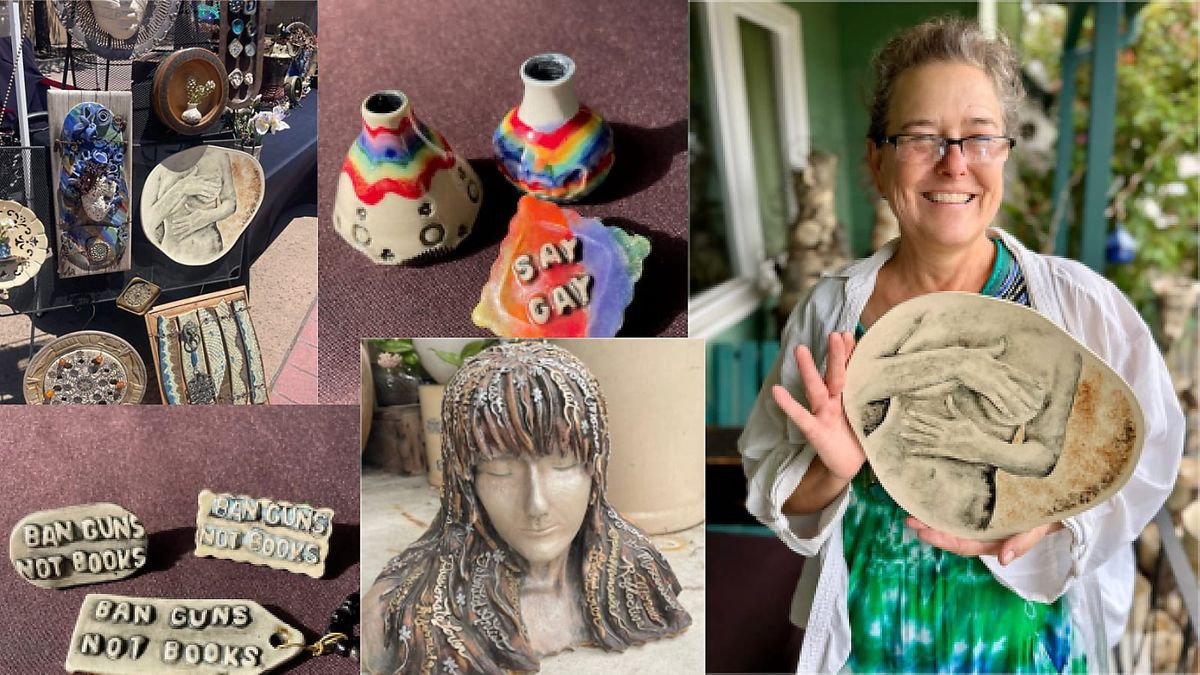
A San Diego artist who was repeatedly fined for selling her work in a public park has filed a federal lawsuit against the city, arguing officials improperly classified her art as “handcrafts” under local sidewalk-vending rules.
Sara Duvall said in her lawsuit filed on February 20 that she has long sold her clay and metal mixed media sculptures in Balboa Park but was fined $250 in August 2024 and $500 in May 2025 by city Park Rangers.
The fines came after San Diego in early 2024 enacted an ordinance that added a regulation called “Expressive Activity on Public Property” to the city’s municipal code while also modifying its existing “Sidewalk Vending Regulations.”
In the ordinance, the San Diego City Council said that, while the city is “committed” to protecting and preserving the rights of persons engaged in expressive activity on public property, its prior lack of regulation had “led to challenges for first responders to access emergency situations” and led to physical fights between sidewalk vendors and others.
The changes created separate rules for expressive activity and sidewalk vending.
Paid subscribers can read the full documents.
 Adam Schrader
People engaged in expressive activity do not need to obtain permits or pay any fees beforehand while sidewalk vendors are required to apply and pay for annual permits, obtain annual business tax certificates, and pay for other fees. Vendors were also restricted from selling in certain public areas, including Balboa Park.
The ordinance defines the term “expressive activity” to mean “all forms of speech and expressive conduct,” which includes “the sale of artwork, recordings of performances, or other items that are inherently communicative in nature and have only nominal value or purpose apart from its communication.”
It explicitly defined “expressive activity” to include “visual art sold by the artist,” as well as such things as face painting and henna tattoos
“Handcrafts means objects made either by hand or with the help of devices used to shape or produce the objects,” the ordinance reads. Such handcrafts include pottery, silver or metal work and leather goods, among other items.
The ordinance states that such handcrafts “are objects not likely to communicate a message, idea, or concept to others … and often have functional utility apart from any communicative value they might have.”
The lawsuit includes images of Duvall with her artwork, as well as images of fliers for events that list her as a participant artist.
Some of her artwork includes messages like “Ban Guns Not Books,” “Cats for Kamala” and support for the LGBTQ community, the images show.
Duvall alleged she “has been singled out from other artists” in Balboa Park, with her work being considered a “handcraft” and not art. She alleged that she filed appeals to her first ticket after receiving it and did not hear back for months.
When she was cited the second time, she appealed again and again did not hear back for months until a hearing in November 2025 with an administrative hearing officer.
In that hearing, Duvall argued that her work was protected by the First Amendment of the U.S. Constitution and that she should have been treated as other artists by the city.
The administrative hearing officer determined he “lacked the power to consider Ms. Duvall’s constitutional claims” and issued an order upholding the fines against her.
The complaint asks a federal court to declare that San Diego’s rules were applied in a way that violates the Constitution and to block the city from continuing to enforce them against Duvall and other artists.
It also seeks financial damages related to the citations and fines she received, as well as compensation for the costs of defending those penalties. In addition, Duvall is requesting a jury trial and asking the court to order the city to change how it enforces the ordinance.
Duvall’s lawyers noted that, while her appeals were pending, a federal appeals court found that part of the ordinance prohibiting the teaching of yoga without a permit to be a content-based restriction on speech.
“The government does not get to dictate what manner and medium the artist uses to express herself,” Michele McKenzie, lead counsel for Duvall said in a statement.
“Sara Duvall is an accomplished artist whose work speaks for itself. The city fined her because a Park Ranger looked at her work and decided they weren’t ‘art.’ That is exactly the kind of content-based judgment the First Amendment prohibits.”
Follow along with other lawsuits at Urgent Matter's art lawsuit tracker.