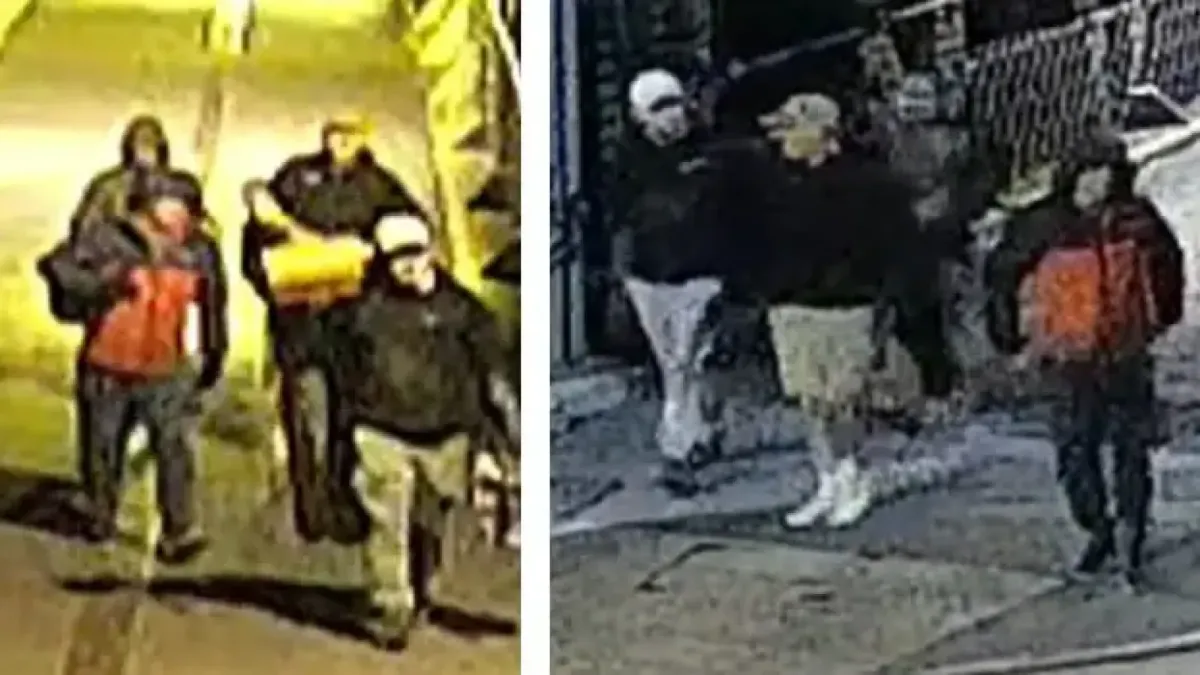
Police in southwest England have released images from closed-circuit television of four men they want to identify in connection with a high-value burglary that saw more than 600 museum artifacts stolen from a storage facility in Bristol.
Avon and Somerset Police said in a statement Thursday that the break-in occurred between 1 a.m. and 2 a.m. on September 25, when a group of four men forced entry into a building on Cumberland Road that housed items from the Bristol Museum’s British Empire and Commonwealth collection.
Police have said they delayed announcing the theft in order to fully audit what was taken from the museum collection. But that wait has garnered criticism from art theft experts.
"Why did we wait so long to bring it to the public's attention? By doing that it makes it easier for criminals to sell what they've stolen,” Chris Marinello, the chief executive of Art Recovery International, told the BBC.
“Normally, it's not very easy when the press is all over a story. The more people that know about it, the harder it is to sell these types of things to respectable dealers. There comes a time when you need to publicize these thefts.”
Sign up for Urgent Matter
Breaking news, investigations and feature articles touching the art world.
No spam. Unsubscribe anytime.
Police are now asking for the public’s help identifying the four men shown in the images released this week, with descriptions of what the suspects were wearing at the time of the theft. They are also asking the public to report any sightings of the stolen objects being offered for sale, particularly online.
Detective Constable Dan Burgan, who is leading the investigation, said the theft represents a major cultural loss for the city.
“The theft of many items which carry a significant cultural value is a significant loss for the city,” Burgan said in a statement. “These items, many of which were donations, form part of a collection that provides insight into a multi-layered part of British history.”
Burgan said investigators have conducted extensive CCTV reviews, forensic examinations and interviews as part of the inquiry.
Items taken in the burglary include jewelry, military medals and badges, natural history materials, and decorative objects including carved ivory, silver items and bronze figurines, the Bristol City Council said in a statement.
Philip Walker, head of culture and creative industries at Bristol City Council, said the stolen collection documented Britain’s relationships with countries formerly part of the British Empire from the late 1700s through the late 1900s.
“These artifacts were part of a collection that documents the links between Britain and countries formerly part of the British Empire,” Walker said. “The collection is of cultural significance to many countries and provides an invaluable record and insight into the lives of those involved in and affected by the British Empire.”
Walker added that security at the storage facility has since been tightened and that museum staff have been informed of the theft.
The public appeal comes amid heightened attention on museum security internationally, following recent announcements of high-profile art and heritage thefts in the wake of the Louvre Museum heist in October.
Most recently, armed thieves carried out a targeted robbery at São Paulo’s Mário de Andrade Library last Sunday, overpowering a security guard and an elderly couple visiting the exhibit before stealing 13 prints by Henri Matisse and Brazilian modernist Candido Portinari in a swift daytime heist.
Bill Anderson, the co-founder of the art security firm Art Guard, previously told Urgent Matter that he worries that violent, forceful intrusions will become more frequent in Europe, where stolen works can be moved across borders and into other markets much more quickly than in the United States.
Follow along with other art crime stories at Urgent Matter’s art crime tracker.