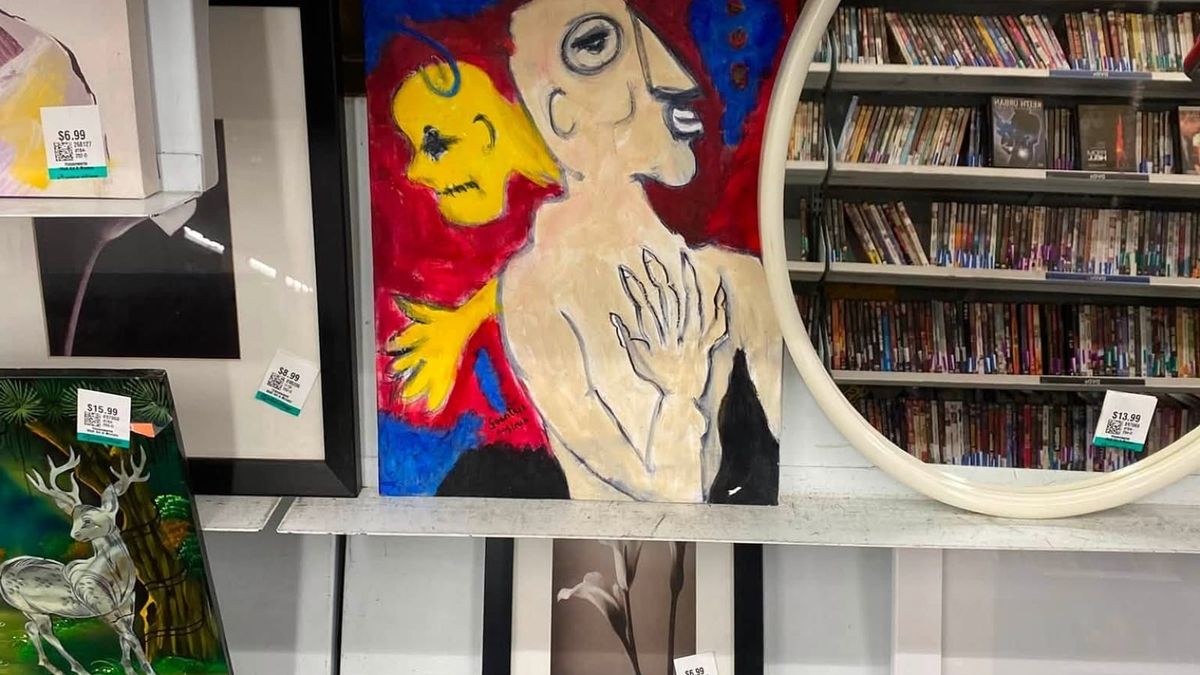
The Penticton Art Gallery in British Columbia apologized to its supporters on July 28 for how it disposed of donated artwork after some pieces appeared for sale at a local Value Village thrift store, sparking days of public anger.

The controversy began on July 24 when Paul Crawford, the gallery’s former curator, posted on Facebook photos of paintings at the store. “Currently at Value Village,” he wrote, identifying at least three untitled acrylic works by Penticton painter Norberto Rodriguez de la Vega.

Crawford said friends and collectors sent him photos of framed pictures at the store, so he went to see for himself, CBC Arts and Castanet reported. “Immediately, I recognized them all from the gallery,” he told CBC Arts.

In a letter to members headed “Dear Friends,” the museum said it should have explained itself sooner.

“We hear the anger many of you have expressed and we feel it personally because we hold you in the highest regard,” the museum wrote.

The museum said it should have communicated “in advance, before this became a topic on social media,” about its process for reviewing donated items “and the reality that not every item can be kept.”

Works accepted into the museum’s permanent collection were never part of the review, the letter said. The items being sorted had been assigned to a fundraising category.

The museum said the “gap in communication about the process is on us, and we are sorry for the controversy it has caused.” It attributed the delayed response to a cyber attack on its website, which is being investigated by the RCMP.

The museum confirmed to CBC Arts that it had dropped hundreds of items at the store earlier this summer but did not provide an exact number when asked how many works it discarded.

Board president Leslie Whatmough told CBC News the museum had been left with pieces it could not trace.

“We came across hundreds of works of art that we could not account for, and by that I mean they did not have any documentation with them and they were not stored in a way that meets museum standards,” Whatmough said.

Whatmough said the museum could not return the pieces to the artists because donors had received tax receipts.

“You can’t give the art back to the person who has donated the art if you have given them a tax receipt because that is considered tax fraud,” she said.

She said staging a fundraiser with the work would require space and staff time and would not raise much money.

The museum said it is working to rebuild trust and that caring for art “extends beyond words.”

“When you take art in, it has to be done responsibly, you have to say I have the space and I have the resources to deal with this effectively, and the situation we inherited was not that,” Whatmough said.

Rodriguez de la Vega, who donated the work, said the sale insulted him. A friend recovered one of his pieces at Value Village priced at $11.

“That doesn’t even cover the cost of materials, this is wrong,” Rodriguez de la Vega said.

Crawford, who is suing the museum over his dismissal, said the controversy reflected a lack of transparency and would affect other arts organizations. He said the discarded works included pieces by established artists from across British Columbia and Canada.

“These are not artists that did not have some significant role in the art history or the cultural history of our country, these are notable people,” he said.

The pieces put up for sale included work by Helen May Duke, Sophie Atkinson and William Alexander, Crawford said.

“He was the guy that taught Bob Ross everything he knows and handed the brush over to him,” Crawford said of Alexander.

Crawford told Castanet that what troubled him was not the decision to part with the work but how the museum handled it. He said it could have used professional auction or consignment services instead.

“I never felt comfortable simply giving artworks away or allowing them to be sold for far less than their potential value,” Crawford told Castanet.

The museum is a registered non-profit that receives about $125,000 a year in city grant funding. Some residents questioned why the museum handed the work to a for-profit chain instead of donating it to a charity, Castanet reported.

The dispute over the donated art overlaps with Crawford’s lawsuit against the museum. He had been its curator and executive director for nearly two decades.

Crawford was laid off in August 2025 and sued in British Columbia Supreme Court in Penticton that October, alleging bullying, harassment and a toxic workplace, Urgent Matter previously reported.

The museum said at the time that it had made “the difficult decision” to lay Crawford off temporarily because of a financial deficit, pausing “the largest salary” while it weighed an operational realignment. Board president Claude Roberto and another longtime board member resigned after the layoff.

Whatmough said the museum still has dozens of pieces to sort and is asking the community for suggestions.

“We would love to do it better,” she said.

Urgent Matter is reader-supported. Please consider subscribing to support independent arts journalism.

Share this article
The link has been copied!