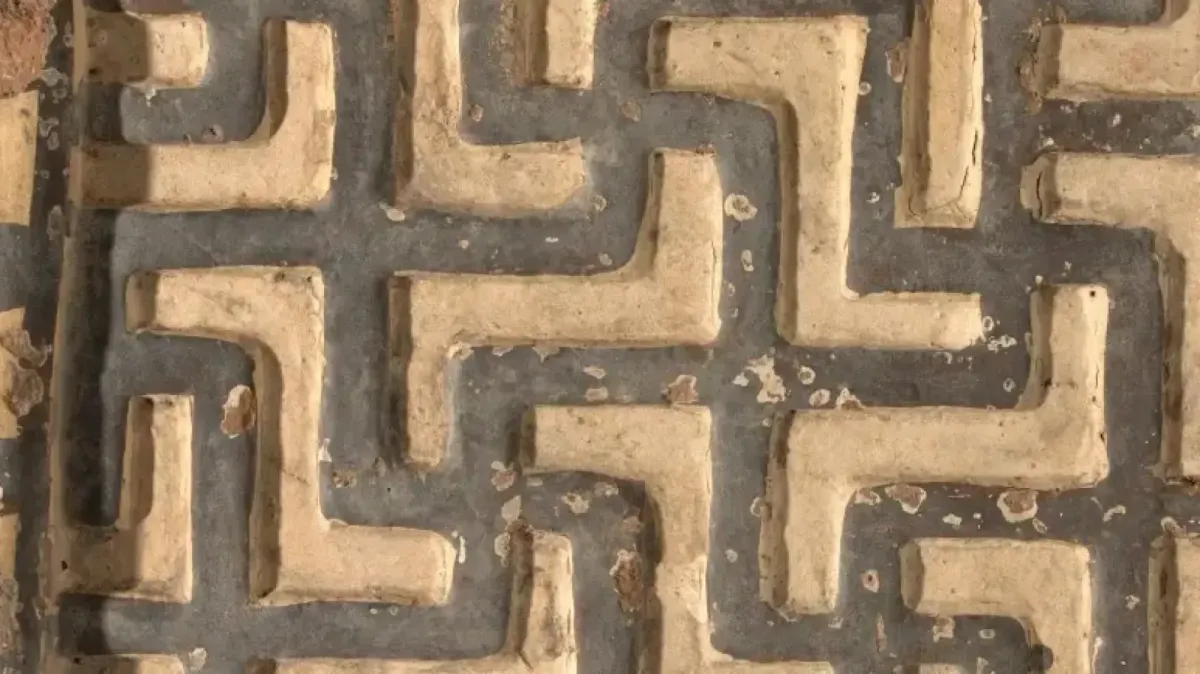
The Virginia Museum of Fine Arts has returned 41 ancient polychrome terracotta relief fragments to Turkey after an investigation by the Manhattan District Attorney’s Office.

Manhattan District Attorney Alvin Bragg, who announced the return of the reliefs last Wednesday, called it an “exceptional group” of plaques and said they were looted from a 2,500-year-old Phrygian temple near Düver, in southwestern Turkey.

While Bragg’s office described the return as “an impressive collaboration,” public statements from prosecutors and the museum outlined seemingly different sequences that led to the restitution.

The two accounts are not necessarily contradictory but may describe different triggers for the repatriation. Prosecutors emphasized the museum’s proactive outreach, crediting VMFA with contacting investigators after a similar repatriation in 2022. VMFA, by contrast, pointed to the formal legal process, saying it acted after receiving a restitution claim and reviewing evidence presented last month.

Bragg’s office said its Antiquities Trafficking Unit previously seized and repatriated a plaque stolen from Düver in 2022. His office said that VMFA chief curator Michael Taylor contacted the ATU after that repatriation and other actions by Manhattan prosecutors identifying potentially looted objects in the museum’s collection.

“The continuing investigation proved these terracotta plaques had been looted, and VMFA immediately and voluntarily surrendered them to this office for repatriation,” the Manhattan District Attorney’s Office said.

The VMFA, however, in its statement last week said the repatriation came about after it received a restitution claim for the reliefs from the ATU on November 3.

The museum said its curatorial and provenance research staff then “fully complied” with the request to supply all documents and photographs related to the purchase.

Those documents included sales receipts, invoices and bills of sale from when the museum bought 34 of the relief fragments from Summa Galleries in Beverly Hills, California, in 1978. It was gifted another six that same year by Chicago-based antiquities dealer Harlan J. Berk.

Summa Galleries then gave another relief to the VMFA in 1979, resulting in 41 relief fragments being added to the museum’s collection, the museum said.

The records sought by Manhattan prosecutors also included shipping and storage records, import and export documents, consignment agreements, appraisal documentation, provenance research and documentation, as well as catalogues, brochures and marketing materials and all correspondence related to the reliefs.

The museum said that Matthew Bogdanos, the head of the Antiquities Trafficking Unit, then met with museum officials on November 17.

During that meeting, Bogdanos “presented clear, compelling and irrefutable evidence that the works under investigation were stolen or looted,” according to the museum.

“The Virginia Museum of Fine Arts takes seriously and responds to all restitution claims for works in our collection,” VMFA director Alex Nyerges said in a statement.

“Based on the evidence shown to VMFA, we are convinced that we do not have clear title for these reliefs. We are therefore happy to be working with the Antiquities Trafficking Unit of the Manhattan District Attorney’s Office to return all of the polychrome terracotta fragments in question to Turkey.”

The museum said that the investigation revealed that the reliefs, collectively valued at around $400,000, were illegally excavated and looted from the Phrygian temple between 1962 and 1968, and were then illicitly exported and sold on the international art market.

“Stolen or looted art has no place in our collection,” Taylor said in a statement. “We are therefore delighted to return these works and thank Col. Bogdanos and his team of investigators for alerting VMFA to the presence of these illegally excavated works in our ancient art holdings.”

The case adds to a growing list of international antiquities trafficking investigations tracked by Urgent Matter, including recent enforcement actions in Italy and Bulgaria.

Last month, a major criminal network trafficking looted cultural artifacts was busted by Bulgarian authorities with support from Europol, leading to the arrest of 35 suspects.

And Italian authorities launched helicopter-backed raids before dawn Friday, swooping down on suspected tomb raiders, traffickers and middlemen—some with alleged mafia ties—accused of grave robbing ancient artifacts and funneling them into the international black market.

Share this article
The link has been copied!