Venezuela’s major cultural institutions condemned the U.S. removal of President Nicolás Maduro on Saturday but have provided no public guidance on the status of museums, libraries or national collections.

The Ministry of Popular Power for Culture issued a statement through Gran Misión Viva Venezuela, a cultural program overseen by the ministry, calling the U.S. military action a violation of national sovereignty. It did not address the operational status of such cultural institutions amid governmental transitions.

“What has occurred constitutes not only a flagrant violation of our sovereignty. It also represents a contemptible affront to Venezuelan identity itself, whose people have always been associated with independence and never with subordination, enslavement, or colonialism,” the ministry said.

“The cultures and practitioners of culture of our homeland, exercising the creative powers of the people, join all social and political forces in a national mobilization to reject this assault, and we call on cultural communities and the governments of Latin America, the Caribbean, and the world to activate mechanisms of solidarity with Venezuela.”

U.S. authorities said American forces captured Maduro and transported him out of the country in a pre-dawn operation on Saturday.

Explosions and low-flying aircraft were reported near major military installations in Caracas, including Fuerte Tiuna, which is located several kilometers from the Plaza de los Museos, the area housing the Museo de Bellas Artes and the Galería de Arte Nacional. There were no immediate reports of damage to the museum buildings.

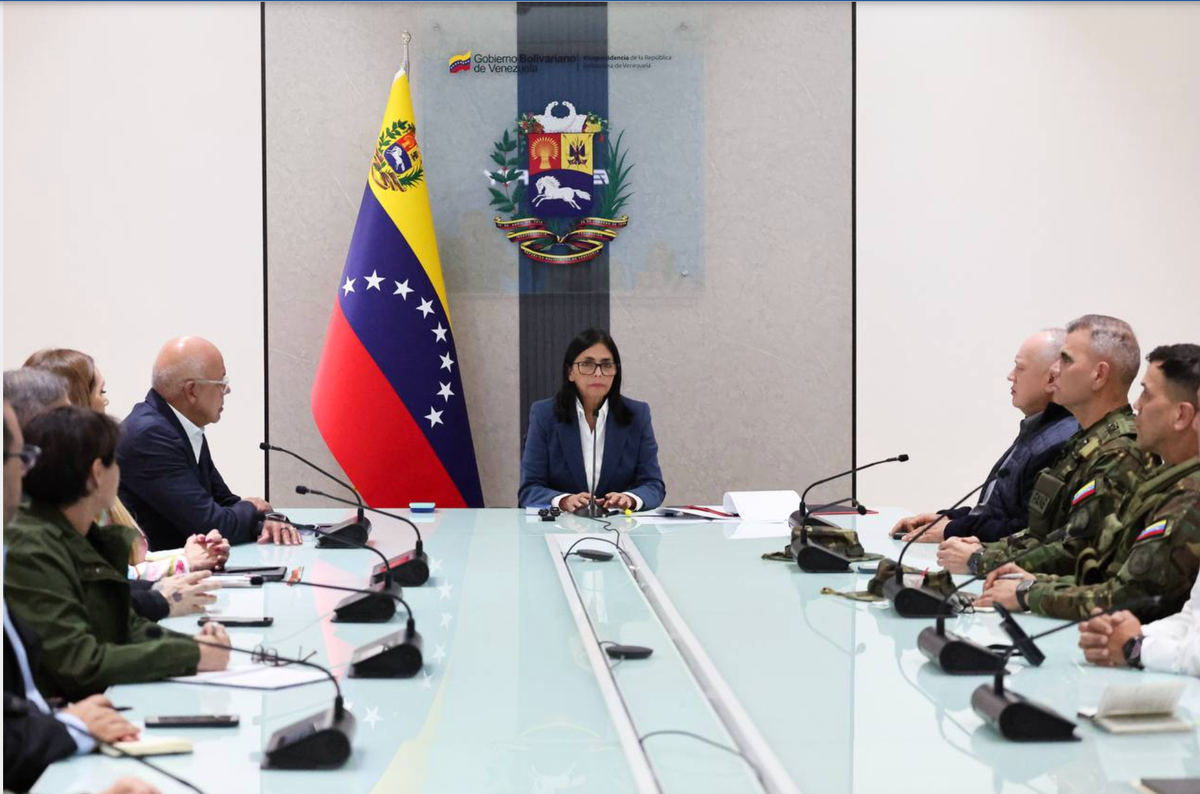
Venezuela’s Supreme Tribunal of Justice ordered Vice President Delcy Rodríguez to assume presidential duties on an interim basis, according to a decree posted on the official Vice Presidency website.

Rodríguez denounced the U.S. action and called it a violation of sovereignty. Her public statements did not reference cultural institutions or heritage sites.

The National Defense Council later activated a decree declaring a state of external commotion, according to a separate notice published on the Vice Presidency’s website.

“We are activating Full Operational Readiness throughout the entire national territory, in perfect military-police-civilian harmony, in order to integrate the elements of National Power in the mission to confront imperial aggression,” Defense Minister Vladimir Padrino Lopez said in a statement.

The Culture Ministry remained publicly active after the crisis, but its communications shifted away from cultural programming, according to a review of its official website and Instagram account.

In the final days of December, the ministry published notices on routine cultural matters. Beginning Saturday, the ministry’s posts shifted to document artists and cultural workers participating in protests against the U.S. actions in Venezuela.

A review of the official websites and verified social media accounts of Venezuela’s major national cultural institutions found virtually no public statements addressing operations, collection access or staff safety.

The Biblioteca Nacional de Venezuela shared posts to its Instagram account with messages including “Hands Off Venezuela” and “The Empire Kidnapped Them,” referring to Maduro and his wife.

The Museo de Bellas Artes in Caracas and the Galería de Arte Nacional did not issue their own statements and instead both shared to their Instagram Stories a document from the Constitutional Chamber of Venezuela’s Supreme Tribunal of Justice that designated Rodríguez to assume presidential duties on an interim basis.

Urgent Matter did not locate recent public statements from the Archivo General de la Nación on its official website or social media accounts.

A review of the official communications on the International Council of Museums Venezuela website did not locate any country-specific crisis guidance or statements addressing the political emergency.

“The Secretary-General is deeply alarmed by the recent escalation in Venezuela, culminating with today’s United States military action in the country, which has potential worrying implications for the region,” U.N. spokesperson Stéphane Dujarric said in a statement.

“Independently of the situation in Venezuela, these developments constitute a dangerous precedent. The Secretary-General continues to emphasize the importance of full respect—by all—of international law, including the U.N. Charter.”

Stories like this take time, documents and a commitment to public transparency. Please support independent arts journalism by subscribing to Urgent Matter and supporting our work directly.

Share this article
The link has been copied!