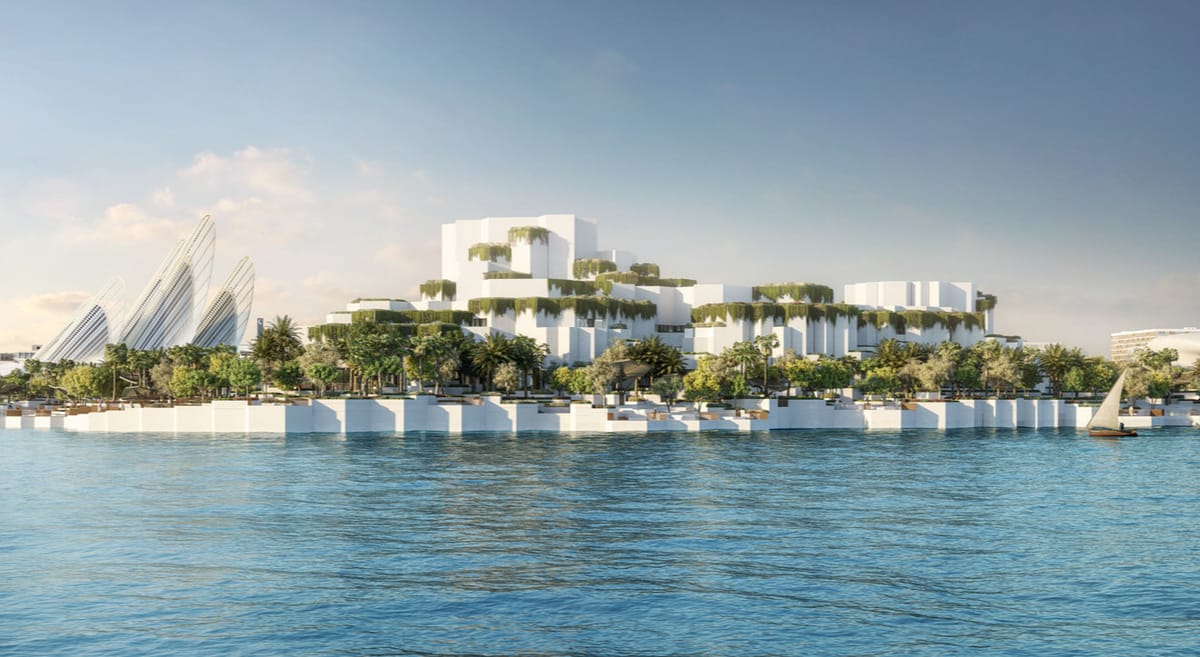
The Cabinet of the United Arab Emirates, the country’s federal executive authority, has approved drafting a federal law to protect and manage the country’s cultural heritage.
The drafting effort aims to encourage the study of heritage, expand cultural exchange and support long-term preservation, according to state media agency WAM. As the law is still in draft form, its operative provisions have not been made public.
The move comes as Emirati state media describes 2025 as a year of heightened cultural and knowledge activity, marked by new institutions, museum openings and expanded international engagement.
While the Cabinet drafts a new heritage law, the UAE last year published a separate federal legal framework for parts of the arts sector, according to the country’s official legislation portal.
Under that law, nonprofit art institutions can be established by individuals or organizations that meet licensing requirements set by federal authorities. The law bars those institutions from operating as commercial businesses and requires them to obtain formal approval, adopt governing documents and clearly identify themselves as non-profit entities once licensed.
Sign up for Urgent Matter
Start the new year with a paid Urgent Matter subscription and support independent arts journalism.
No spam. Unsubscribe anytime.
The law also sets basic oversight rules. Art institutions must have a governing board, with some flexibility for smaller organizations, and must comply with reporting and preservation standards. It bans unlicensed activity and political interference, regulates how non-profit institutions handle revenue and allows eligible institutions to access customs and tax exemptions.
That legal framework has developed alongside a broader push to expand cultural infrastructure, with the past year marked by institutional launches and policy initiatives tied to culture, education and heritage across the UAE.
This federal legislative push is mirrored by local developments in the individual Emirates, notably in Sharjah, where a decree established the Sharjah Creative Quarter as a hub for creative and cultural projects. A separate Emiri decree established the University of the Arts in Sharjah. Sheikha Hoor Al Qasimi, president of the Sharjah Art Foundation, has been appointed to lead the university.
At the national level, the Emirates Council for Balanced Development, working with the Ministry of Culture, launched programs to support creatives and artisans and to develop cultural tourism. Those initiatives include backing for 20 creative projects, training cultural ambassadors, and expanding markets for traditional crafts, according to state media.
The government has also approved Sheikh Zayed Farm in Al Khawaneej as the UAE’s third national site—alongside Dar Al Etihad and Argoub Al Sedirah—citing its role as the location of early leadership meetings that shaped the creation of the modern United Arab Emirates.
That broader push has been accompanied by a wave of new cultural institutions, with several museums opening or being formally announced in 2025.
In Dubai, officials announced plans for the Dubai Museum of Art, a future public art museum designed by architect Tadao Ando. The project has been introduced through government announcements and architectural renderings, but the museum has not yet been completed or opened to the public, and no opening date has been announced.
TeamLab Phenomena Abu Dhabi opened to the public on April 18 in the Saadiyat Cultural District, establishing a permanent immersive digital art venue built around large-scale, interactive installations responsive to movement, light and environment.
Also in Abu Dhabi, Zayed National Museum opened to the public on December 3. Officials described it as the national museum of the UAE and a centerpiece of the Saadiyat Cultural District.
Designed by architect Lord Norman Foster of Foster + Partners, the museum presents a chronological account of the UAE’s history across six permanent galleries, drawing on archaeological material, historic objects, and contemporary installations. Its displays incorporate more than 1,500 objects and are anchored by an outdoor gallery, Al Masar Garden.
The Natural History Museum Abu Dhabi opened to the public on November 22, also in the Saadiyat Cultural District. In a news release, the museum described itself as the largest of its kind in the region.
The museum spans about 376,700 square feet and traces 13.8 billion years of natural history, from the Big Bang through the evolution of life on Earth.
Highlights include “Stan,” a nearly complete Tyrannosaurus rex skeleton that sold at a Christie’s auction in 2020 for about $31.8 million, then a record price for a dinosaur fossil. Officials said the natural history of the Arabian Peninsula is central to the museum’s narrative and cited discoveries in Abu Dhabi, including the extinct elephant species Stegotetrabelodon emiratus.
Abu Dhabi’s Department of Culture and Tourism and Tokyo National Museum have also signed a five-year memorandum of understanding aimed at expanding cooperation and exchange.
According to the Abu Dhabi Media Office, the agreement sets a framework for joint research, education, professional development, and collaboration on the study and preservation of cultural materials, including opportunities for mutual lending and borrowing, as well as training programs, exhibitions and educational initiatives.
Stories like this take time, documents and a commitment to public transparency. Please support independent arts journalism by subscribing to Urgent Matter and supporting our work directly.