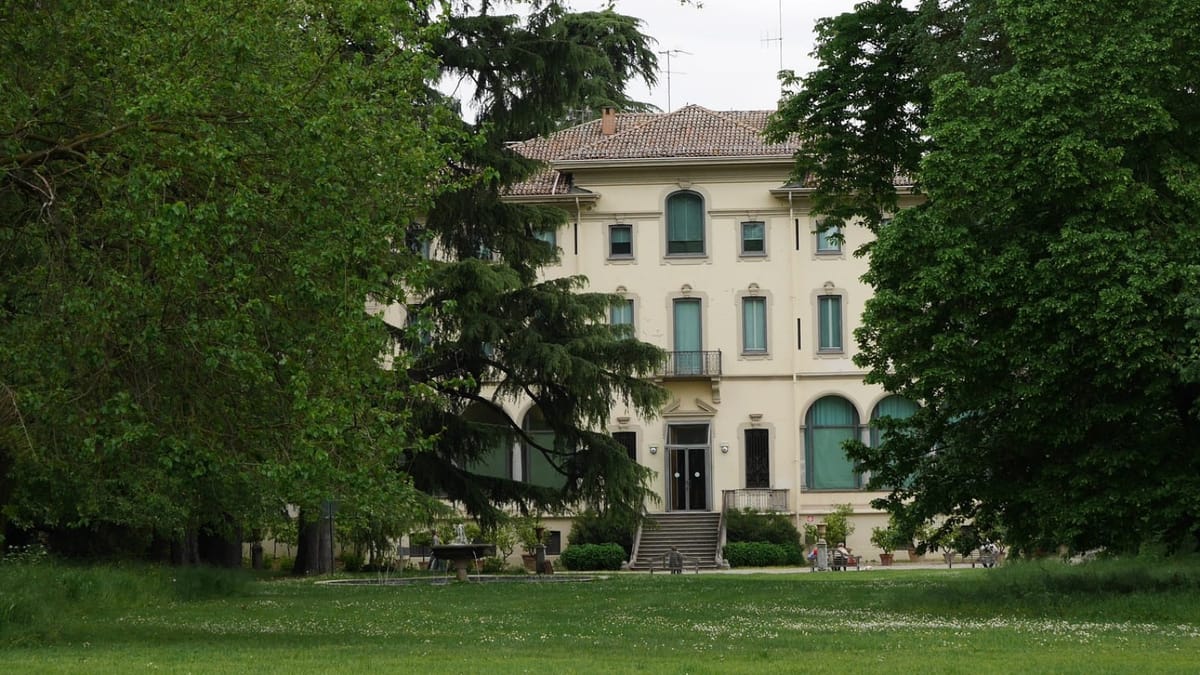
A group of hooded thieves raided a private museum outside the Italian city of Parma, making off with paintings by Pierre-Auguste Renoir, Paul Cézanne and Henri Matisse collectively worth about $10 million, Italian authorities and media said.

The Fondazione Magnani-Rocca, the museum, said Monday that it was targeted in a theft overnight on March 22, but provided few details. The announcement came more than a week after the heist and after the news was first reported Sunday by the regional branch of Italy’s state broadcaster, Rai.

A Carabinieri spokesperson told CNN that the museum decided not to publicize the theft in the hopes of catching the thieves if they returned. But experts generally recommend quickly notifying the public of such thefts.

In December, Avon and Somerset Police in southwest England were criticized in the media for releasing images of four men months after the September theft of more than 600 museum artifacts from a storage facility in Bristol. British police said they delayed announcing the theft to fully audit what was taken from the museum collection.

"Why did we wait so long to bring it to the public's attention? By doing that, it makes it easier for criminals to sell what they've stolen,” Chris Marinello, the chief executive of Art Recovery International, told the BBC at the time.

“Normally, it's not very easy when the press is all over a story. The more people that know about it, the harder it is to sell these types of things to respectable dealers. There comes a time when you need to publicize these thefts.”

As for the Fondazione Magnani-Rocca theft, James Ratcliffe, general counsel and director of recoveries at The Art Loss Register, said in an emailed statement that the theft should be viewed ‘in a very different light’ from last year’s $100 million Napoleonic jewels heist at the Louvre Museum in Paris.

“The pictures stolen only have value if they are kept intact as artworks. They have no financial value if destroyed in the way that the jewelry stolen in Paris would as gold and gems,” Ratcliffe said.

"This means that if the thieves wish to somehow benefit financially from this theft, they will need to sell the pictures as art, or perhaps try to ransom it back to its insurer if there was one.”

Ratcliffe said that selling stolen art worth millions on the legitimate market “is now almost impossible,” crediting the work of the company—which maintains a database of lost, stolen and looted art and cultural items. The artworks stolen in Italy have already been registered to the company’s database.

Italy’s Carabinieri police force told local media that the heist lasted just three minutes. The works stolen include Renoir’s Les Poissons, Cézanne’s Still Life With Cherries and Matisse’s Odalisque on the Terrace.

The Italian newspaper La Repubblica reported that the bandits were forced to abandon their attempt to steal a fourth artwork due to the museum’s security system.

Surveillance footage reviewed by police showed the thieves leaving with the paintings as the museum’s alarm system blared in the background.

The Fondazione Magnani-Rocca said it is cooperating with the Carabinieri Command for the Protection of Cultural Heritage and with relevant authorities amid the ongoing investigation.

“This is a loss to our shared cultural heritage,” the museum said. “The Villa of Masterpieces remains open and continues its activities.”

Follow along with other art crime stories at Urgent Matter’s art crime tracker.

Share this article
The link has been copied!