Tehran’s Golestan Palace damaged; UNESCO warns of threats amid U.S.-Iran war
The Iranian government shares photographs of the damage, depicting its ornate halls with shattered glass and scattered debris.

The Iranian government shares photographs of the damage, depicting its ornate halls with shattered glass and scattered debris.
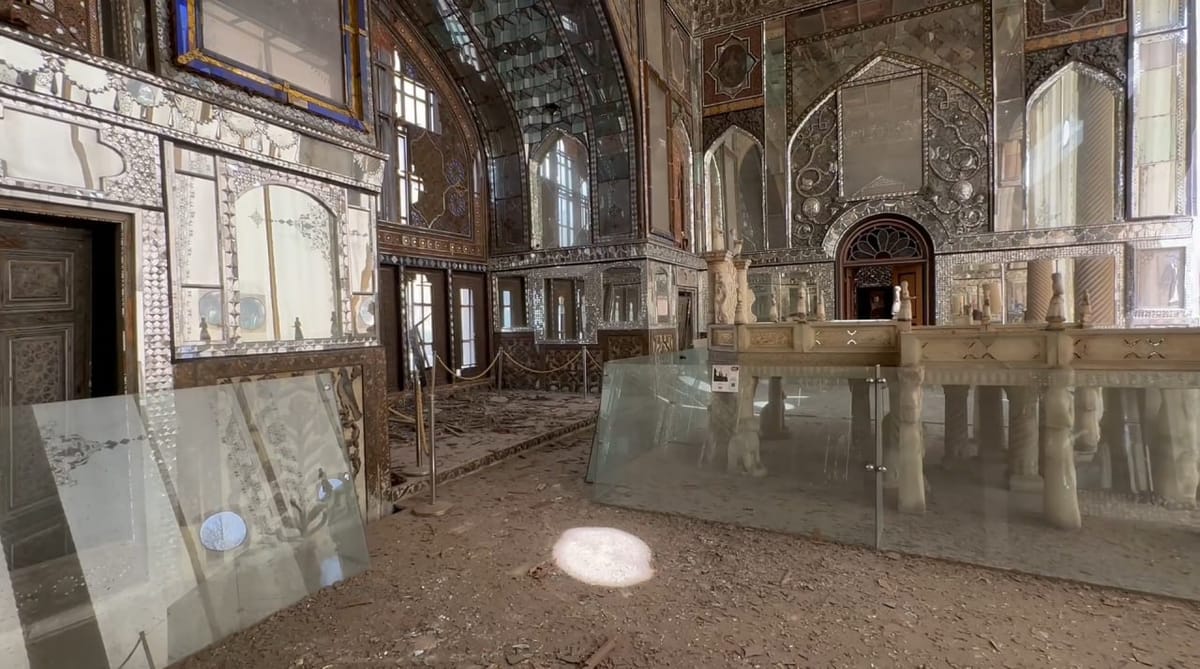
Airstrikes carried out by the United States and Israel have damaged the Golestan Palace in Tehran, the Iranian government said Monday.
“Golestan Palace was among the sites that sustained serious damage and destruction following the attacks carried out by the United States and the Israeli regime on Sunday night,” the Iranian government said in a statement.
Golestan Palace is a sprawling royal complex that dates largely to the Qajar dynasty of the 1800s, though its origins trace back to the Safavid era.
Long used as a seat of power for Persian monarchs, the palace is renowned for its elaborate mirror-work halls, marble throne terrace, tile façades, and fusion of Persian craftsmanship with European architectural influences. It was inscribed as a World Heritage site in 2013.
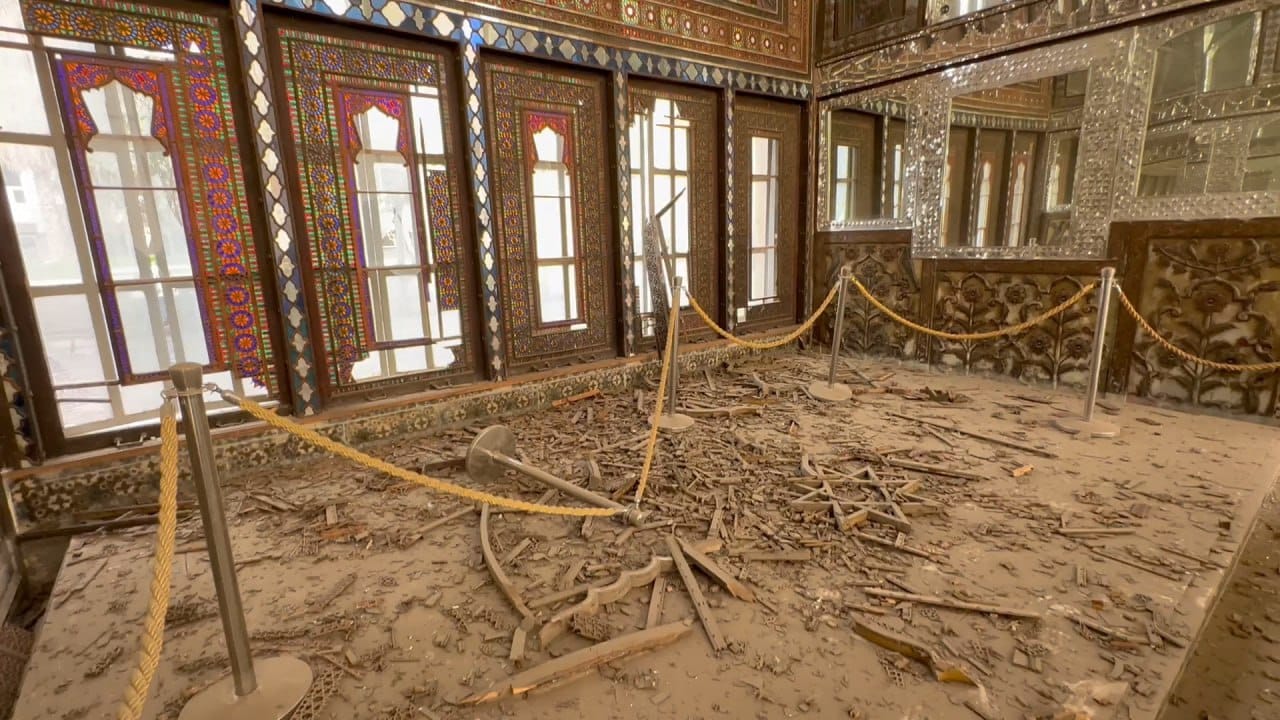
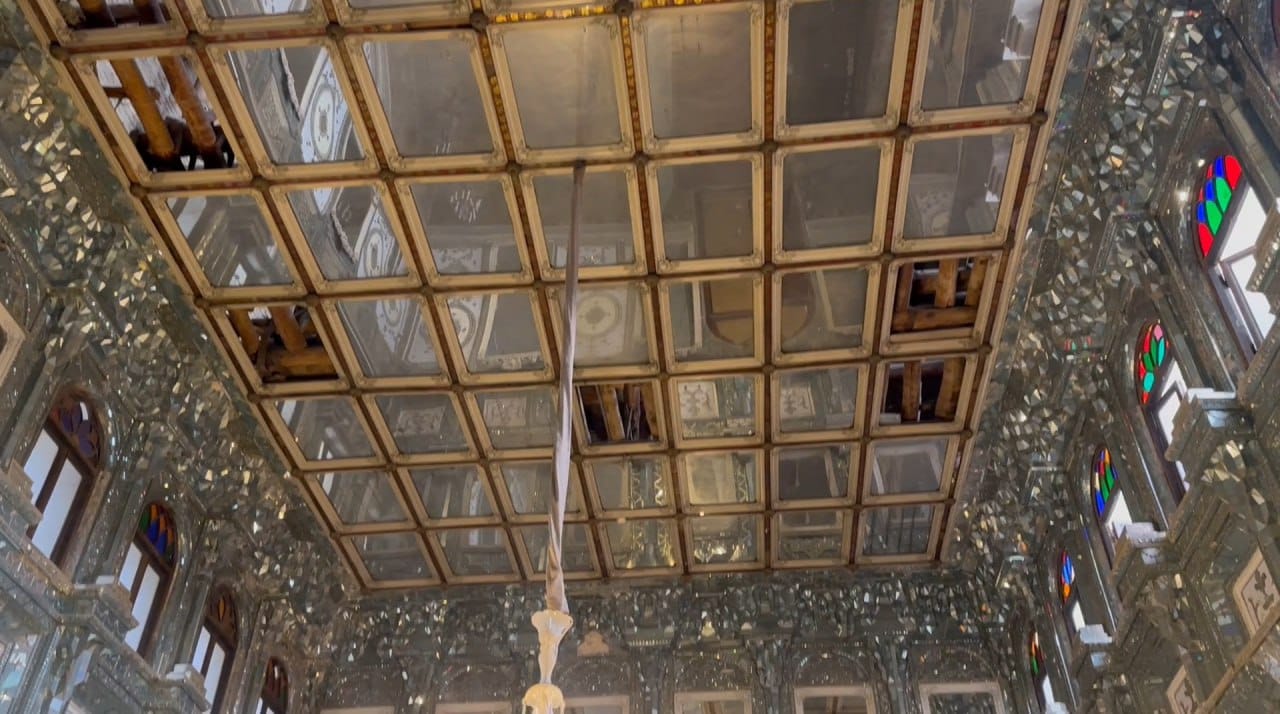
The Iranian government shared photographs of the damage, depicting its ornate halls with shattered glass and debris scattered across the floor.
In one image, large glass panels appear dislodged and leaning at angles against balustrades, while fragments of broken mirror and window glass cover the ground beneath the richly decorated walls.
Protective stanchions and rope barriers remain in place, but portions of the reflective surfaces that define the Qajar-era interiors appear cracked or blown out.
A second image, taken from floor level, shows a dense field of shattered glass fragments stretching across the room. In the background, scaffolding and chairs are visible near tall windows, suggesting either prior restoration work or an emergency stabilization effort after the damage occurred.
The overall scene suggests that shockwaves from nearby explosions, rather than a direct hit, may have caused the breakage to the palace’s fragile mirrored surfaces and windows.
The news was confirmed by the United Nations Educational, Scientific and Cultural Organization, which expressed concern over the protection of cultural heritage sites amid “escalating violence” in the Middle East.
 Adam Schrader
“UNESCO continues to closely monitor the situation of cultural heritage in the country and across the region, with a view to ensuring its protection,” the international body said in its statement.
“To that end, the Organization has communicated to all parties concerned the geographical coordinates of sites on the World Heritage List as well as those of national significance, to avoid any potential damage.”
The news came after Qatar and Bahrain closed their cultural sites over the weekend amid Iran retaliation on U.S. military installations across the Middle East in response to ongoing strikes by the United States and Israel.
Stories like this take time, documents and a commitment to public transparency. Please support independent arts journalism by subscribing to Urgent Matter and supporting our work directly.