SVA moves MFA Art Practice program fully online, cuts tuition
SVA is removing mandatory summer residencies and lowering per-credit tuition.

SVA is removing mandatory summer residencies and lowering per-credit tuition.
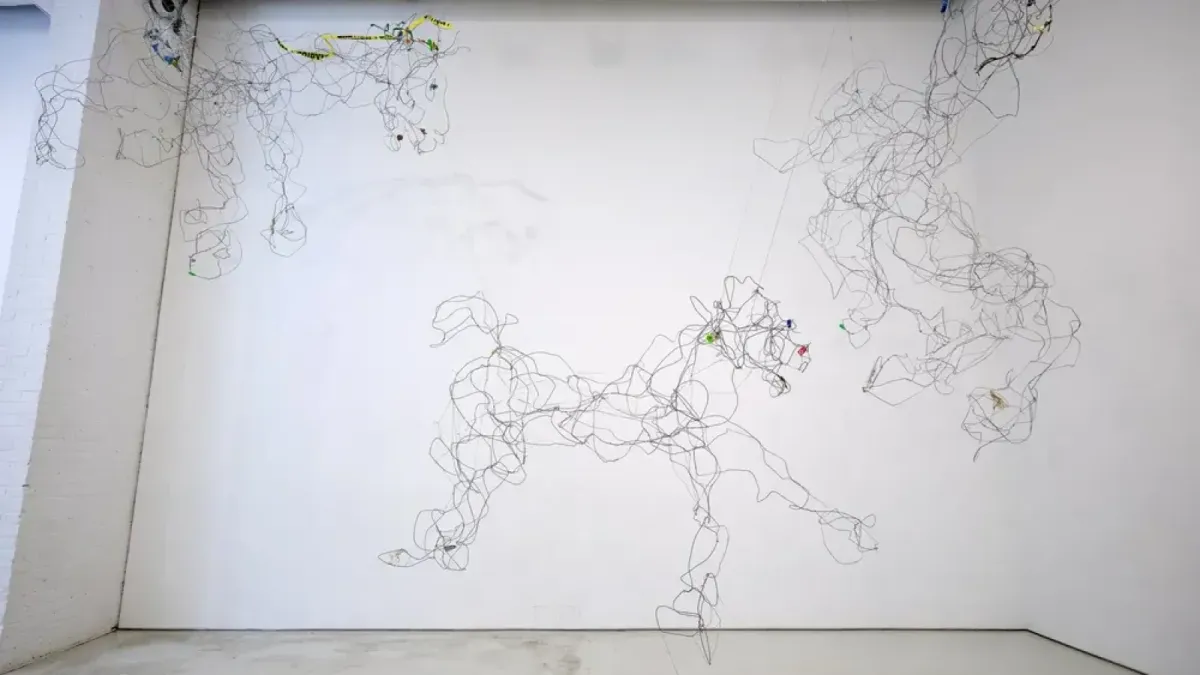
The School of Visual Arts will transition its MFA Art Practice program to a fully online degree beginning next academic year, eliminating mandatory in-person residency requirements and cutting per-credit tuition roughly in half.
The shift comes as graduate art education faces mounting pressures tied to rising costs, changes to federal student loan policy and declining international mobility.
The program is chaired by David Ross, the former director of the Whitney Museum of American Art, the San Francisco Museum of Modern Art and the Institute of Contemporary Art Boston, who has been involved in new media and distance learning since the 1970s, when he served as the first video art curator at the Everson Museum.
The MFA Art Practice program has operated as a low-residency degree for the past 14 years, requiring students to spend six weeks in New York City during three successive summers, with the remainder of coursework conducted online.
Under the new model, the residency requirement has been removed entirely, though students may still opt into a voluntary summer symposium in New York.
“This year, we've made one more step forward, which is that we've eliminated the required in-person summer residency component, and now we are fully online,” Ross told Urgent Matter.
Ross emphasized that the transition does not affect the program’s accreditation. He noted that the MFA Art Practice curriculum has already passed multiple rounds of state review and has been operating largely online for more than a decade.
“In order to be able to award an MFA in New York State, the curriculum and the plan for the program have to be passed by the state,” he said. “It has to fulfill certain requirements in order to pass, and our program passed with flying colors, and has been a successful online MFA program for the last 14 years."
He added that the newly structured program was again reviewed by the State Board of Regents before receiving approval.
“Once again, we had to make sure that it passed the standards of the State Board of Regents,” Ross said. “Of course, it was passed because our program has all the necessary requirements, and then some.”
State records show the MFA Art Practice program is formally registered with the New York State Education Department and was most recently approved in April 2025, though it does not qualify for New York’s Tuition Assistance Program, a limitation tied to state aid rules rather than the program’s accreditation or legality.
Ross described the change as the latest step in a long-running effort to reach artists for whom traditional MFA structures have never worked.
“One of the reasons that our program was started in the first place was to reach out to those artists, many of whom are in their 30s or 40s and have just gotten to the point where they realize that an MFA is important to their practice,” Ross said. “Many of them have jobs and need to keep those jobs to support their families.”
School data shows that Art Practice enrolled 16 students in fall 2025, a typical size for a studio-based MFA program.
Across SVA, the graduate population totalled 524 students, with an average age of 28. Ross said Art Practice has historically drawn older students, often in their late 30s, many of whom are balancing jobs, family responsibilities and geographic constraints.
“We found that the low residency program was a good start, but this will allow even more people to apply to our program,” Ross said.

Even the six-week summer residency proved impossible for many prospective students.
“There are a lot of people who couldn't even do that because they had jobs or family responsibilities that didn't give them the freedom of having six weeks for three summers in a row,” he said.
A standard 60-credit MFA at SVA has typically cost about $120,000, at roughly $2,000 per credit. Under the new model, per-credit tuition will drop to $1,000, bringing the tuition portion of the degree to approximately $60,000, before living expenses and fees.
“Because we've reduced some of the overhead significantly by transitioning to an all-online program, we are now able to offer this program to students for $1,000 a credit, so cutting the cost of an MFA in half and at a time where the economy is not exactly thriving,” Ross said.
He pointed to changes in federal student loan policy as a key factor tightening access to graduate education in the arts.
“But because of the new Trump economic plans, the amount of money that can be borrowed through a federally insured student loan program has been reduced for arts graduate programs,” Ross said. “We didn't know this when we set about making our plan, but it's turned out to be the case.”
Beginning in July 2026, the federal Graduate PLUS loan program, which has allowed students to borrow up to the full cost of attendance, is set to be eliminated for new borrowers under changes being implemented by the U.S. Department of Education as part of The One Big Beautiful Bill Act.
Most new graduate borrowers will instead be limited to Direct Unsubsidized Loans capped at $20,500 per year and $100,000 total for non-professional degrees.
“We think the timing of this is actually, unfortunately, good,” Ross said. “When we began planning this, which was two years ago, we didn't know that the economy would be as problematic as it is.”
At roughly $60,000 in total tuition for the full degree, SVA’s revised MFA Art Practice program undercuts many traditional fine arts degrees. Yale School of Art’s annual tuition alone is listed at about $48,500, with total cost of attendance rising once fees and living expenses are included.
Ross said the tuition reduction was not achieved through faculty layoffs or staff cuts.
“No, no, because we're not using any real estate,” he said. “The overhead for classroom space to make use of real estate in New York is a major part of the cost of a program.”
School data show that SVA already functions as a largely non-residential graduate institution with 93.7% all graduate students commuting rather than living on campus, and fewer than one-third listing New York as their permanent residence.
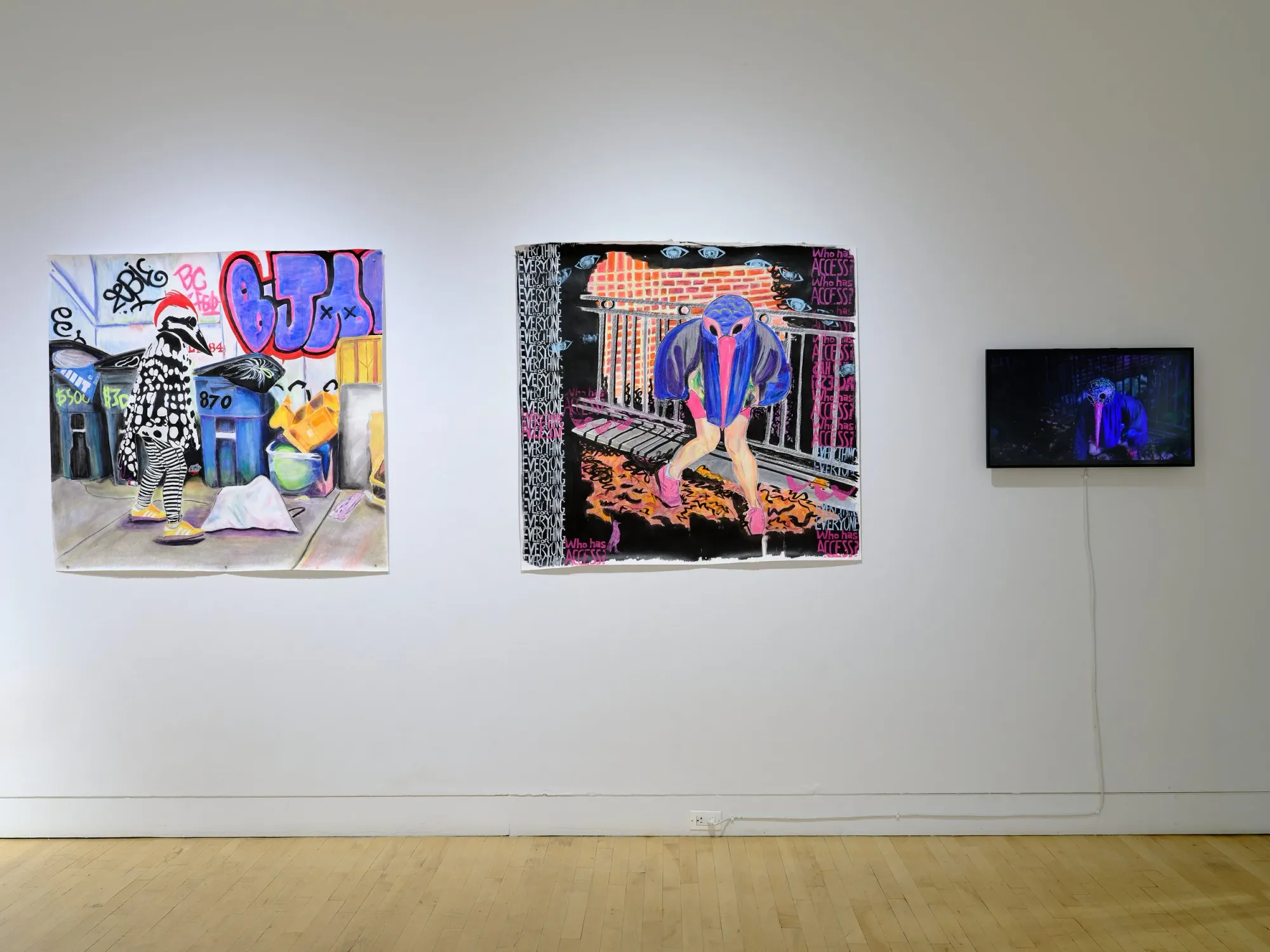
More than half of SVA’s graduate students—52.5%—are international, and 54.2% list a permanent residence outside the United States. He said political uncertainty and visa concerns have weighed on international applications across U.S. art schools, with many reporting sharp declines.
“Given the United States' sorry position in the world today because of the current administration, the idea of coming to the United States isn't necessarily something on the top of everybody's mind,” Ross said. “Hey, yeah, let's go spend time in Trump America. That'll be fun.”
Institutional data show that SVA’s graduate programs retain and graduate most students once enrolled, suggesting that academic follow-through has not been a central challenge. Critics of fully online MFA programs have raised concerns about the loss of shared studio space, reduced informal peer exchange and weaker professional networks.
Ross said those concerns misunderstand how graduate art education functions at its core.
“The thing that encourages the coherence of a group of people together is the time they spend critiquing each other's work,” he said.
The program’s faculty includes artists such as Miatta Kawinzi, whose exhibition Numma Yah at Smack Mellon was named one of Hyperallergic’s best shows of 2024, and Andrew Woolbright, whose recent exhibition at Blade Study was reviewed by The New York Times.
Ross said the Art Practice program has long served as a template for alternative MFA structures.
“We were one of the very first programs to be a low-residency program anywhere in the country, and we became the model for other low-residency programs,” he said. “We think that this new program will also become a model for an all-online MFA program.”
Stories like this take time, documents and a commitment to public transparency. Please support independent arts journalism by subscribing to Urgent Matter and supporting our work directly.