Surveillance footage of protests reworked into installation on policing, injury
Artist uses public records and data-driven audio to reinterpret protest footage and surveillance systems

Artist uses public records and data-driven audio to reinterpret protest footage and surveillance systems
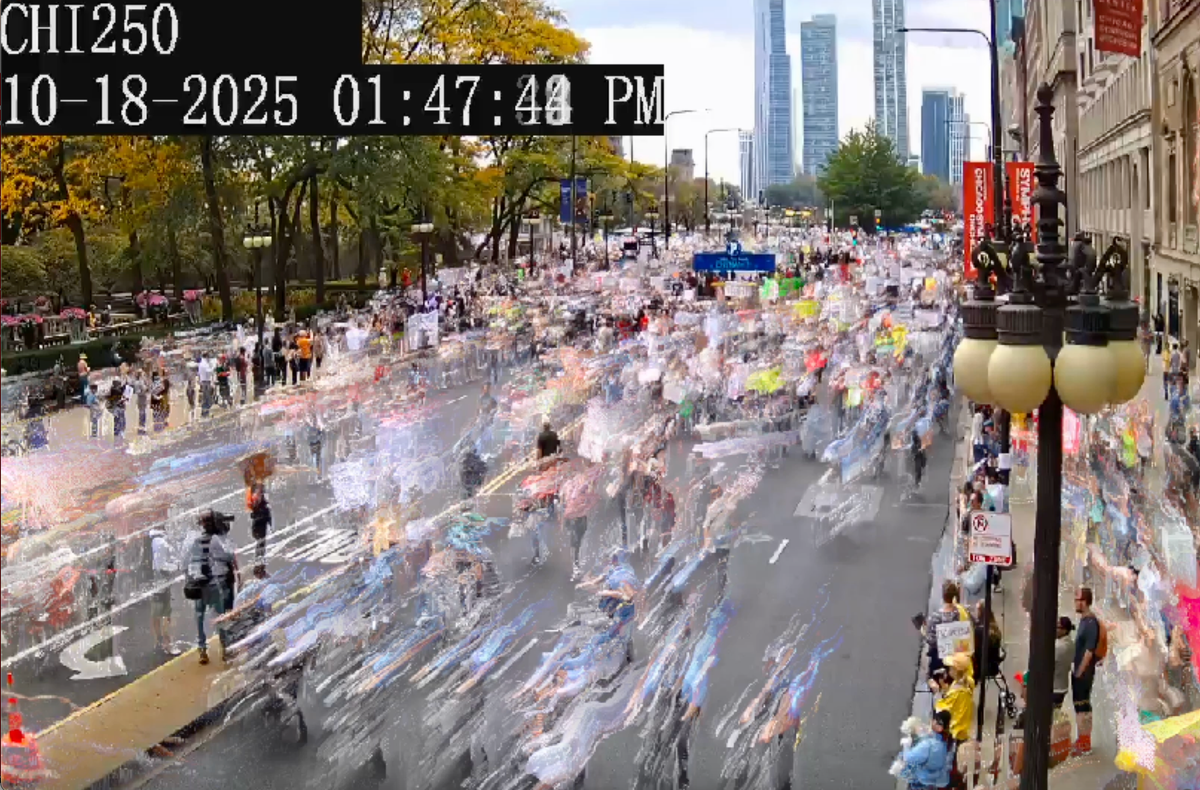
A University of Wisconsin–Madison graduate student has turned municipal surveillance footage of protests into a multi-channel installation examining policing, disability and public space in the United States.
The exhibit, titled “Infrastructure Bodies/Injury Systems: An Exhibition by Anne E. Stoner,” is on view beginning April 10 at the university’s Chazen Museum of Art.
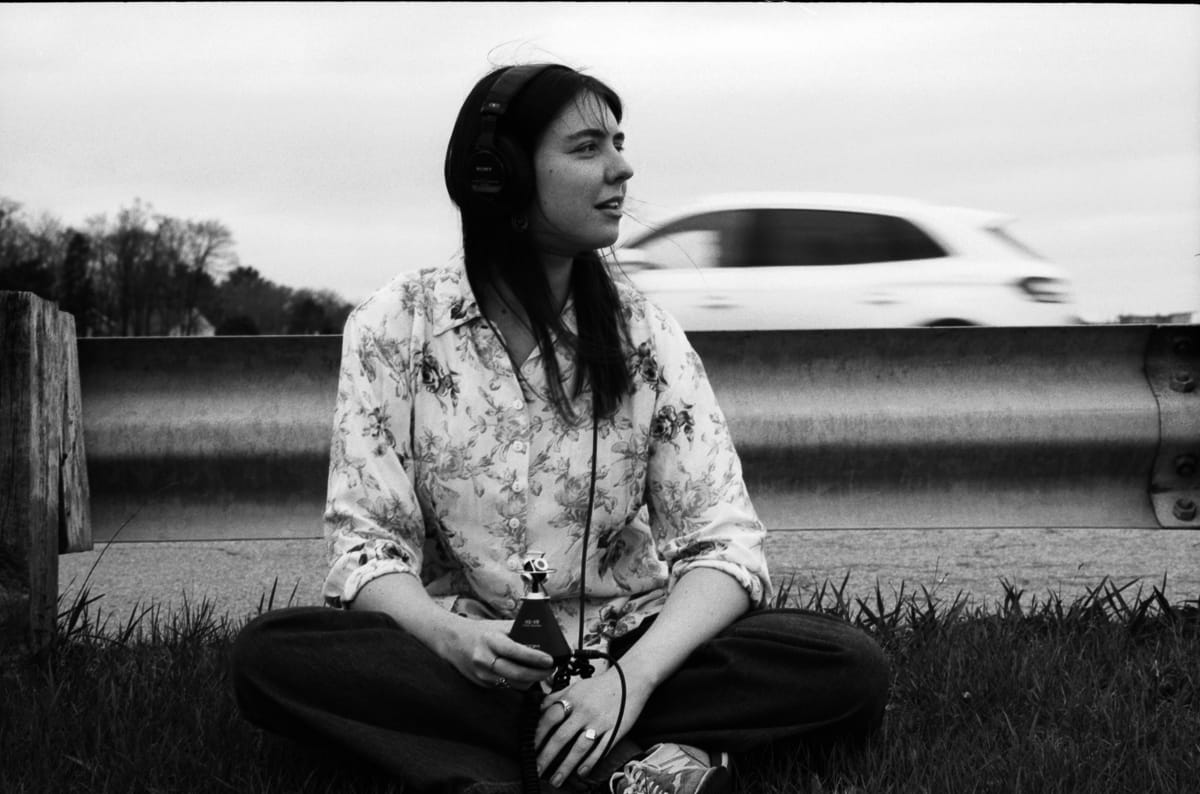
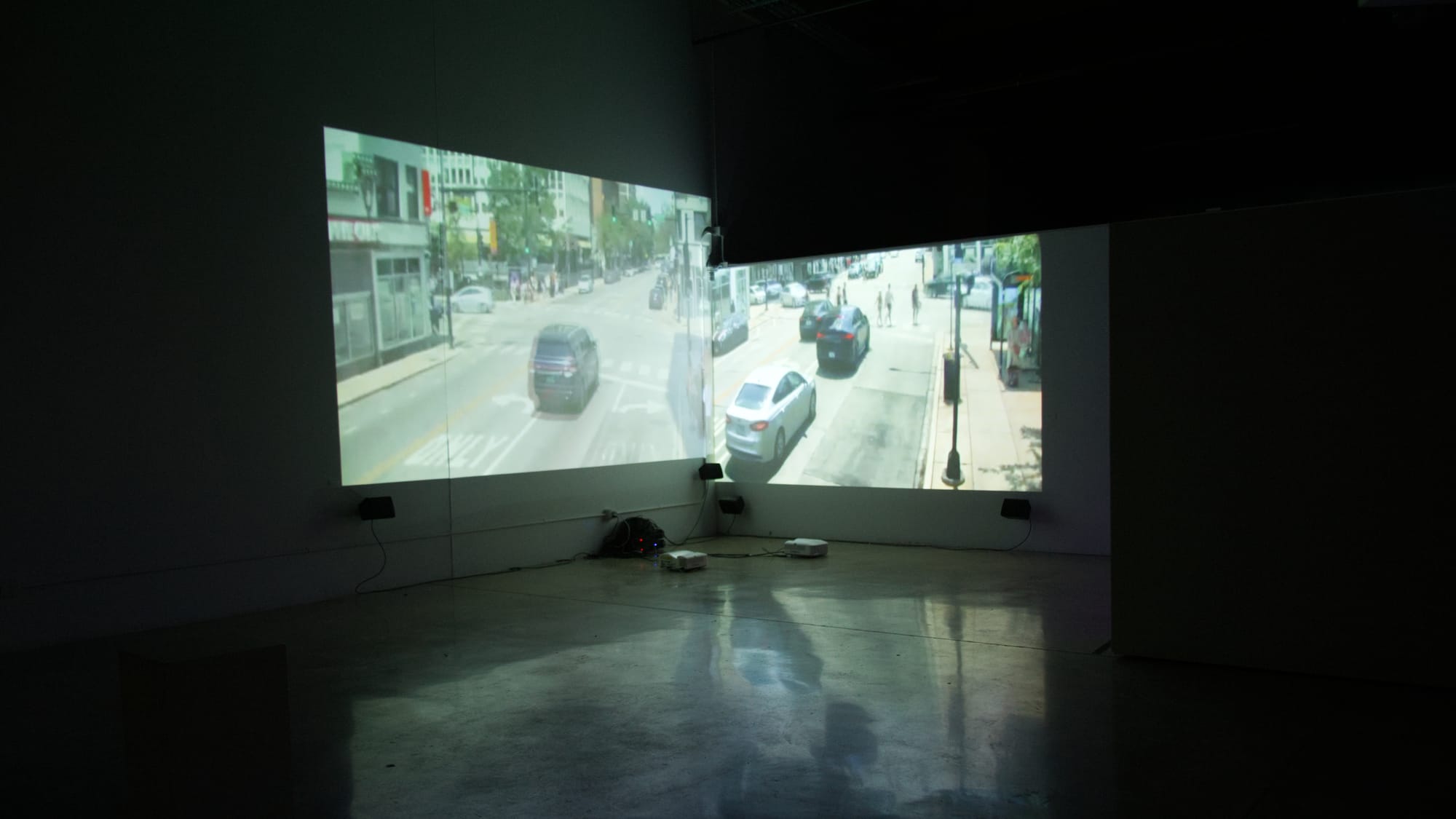
The project, which earned Anne E. Stoner the 2026 Russell and Paula Panczenko MFA Prize, combines video captured from public surveillance systems with sound generated from both data and human voices.
The result is an immersive environment that draws on footage of protests and law enforcement activity in Midwestern cities, translating movement into sound while foregrounding the bodily consequences of those events.
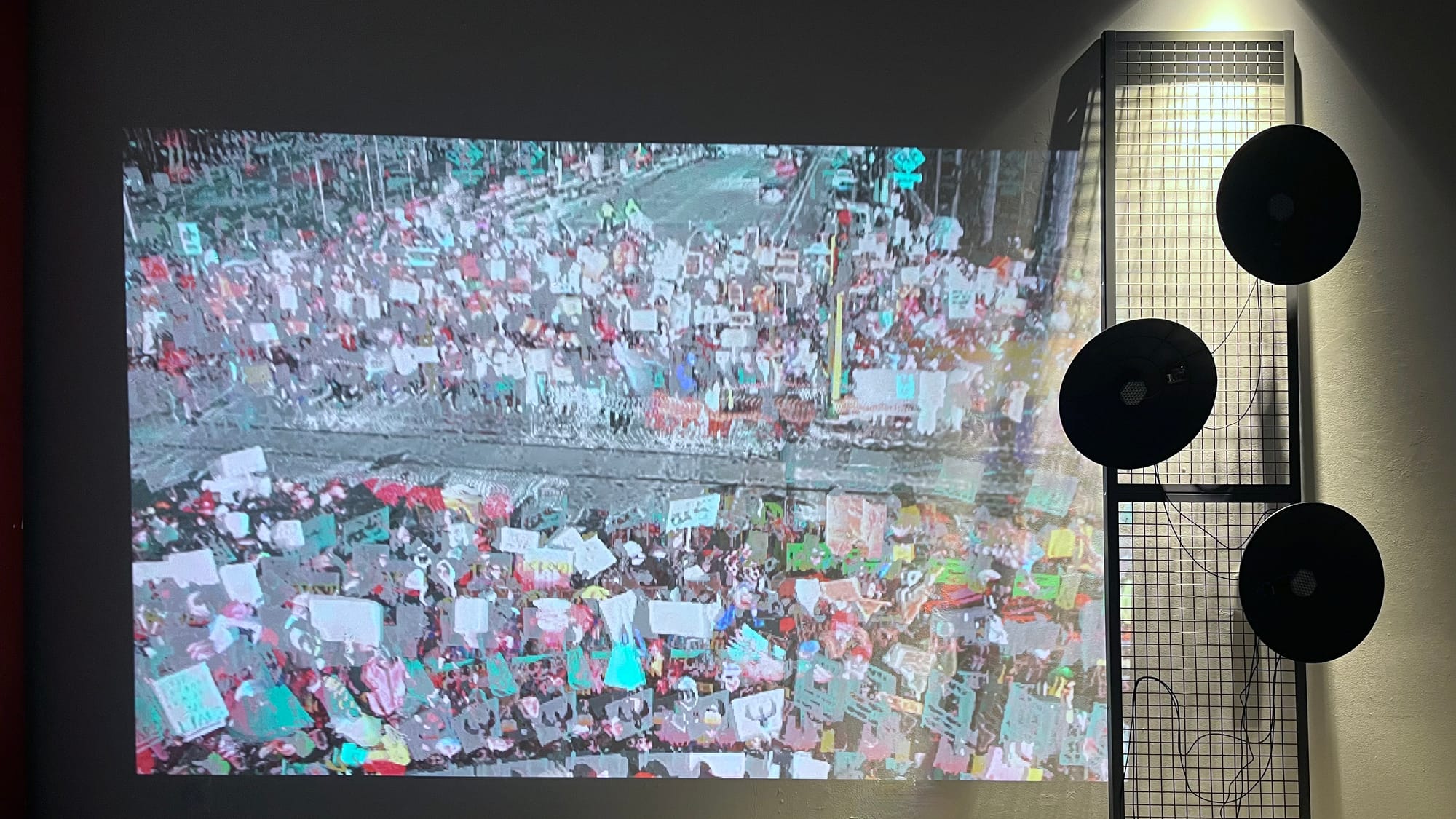
Stoner said there are two main ways in which the audio sounds. One of them is very data-driven in which she tracks changes in pixels in surveillance footage and maps that movement to sound. That audio is layered with what is effectively a software instrument—a digital synthesizer—she created using recorded hums of people injured in protests.
“I’m a big coder, so I built a system that breaks down the pixel movement of the CCTV videos,” she said. “It’s a very binary system, it’s very much like, ‘Is this pixel changing color, which signifies movement?’ If yes, it adds to the number of pixels moving.”
She said that audio will sound like a computer game, but with its tones randomized by how people are moving. Neither of the audio types will sound like tonal music, by design. Still, she hopes that the two distinct and opposite qualities of sound, one which is very digital and one which is very human-driven, will offset one another.
“Altogether, I think the emotional experience will likely be quite unsettling, maybe even annoying, but in a way that I hope is jarring and uncomfortable for listeners and viewers,” she said.
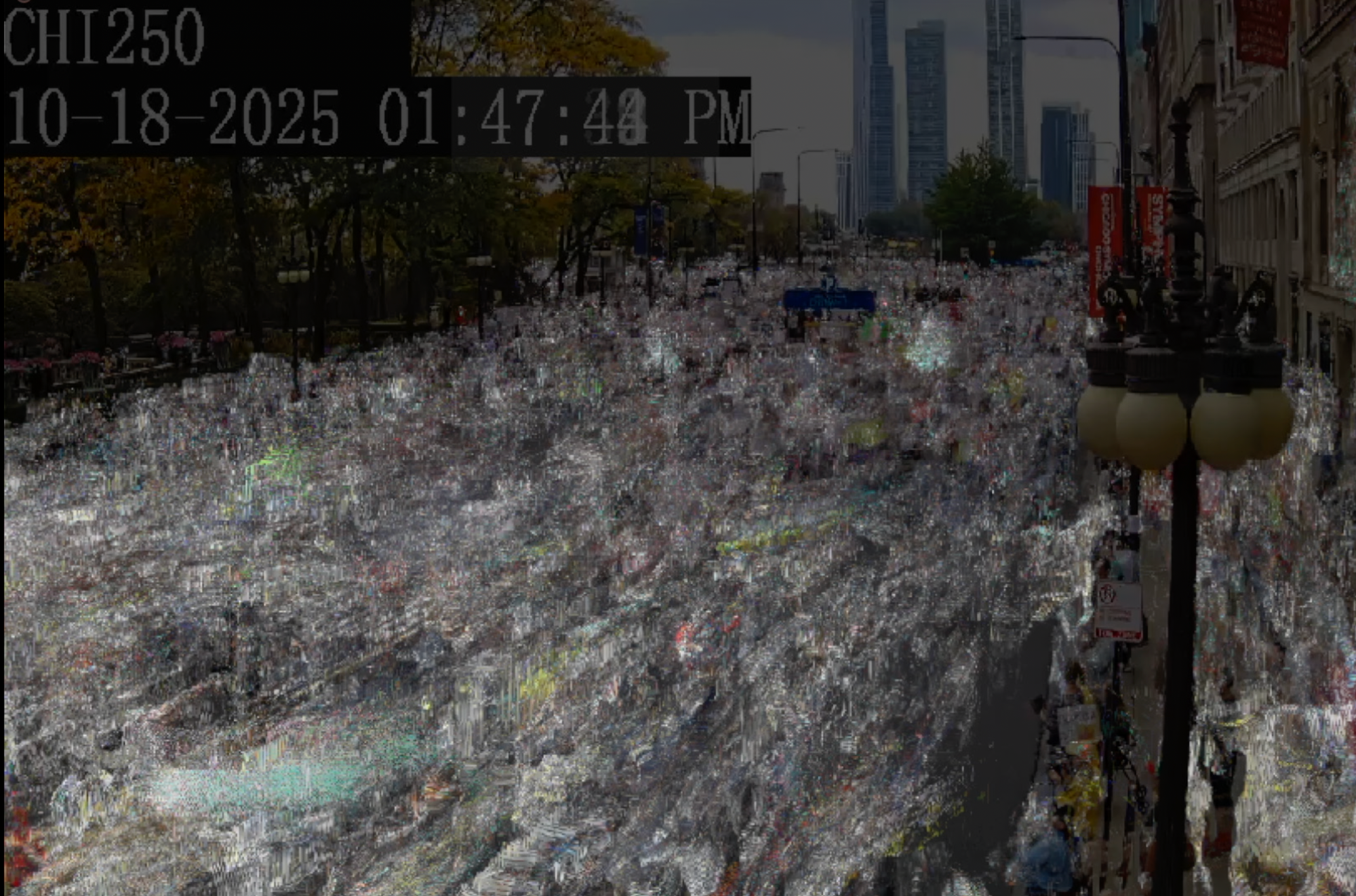
The footage used in the exhibition was obtained through a mix of public records requests and publicly available sources. Stoner said she relied heavily on Freedom of Information Act processes to access municipal surveillance systems, particularly traffic cameras.
“A lot of the footage from the show is actually red-light traffic cameras, and those are the easiest ones to access,” she said. “A lot of people refute their red-light traffic camera violations, so it’s really easy to access that traffic feed.”
The exhibition focuses primarily on protests in Chicago and Minneapolis, cities that have seen significant demonstrations in recent years, particularly following the 2020 protests after the murder of George Floyd, as well as more recent demonstrations tied to U.S. Immigration and Customs Enforcement activity.
Stoner said she began working on the project almost a year ago, when she first learned that surveillance footage could be obtained through records requests.
Her first request was for footage from the street corner when Stoner was hit by a car in downtown Chicago when she was in high school. She said that experience shaped her thinking about how bodies interact with urban environments.
“So, the entire show, to me, is about injury, disablement, and death in the streetscape,” she said. “That has been at the core of my practice for a really long time.”
For the hums used in the audio, Stoner said she sourced them by reaching out to people who were injured in protests on Facebook and through alliance groups. “One of the folks was injured in protest in Indiana and Chicago, so actually twice,” she said.
For this project, Stoner said she sought footage related to federal immigration enforcement activity, describing the difficult part of her process as “tediously watching” trackers like iceout.org and identifying which cameras may have captured incidents to request footage.
“In the end, the show is going to include some of that CCTV footage that I gathered through news outlets, as opposed to my own requests, just because it is quite difficult to be at the right place at the right time to get the right footage,” she said.
While some of that material was sourced from news outlets rather than public records requests, Stoner said the protest footage central to the installation came directly from her own efforts.
The exhibition also engages with recent federal policy, particularly a July 2025 executive order by President Trump titled “Ending Crime and Disorder on America’s Streets.” According to the Chazen Museum, the work draws connections between contemporary policing practices and historical laws that targeted marginalized populations.
Stoner said the order served as a catalyst for the project, prompting her to consider parallels with so-called “ugly laws” that once criminalized the presence of people deemed undesirable in public spaces.
“It immediately reminded me of the ugly laws in the United States,” she said. “If you were disabled in some visual way, you literally were not welcome in the streetscape, and you would be arrested for simply being on the street.”
She sees a similar logic operating in contemporary systems, particularly when combined with advances in surveillance technology.
“This is also the reason why I’ve chosen to include people who were injured in protest,” she said. “It’s this cyclical nature to me where, if protesters or people who are speaking out are injured, then they are no longer welcome in the streetscape.”
The installation’s physical design reinforces those themes. The exhibition includes four projection screens displaying manipulated video footage, as well as a 10-foot central steel structure outfitted with directional speakers. The tower, which evokes but does not replicate surveillance infrastructure, serves both functional and symbolic purposes.
The speakers themselves are highly directional, allowing sound to be experienced differently depending on a viewer’s position within the space.
“If you point them directly at a person’s ears, they can hear them,” Stoner said. “But if it’s moved away, you don’t hear it as much, if at all.”
That spatial variability is intended to create individualized encounters with the work, echoing the uneven ways surveillance and policing are experienced in real life.
Although the project draws heavily on journalistic methods—public records requests, sourcing from affected individuals—Stoner said the final presentation deliberately departs from traditional reporting.
“A lot of the accessing of the material is done through quite journalistic lenses,” she said. “But then in the end, the product isn’t just speech and video, it’s moshed video with data sonification and hums instead of speech.”
The artistic framing, she said, allows viewers to engage with the material on a different level.
“I’m making a lot of statements and alterations, artistically, to all of the footages,” she said. “Placing it into a context to allow the viewer to think more critically about some of the ramifications of allowing this to happen within the United States.”
The exhibition is being presented in the Midwest, a decision Stoner said reflects both the geographic focus of the footage and her own background.
“I’m from outside Chicago. I’ve lived in the Midwest most of my life,” she said. “I think that it will have particular resonance in the Midwest.”
At the same time, she views the issues explored in the work as broadly applicable.
“I also think that this is a problem that’s affecting us nationally and internationally,” she said. “I think there will be resonance nationally and internationally.”
Stories like this take time, documents and a commitment to public transparency. Please support independent arts journalism by subscribing to Urgent Matter and supporting our work directly.