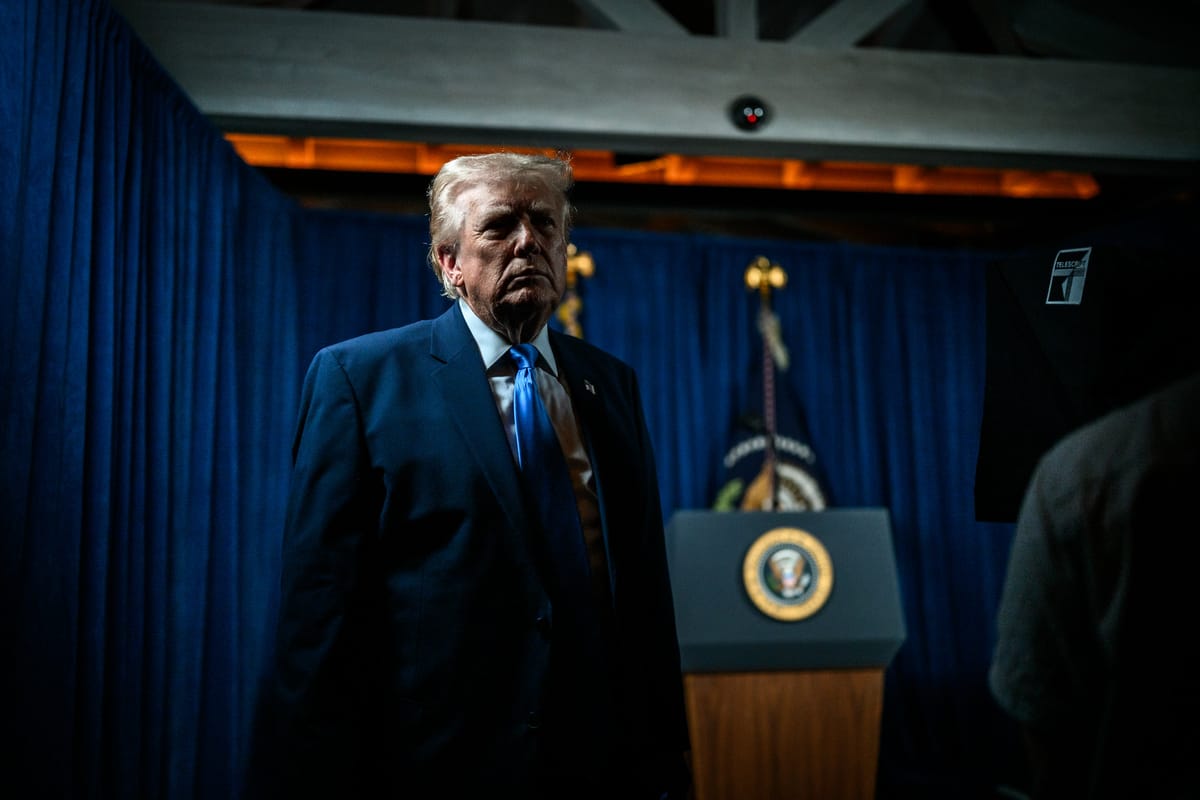
The U.S. Supreme Court has deferred acting on whether President Donald Trump could legally remove the head of the U.S. Copyright Office, leaving the agency in a state of uncertainty with major implications for artists and copyright policy in the age of artificial intelligence.

The Trump administration had petitioned the justices last month to allow him to fire Shira Perlmutter, arguing that president had the legal authority to do so. Specifically, in the petition, Solicitor General John Sauer asked the Supreme Court to stay an injunction from a lower appeals court in September that ordered Trump to reinstate Perlmutter.

Perlmutter, earlier this year, filed a lawsuit against the Trump administration over her May termination, alleging that only the Librarian of Congress has that right. The Copyright Office is part of the Library of Congress, which sits within the legislative branch of government.

But two days before Trump fired Perlmutter on May 10, he had fired Carla Hayden—the Librarian of Congress—on May 8. He then appointed Deputy U.S. Attorney General Todd Blanche as the Acting Librarian of Congress, a move that has been widely disputed. Perlmutter’s lawsuit asserts that Trump lacked the legal authority both to fire Hayden and to appoint Blanche to a legislative-branch position.

In her lawsuit, Perlmutter said she was fired one day after her office published a report questioning whether tech companies can legally use copyrighted material to train A.I. systems. The administration has not publicly tied her firing to the report.

In a brief order Wednesday, the Supreme Court said it would delay any decision until it resolves two related cases: Trump v. Slaughter, involving the president’s firing of Federal Trade Commissioner Rebecca Kelly Slaughter, and Trump v. Cook, concerning his attempt to remove Federal Reserve Governor Lisa Cook.

Both of those cases ask whether long-standing “for-cause” protections for independent regulators violate the U.S. Constitution by limiting the president’s control over executive-branch personnel.

While the Slaughter and Cook cases center on the president’s power to remove leaders of independent regulatory agencies, the Perlmutter dispute presents a different question because of the Copyright Office’s status as an agency within the legislative branch, creating an unusual cross-branch clash over removal authority.

Justice Clarence Thomas said he would not have waited for the other cases to resolve and would have allowed Trump to fire Perlmutter.

The decision to defer leaves Perlmutter legally reinstated as Register of Copyrights, but the day-to-day operations of the Library of Congress are being overseen by Blanche as the acting Librarian of Congress.

That dynamic allows the administration to steer the Copyright Office’s posture toward more permissive A.I. policies even while Perlmutter nominally holds the title.

Stories like this take time, documents and a commitment to public transparency. Please support independent arts journalism by subscribing to Urgent Matter and supporting our work directly.

Share this article
The link has been copied!