Stay-at-home dads find ways to keep art careers going
Licensed work, freelance commissions and contract projects allow some fathers to remain artists while handling full-time caregiving.

Licensed work, freelance commissions and contract projects allow some fathers to remain artists while handling full-time caregiving.
For many men, staying home with their children has meant stepping away from professional work, often in a culture that still treats caregiving as a temporary or secondary role for fathers.
But some stay-at-home dads are finding ways to keep art careers alive, adapting their practices to licensed, freelance and commission-based work that fits around full-time caregiving.
When people in a private stay-at-home dad Facebook group started comparing “side hustles,” many referenced being an artist.
For stay-at-home fathers, the decision to pause or abandon professional work often carries a different social weight than it does for mothers, reflecting persistent expectations around masculinity, breadwinning and paid labor.
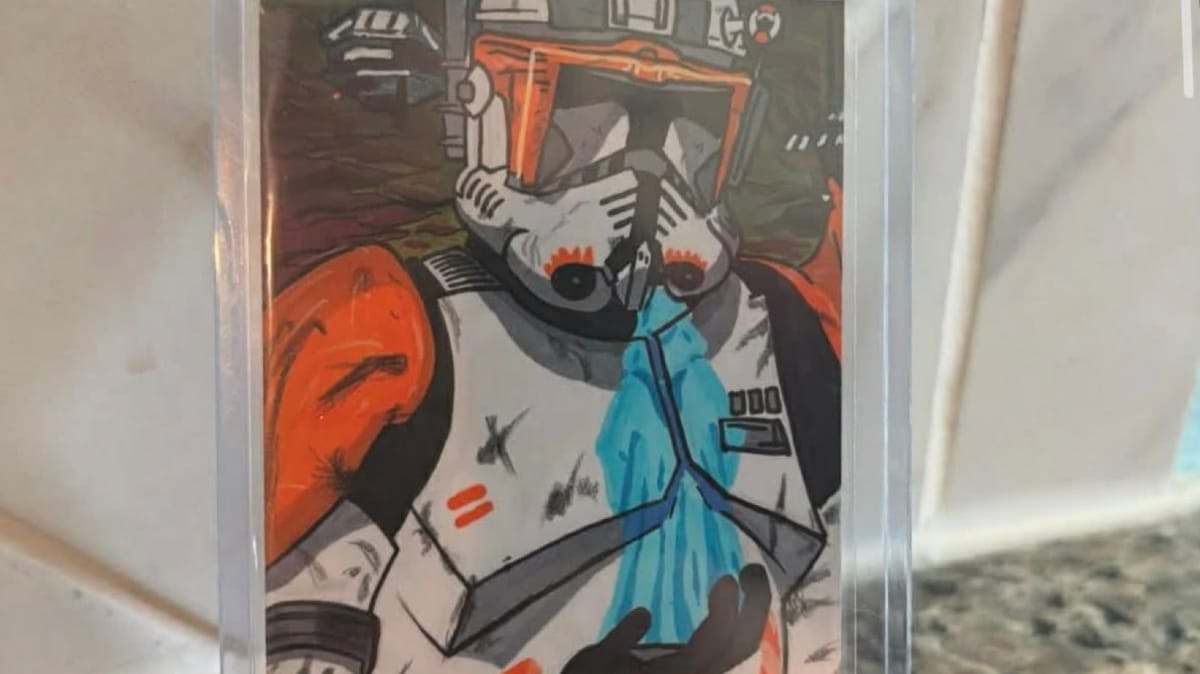
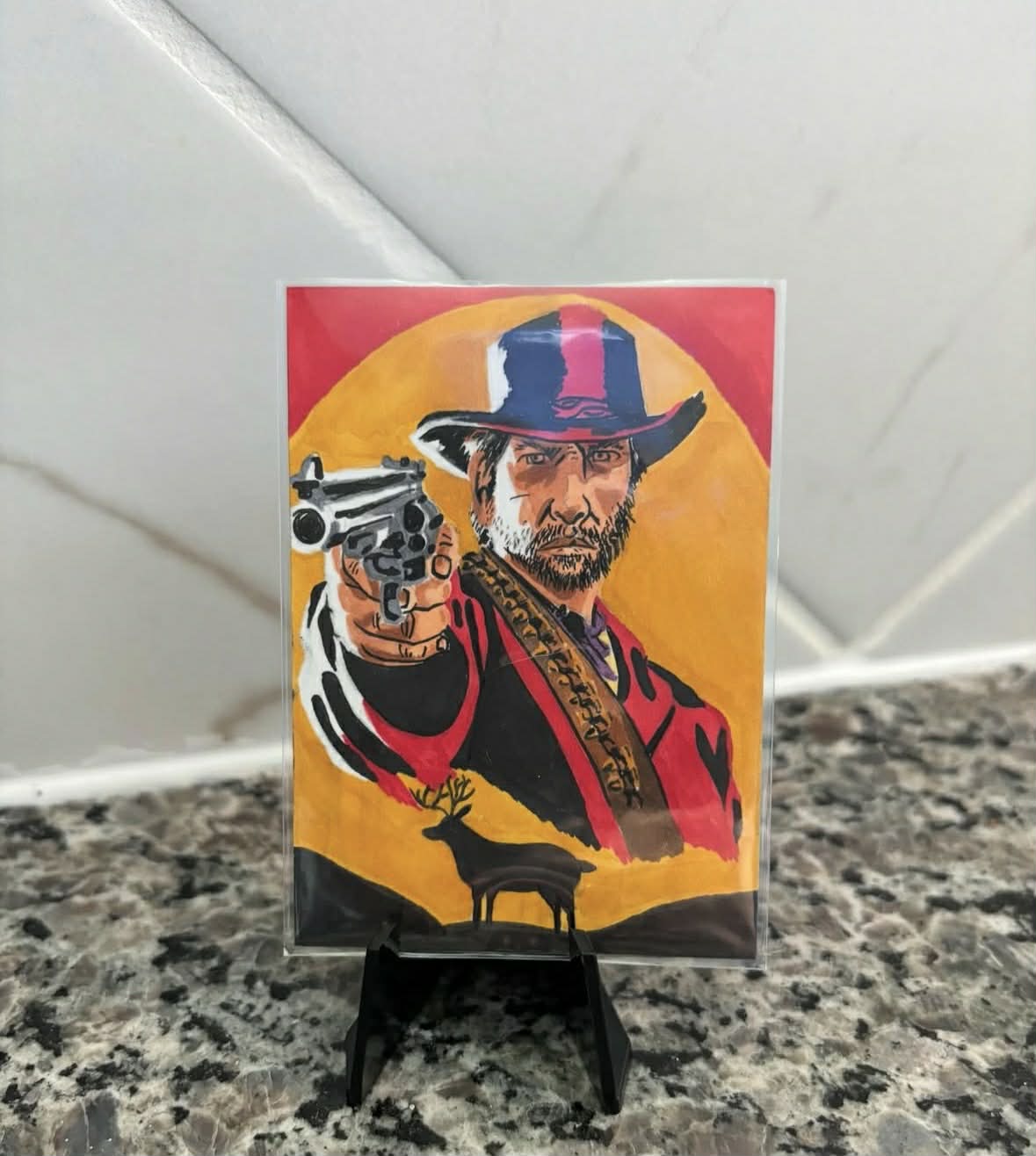
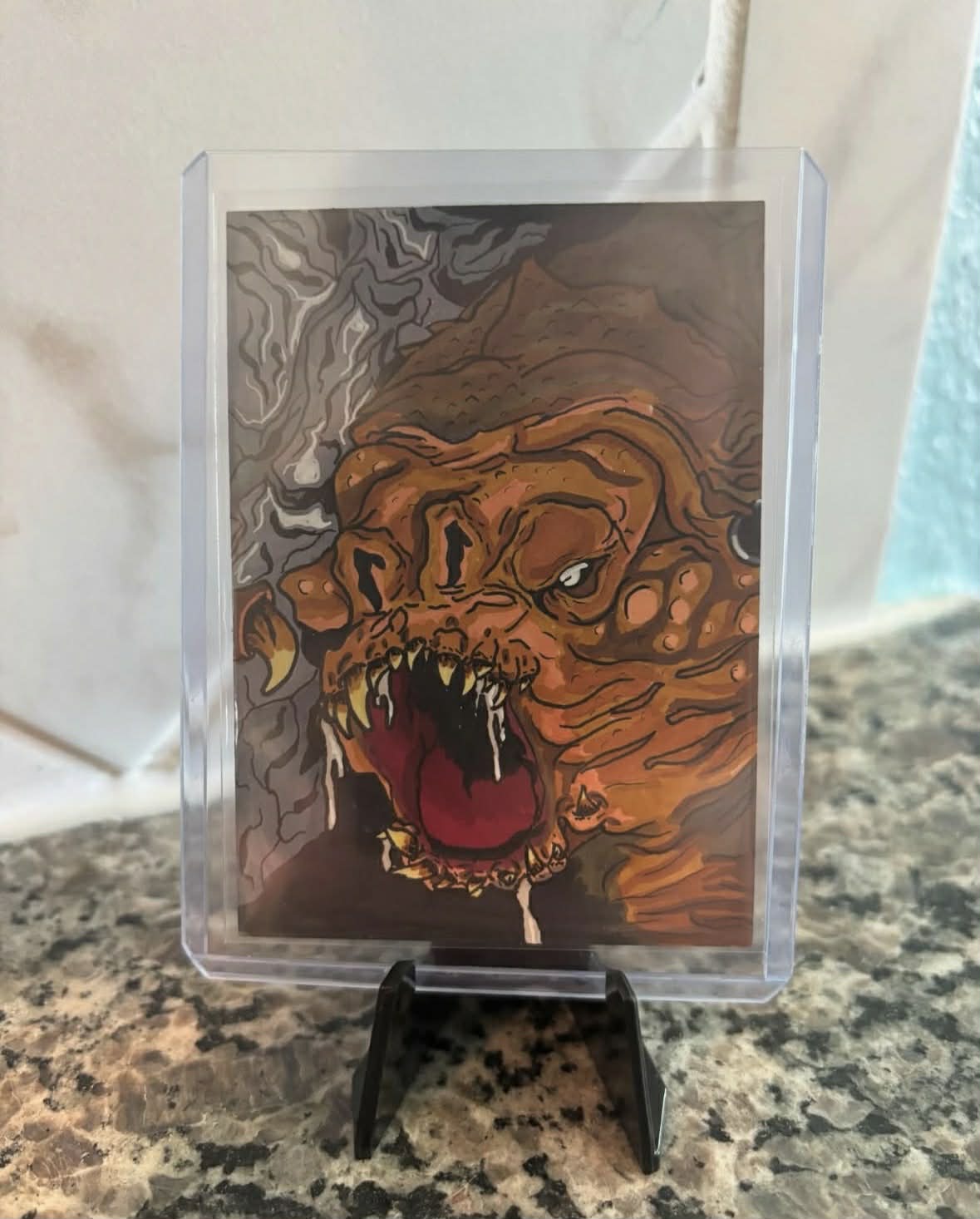
Alexander Damian Govea is a sketch card artist for Topps, a major U.S. manufacturer of sports and non-sports trading cards. His work entails taking blank card stock cards and drawing or sketching characters and subjects on them based on the license and product.
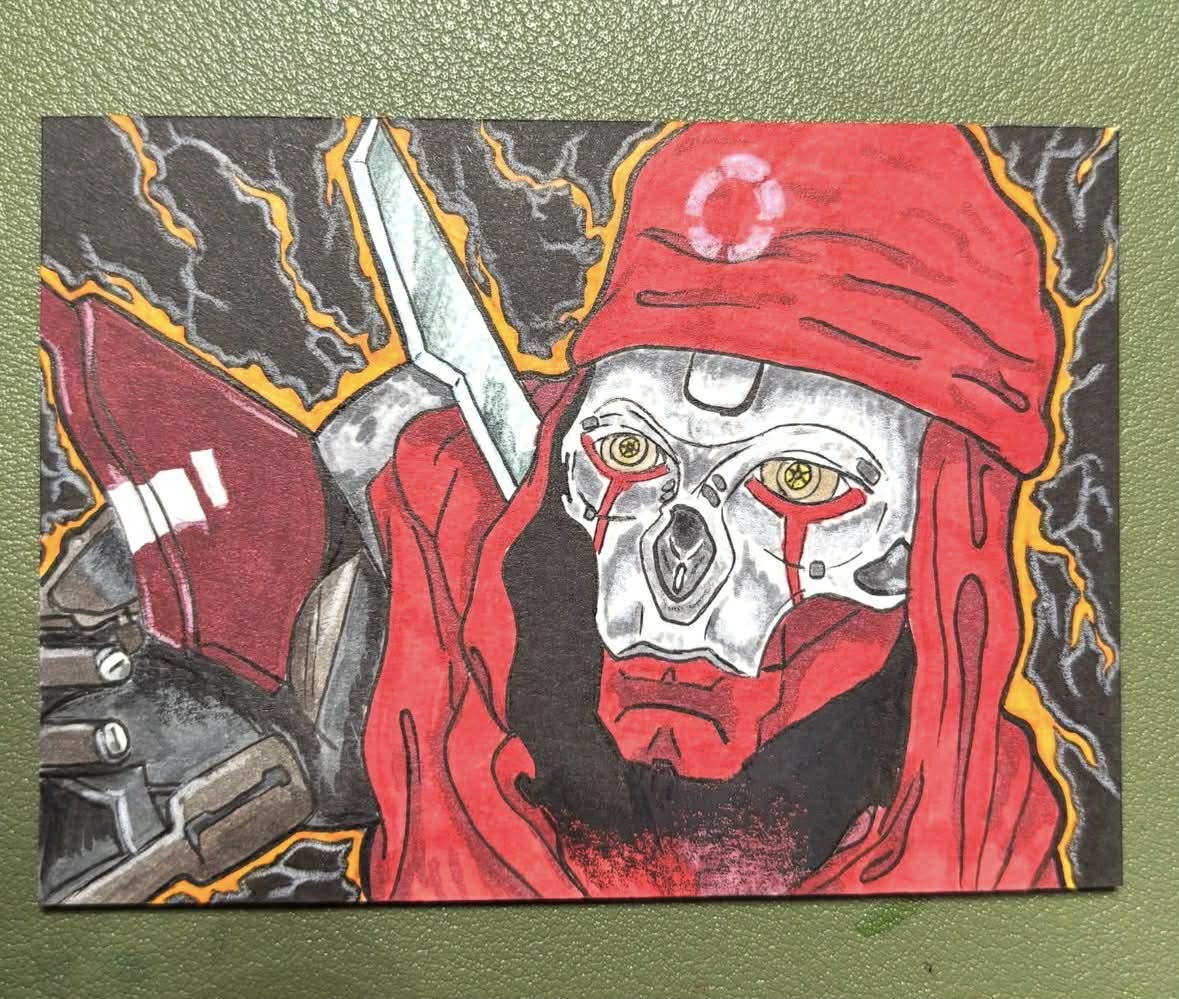
Govea said his son started preschool last fall, so he had two uninterrupted days a week to work on sketches. Before that, he would try to fit in sketching time while his son played or napped. He said he is currently only licensed for Star Wars trading cards but hopes to break into other franchises or subjects soon.
“To get work done, I just found any time I could,” Govea said. “I always wanted to find a way to make money doing art but knew it’s not always easy to do that. Staying home allowed me to reignite my passion for hobbies, including video games, movies and, of course, drawing.”
Govea said his work is project-based and that he is “lucky enough” to not have to rely on his work to pay all the bills.
“It really is a passion that I am able to put a few extra dollars in the bank with,” he said, adding that he was able to develop his relationship with Topps after getting back into his hobby of card collecting a couple of years ago.
“That led me to the current market for Star Wars cards and eventually to discovering what sketch cards even were. I actually began to befriend some other licensed artists as well as doing some independent sketch cards. This allowed me to have a decent sample of work to submit to Topps.”
Others in the Facebook group described similar trajectories. Urgent Matter is not publishing their identities because of the private nature of the group.
“I got into 3D printing last year and while I love it as a hobby, everyone and their sister wants me to print stuff for them, so it’s becoming a little bit of a side hustle,” one dad posted.
Several said they do freelance design work, fix and resell antiques, or are in art-adjacent creative fields like wedding photography.
“I'm in the process of starting a side hustle. Before I became a SAHD, I was a designer, and I did odd jobs on the side, sewing costumes and toys and leatherwork and stuff,” another dad said.
“I'm slowly working towards starting a YouTube channel, doing some of those things again, but time has been tough. My kid starts kindergarten in the fall, so I'm hoping I have more time by then.”
And some dads in the group have previously indicated that, while they graduated from art school, they no longer consider themselves artists.
“Spent four years also in art school,” one dad said in a similar discussion in the group in 2022. “I’m an engineer now, though I do love my art.”
The number of stay-at-home fathers has grown steadily over the past several decades.
Data published by the Pew Research Center in 2023 show that stay-at-home dads now account for 18% of stay-at-home parents, up from 11% in 1989, with researchers noting that the share rises significantly when part-time and nonstandard work is included.
And while organizations like Artists and Mothers offer grants for stay-at-home moms with art practices, there appear to be no such grants specific for dads.
Generally, Govea said that, unfortunately, the state of the economy “has not been kind to artists trying to find work that makes meaningful money.”
“However, I do feel that if an artist with a family is lucky to have the free time, they should definitely pursue their creativity. Only good can come from putting more human-made art into the world,” he said.
Govea added that, beyond his officially licensed sketches for Topps, he does freelance commissions for collectors and has had a consistent professional relationship with a small, independent company called Collectabees.
“The man who runs it, Mike Beeson, is one of the reasons I was able to have some experience doing sketch cards before becoming involved with Topps,” he said.
For artists working under license or contract, the challenge is not just finding work, but having that work recognized as skilled, time-intensive labor.
“There have been times I mention that I do art and people don’t realize that it takes more than just scraping together some drawings. There are guidelines, rules and schedules that go into it,” Govea said.
“Especially in the growing world of generative artificial intelligence, being a real artist becomes harder and harder to have people understand. It takes time to produce the quality that is expected of me from Topps, and not everyone gets that.”
Stay-at-home artists often face questions of legitimacy that come from multiple directions, first from a culture that undervalues caregiving labor, and now from technologies that blur public understanding of how art is made.
Last month, San Diego Comic-Con, which allowed art made with artificial intelligence at its separate art show event in previous years, quietly reversed course after backlash from artists. In both the 2024 and 2025 editions, organizers said artwork made with A.I. could be placed in the art show only if labeled as “Not-For-Sale.”
Now, the convention’s website has been updated with a new policy that bans all artwork made with A.I. from the art show, a decision that came after artists including Karla Ortiz expressed anger at the policy ahead of the 2026 Comic-Con Art Show.
“The unfortunate truth is that, at any time, the company I do art for could decide to just take the easy route and axe the entire sketch artist program altogether and consumers of the trading card world wouldn’t know the difference. If I could have one thing be understood is that you can’t put a price on the soul real artists put into their work,” Govea said.
“With being a parent, I have been lucky to be supported in my endeavors but I’m sure there are those who feel ‘art isn’t worth the time, there are more important things as a parent.’ But becoming a parent doesn’t mean you have to stop being who you are. I’ll never stop being an artist and creating, no matter how many kids I have or how little free time.”
Correction: An earlier version of this article incorrectly spelled Alexander Damian Govea's last name. Govea is the proper spelling.
Disclosure: The author is a stay-at-home father and participates in the private Facebook group referenced in this article. The author did not quote himself, and other members were granted anonymity.