South Africa’s Culture Ministry denies censoring Venice Biennale pavilion
The reversal has stirred diplomatic questions abroad while exposing fractures inside South Africa’s governing coalition.

The reversal has stirred diplomatic questions abroad while exposing fractures inside South Africa’s governing coalition.

Gayton McKenzie, South Africa’s Minister of Sport, Arts and Culture, has denied censoring artist Gabrielle Goliath’s proposed artwork to represent the country in its Venice Biennale pavilion after he overturned the submission earlier this month. Goliath’s proposed artworks had included a performance grieving victims of Israel’s war in Gaza.
McKenzie, in a statement released Saturday, criticized what he called “misinformation, misdirection and insult” in public statements and media reports surrounding his decision to cancel South Africa’s working agreement with Art Periodic, a nonprofit it had partnered with to administer, produce and fundraise for the 2026 pavilion. Goliath’s selection was chosen by an independent panel of curators and historians.
The minister, who previously called the arts a form of “soft power” for nations, said he was alerted that a foreign country had allegedly funded South Africa’s exhibition. Israeli media later identified the country as Qatar. Urgent Matter has not yet confirmed the source of the alert.
McKenzie said the alert was “raised as a concern” with Art Periodic. He said the nonprofit clarified that the foreign country had actually agreed to purchase the pavilion’s artworks at the conclusion of the Biennale.
“This nevertheless still raised alarm, as it was being alleged that South Africa’s platform was being used as a proxy by a foreign power to endorse a geopolitical message about the actions of Israel in Gaza,” McKenzie said.
“This foreign country has its own resources, so why not rent its own space and fund its own message to convey its feelings about Israel and Gaza?”
Urgent Matter has reached out to various South African and Qatari officials for more information and additional comment but did not hear back by press time.
“South Africa’s position on Israel and Gaza is clear. Maybe this country’s position should also be stated clearly – by them, and not indirectly through another country’s platforms,” McKenzie said.
He said the determination to cancel the Art Periodic partnership and retake control of South Africa’s pavilion by the ministry was made “in the interests of safeguarding our sovereignty and reputation on the international stage.”
Latitudes Online, a major South African art platform that acted as the early-stage strategic and media partner for the 2026 South African Pavilion, released a statement expressing its “disappointment” in the minister’s decision. It said that with the termination of the Art Periodic partnership, it no longer holds any role in relation to the pavilion.
“The intention behind the project was to explore a transparent, sector-led public–private model for international cultural representation. It is deeply regrettable that circumstances beyond the control of many involved have brought this initiative to an end,” Latitudes Online said in its statement.
It clarified that it had no involvement in curatorial decision-making, or the evaluation or selection of Goliath and her project.
Last week, Art Periodic released its own brief statement announcing the end of the partnership.
Beyond concerns of how the decision impacts international relations between South Africa, Israel and Qatar, it has also led to internal disputes between McKenzie and his own government’s coalition partners.
 Adam Schrader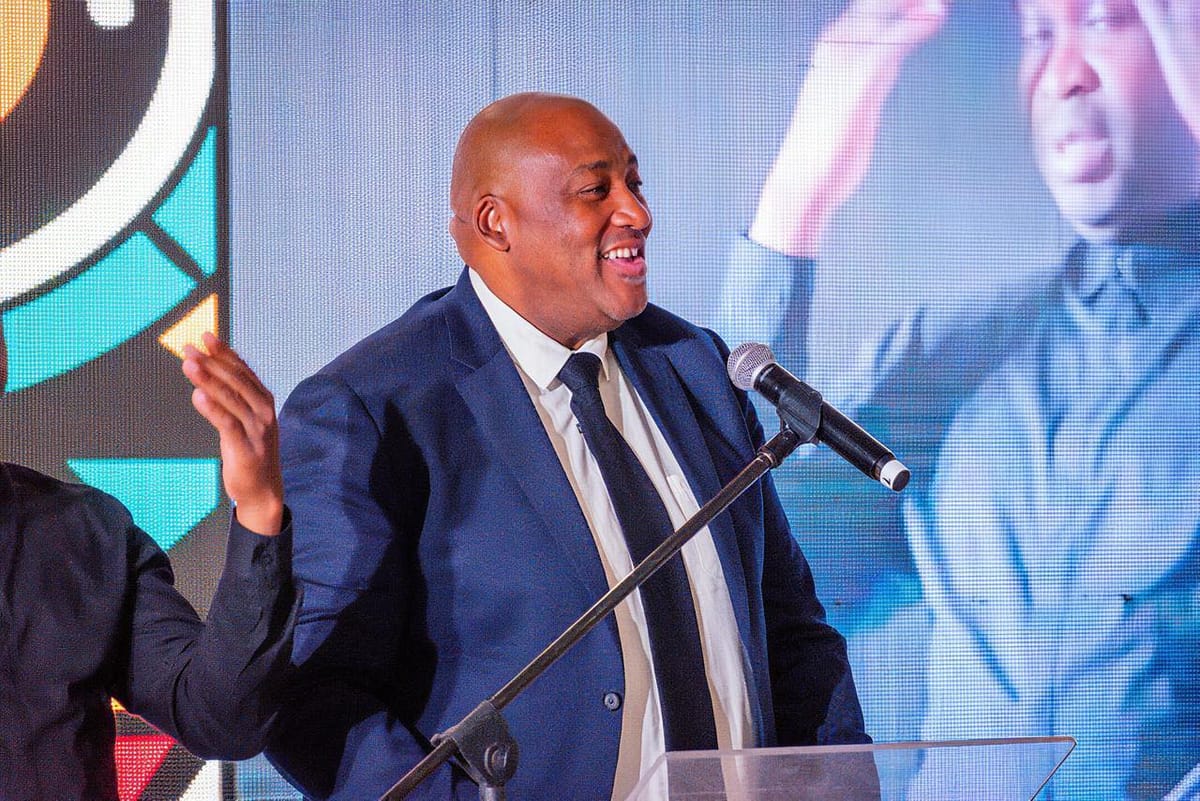
The Democratic Alliance, the official opposition party in South Africa and the second-largest political party in the country, has taken a hardline stance against McKenzie’s cancellation of Goliath’s work despite technically being partners with his party in the current national government.
Leah Potgieter, the party’s spokesperson for sports, arts and culture, penned a statement Sunday declaring that McKenzie should have raised concerns before the process of selecting and commissioning the artwork had been completed.
“Retroactive political interference fatally undermines the credibility of South Africa’s cultural institutions. If ministers are allowed to step in after the fact, no selection process is meaningful and no artistic platform is secure. Today it is artwork. Tomorrow it could be any issue, from any political direction,” Potgieter said.
“The Minister claims this was an exercise of executive discretion. It was not. It was interference, plain and simple. It sets a dangerous precedent in which cultural expression becomes subject to political approval.”
She said the Democratic Alliance would report McKenzie to the Public Protector for “acting beyond his lawful authority and undermining due process.”
“We call on the Minister to reverse this decision immediately and to respect the independence of South Africa’s constitutional values and cultural institutions,” she said.
Stories like this take time, documents and a commitment to public transparency. Please support independent arts journalism by subscribing to Urgent Matter and supporting our work directly.