Some people decorate for who they want to be, not who they are
Caroline Blackman spent three months perfecting her Manhattan apartment. At a housewarming, she discussed the interesection of art and psychology.

Caroline Blackman spent three months perfecting her Manhattan apartment. At a housewarming, she discussed the interesection of art and psychology.
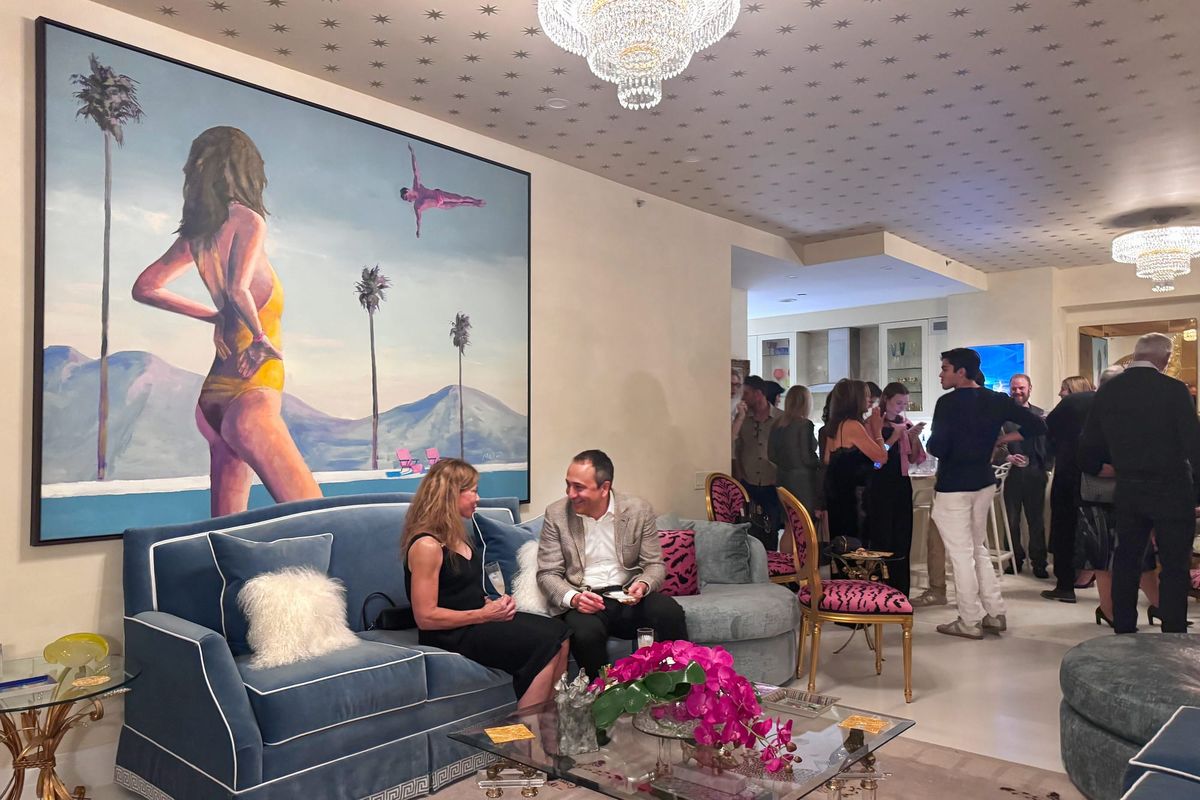
Caroline Blackman, a Manhattan psychiatrist and psychoanalyst, spent three months making a designer-decorated apartment her own before moving in.
"I wanted it done because that's how I operate," Blackman said. "I need everything mostly done, but it's only 90% there. There's still perfection I don't have yet."
New York interior designer Sasha Bikoff had decorated the apartment for its previous owner. Blackman said she had seen many apartments, "but nothing was quite like this."
"So I made an offer on the spot," she said.
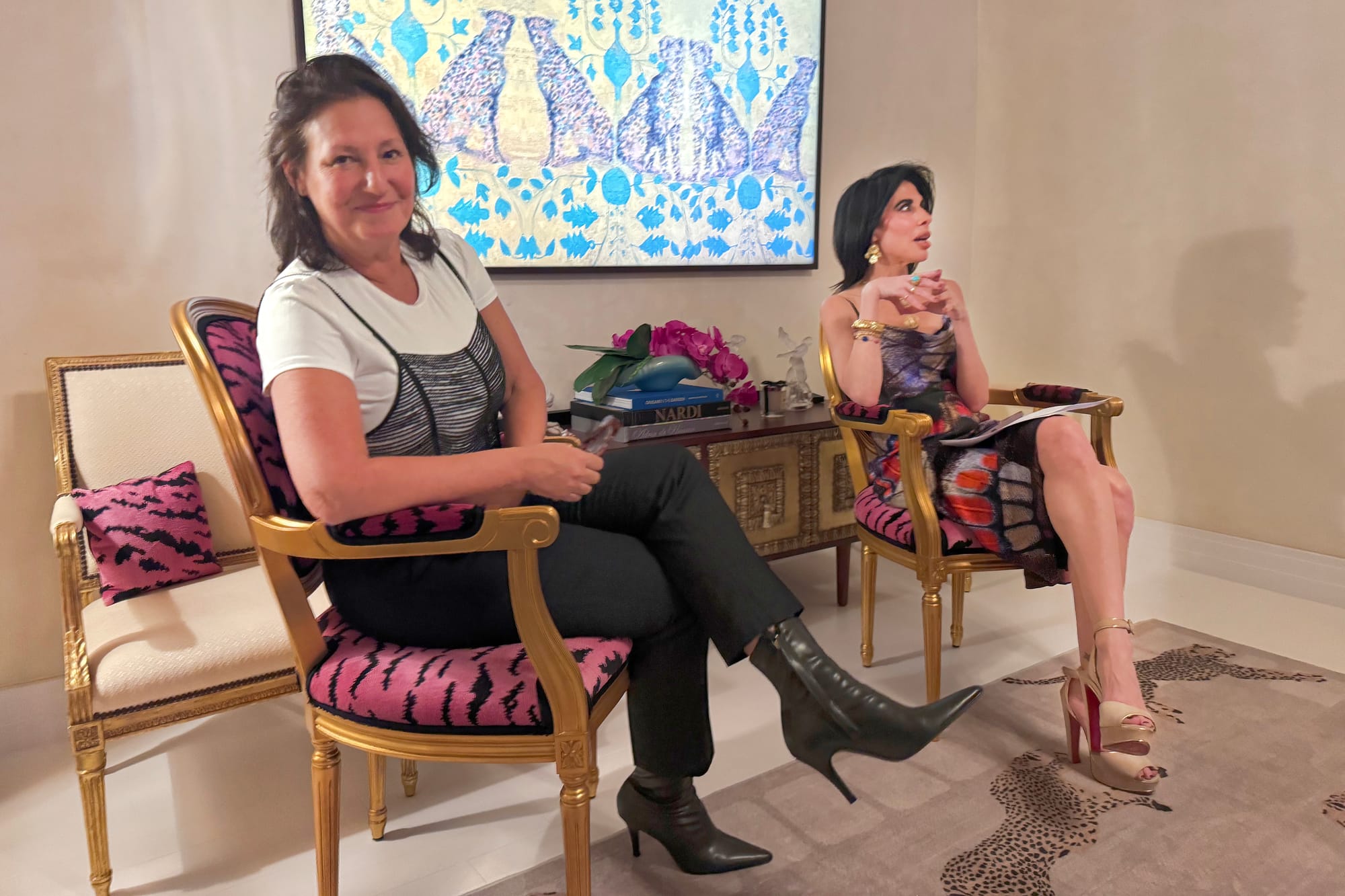
Blackman opened the apartment to guests Friday for a conversation with video artist Nicole Cohen, whose work she collects, on the art and psychology of interior spaces.
One guest was Andrea Jewell, a Manhattan clinical psychologist with over 25 years of experience and postdoctoral training in psychotherapy and psychoanalysis at New York University, according to her website. She said some people decorate for who they want to be rather than who they are.
"Rather than working on what it is and putting their imprint on it, they're trying to make it something other than where they are," Jewell said.
Because Blackman works from home, Urgent Matter is withholding the apartment location.
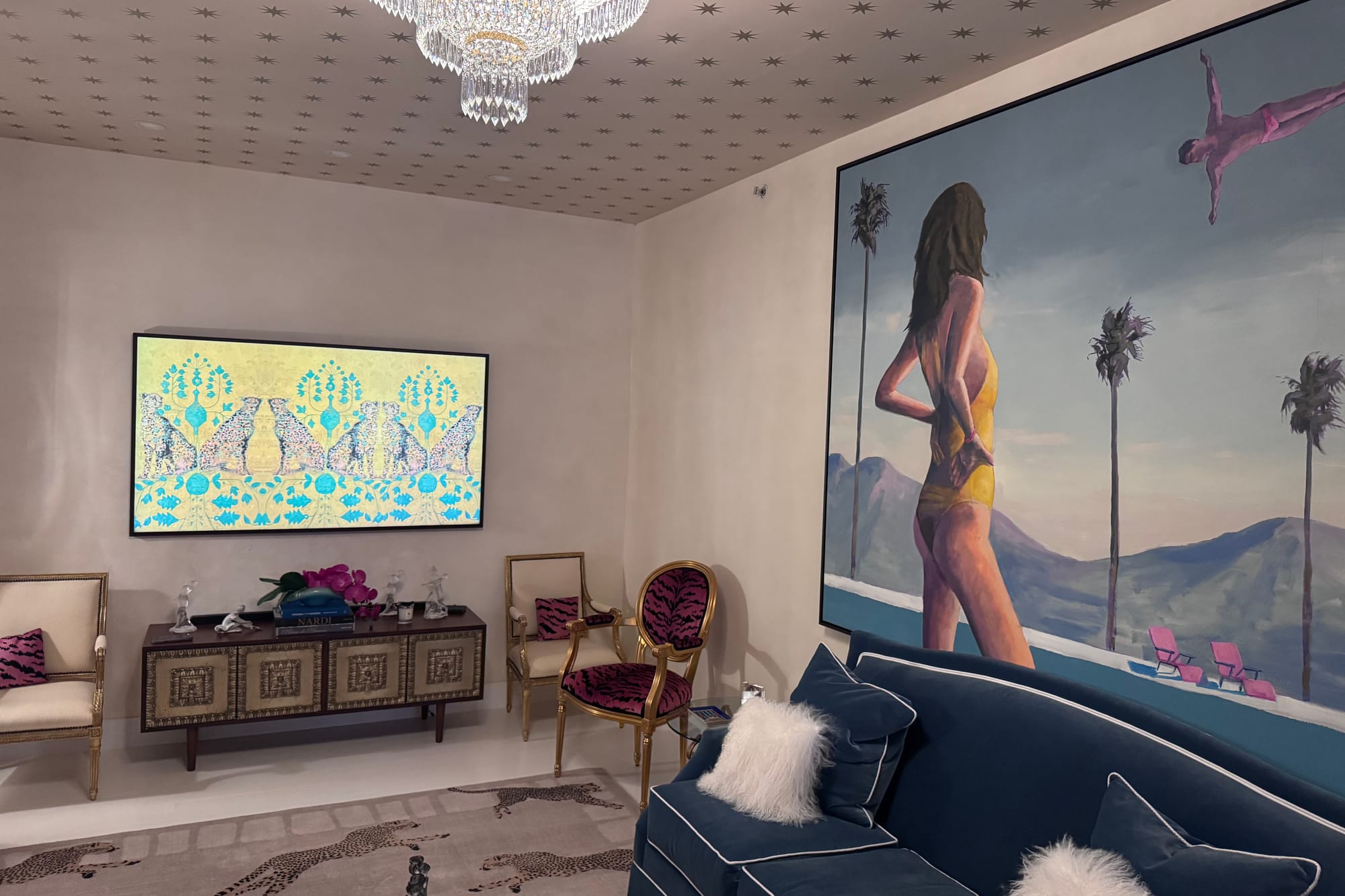
"Working in this space, I don't want to leave. I don't want to stop working," Blackman said. "I love working and connecting with people on such a deep level."
"I'm both a psychoanalyst and a psychiatrist," she said. "I treat people who need therapy, and I also medicate them."
She primarily works with adults, some of whom she sees several times a week and has maintained close relationships with for as long as 12 years.
Blackman tried to buy art from the previous owner and tracked down pieces like those the owner and Bikoff had used. "So I sourced them myself," she said.
In a toast to her guests, Blackman credited Bikoff with the painted walls and floor, the plaster and the layout. She said she "kind of adopted" some of the art from Bikoff, who "dealt with the prior owners."
"I remade and rethought it," Blackman said. "I added some twists to my own art and whatnot."
She called the apartment "almost like a sanctuary in the city."
At antique stores, she found "cool palm mirrors from Paris in the 1940s."
"I was like, well, these open up the space," Blackman said.
She bought one piece on 1stDibs, the online marketplace. She also pointed out ghosts by New York artist Adam Handler, whom she said she commissioned.
Blackman said she initially budgeted less than she spent.
"I budgeted an amount after realizing how much it would cost to furnish and do it my way," she said. She said she had "a sense of what I had to stay on."
Jewell said the people she described "have a hard time aesthetically figuring out what they like because they have, for example, a model in their mind of someone very curated from somebody else."
"It's like if someone didn't have a sense of clothing style but looked at a magazine, saw a stylist who did a certain celebrity, and tried to fit that mold, but it didn't feel comfortable," Jewell said. "It's the same with design."
Asked whether that is a New York problem, Jewell said the city is "like no other place."
"I think there's a certain level of aspiration and competition that is escalated here," she said.
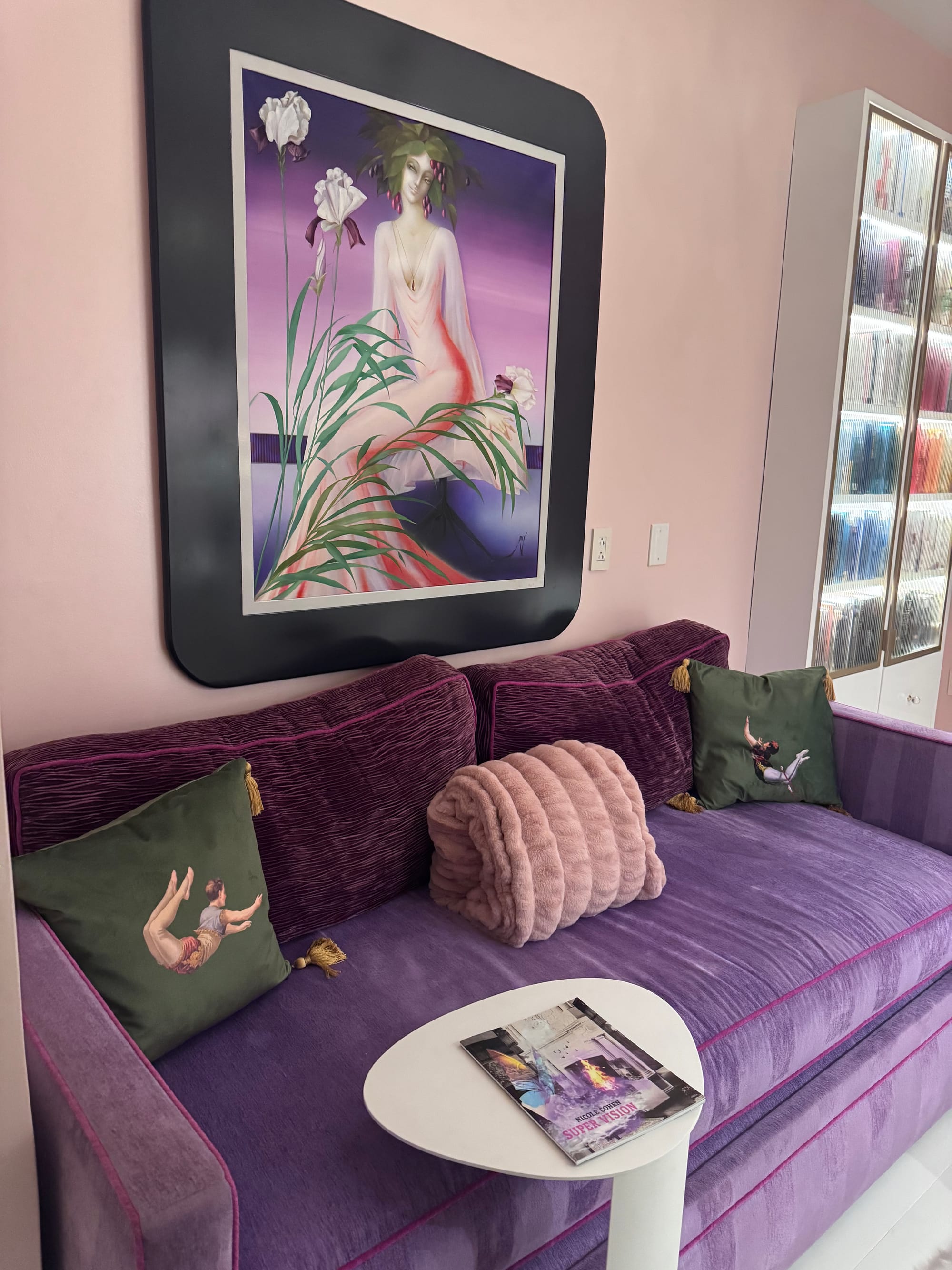
Asked if a home or art collection can say something about its owner, Jewell compared it to looking at "someone else's bookshelf."
A 2002 study in the Journal of Personality and Social Psychology tested that idea. University of Texas at Austin psychologist Samuel Gosling and his colleagues had strangers look through 94 offices and 83 bedrooms, then rate the personalities of the people who used them.
The observers were relatively accurate at judging how open and conscientious the occupants were, the American Psychological Association said when the study was released. They also relied on stereotypes about gender and race, the association said.
"Should you decide to date someone by looking at their bedroom?" Gosling said in the release. "If openness is important to you, sure."
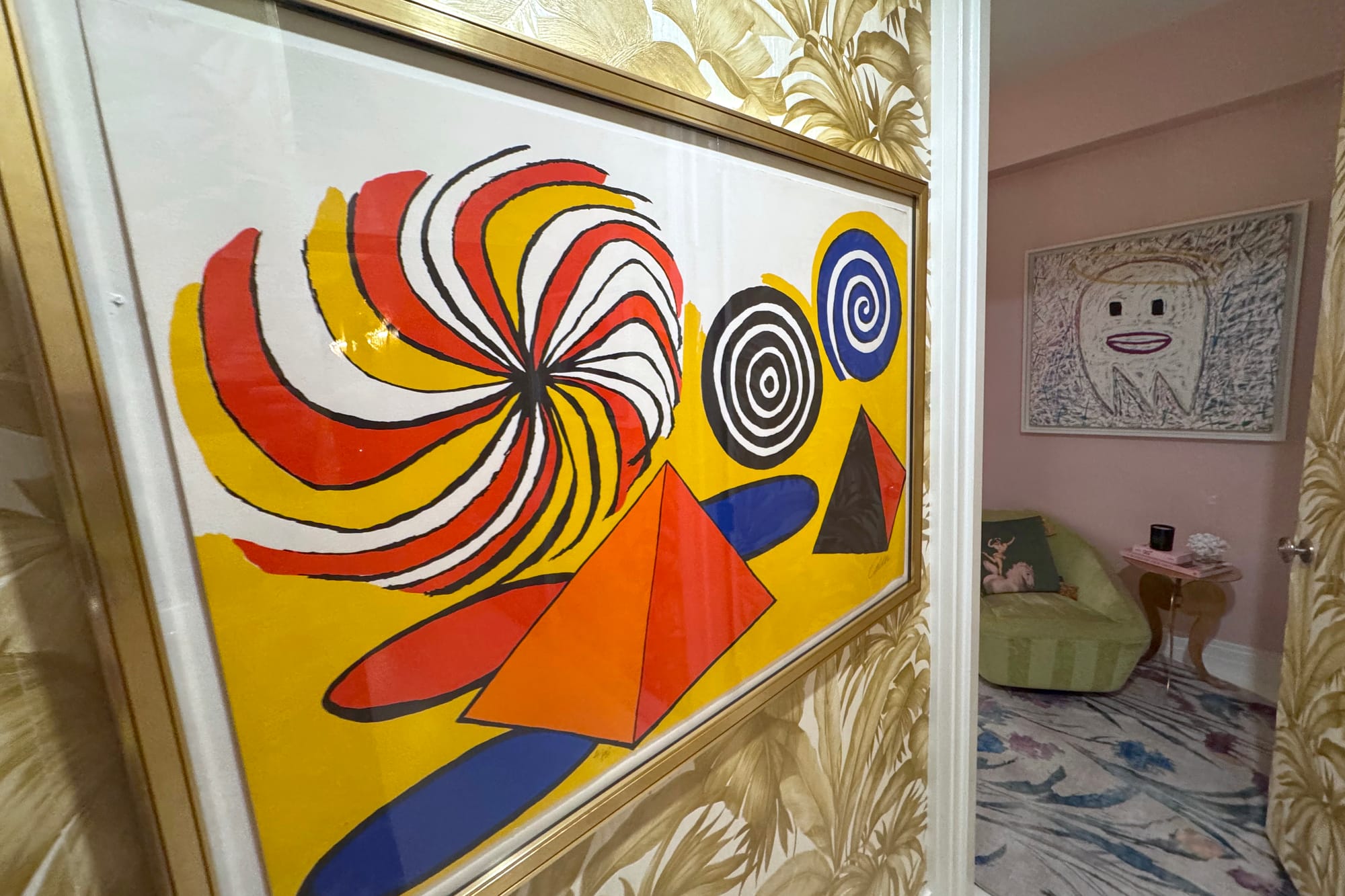
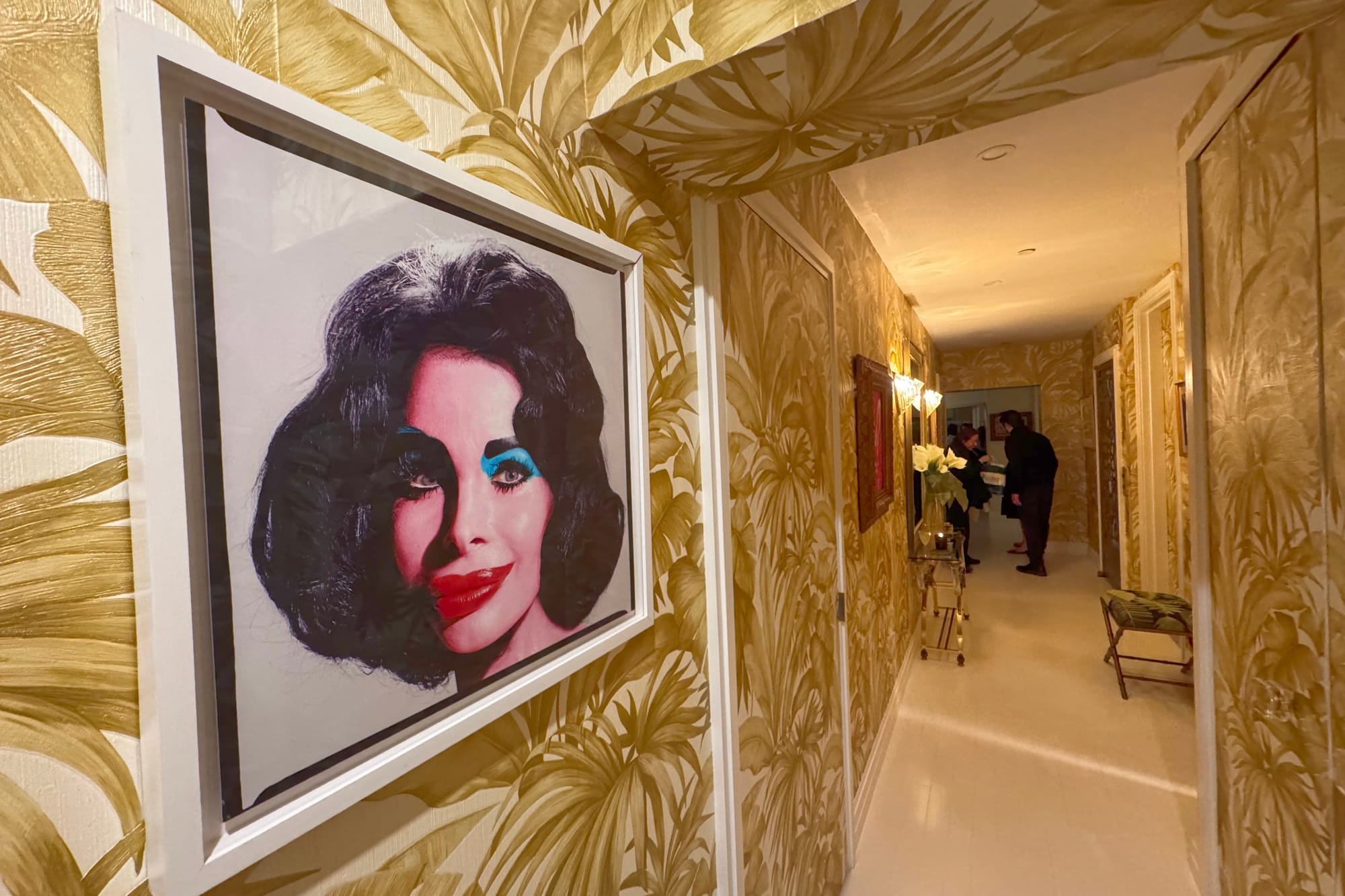
Blackman's collection includes work by Robert Rauschenberg, Alexander Calder and photographer Bert Stern. She pointed guests to a Stern print she described as "a big, gold Marilyn silkscreen." Cohen's work is "kind of draped around it," Blackman said, along with a Terry O'Neill photograph of Audrey Hepburn.
Cohen's work has hung beside Stern's before. In 2010, she showed work at Schloss Britz in Berlin, where she said she lived for four years, in "Last Sitting with Bert Stern, Marilyn Monroe Exhibition," her CV shows. She said her piece, Marilyn's Interiors, drew on Monroe's former homes in California and New York.
"I feel connected to Marilyn by looking at her spaces," Cohen said. "I wasn't looking at her furniture because she's long gone from the spaces. I was looking at the design, the infrastructure, the lines, how she lived within those – that the containment of that space was her oasis to generate her peace of mind within a busy city."
Cohen, who teaches in the art department at Pace University, layers video of performers over pictures of historic rooms and old magazine pages. For Please Be Seated, at the J. Paul Getty Museum from 2007 to 2009, visitors sat in white copies of the museum's antique French chairs and watched themselves on screens inside the 18th-century rooms the chairs came from.
"I was using the canvas as a kind of theater," Cohen said of her start as a painter. Even after she moved into video, she said, "it was always a contained space."
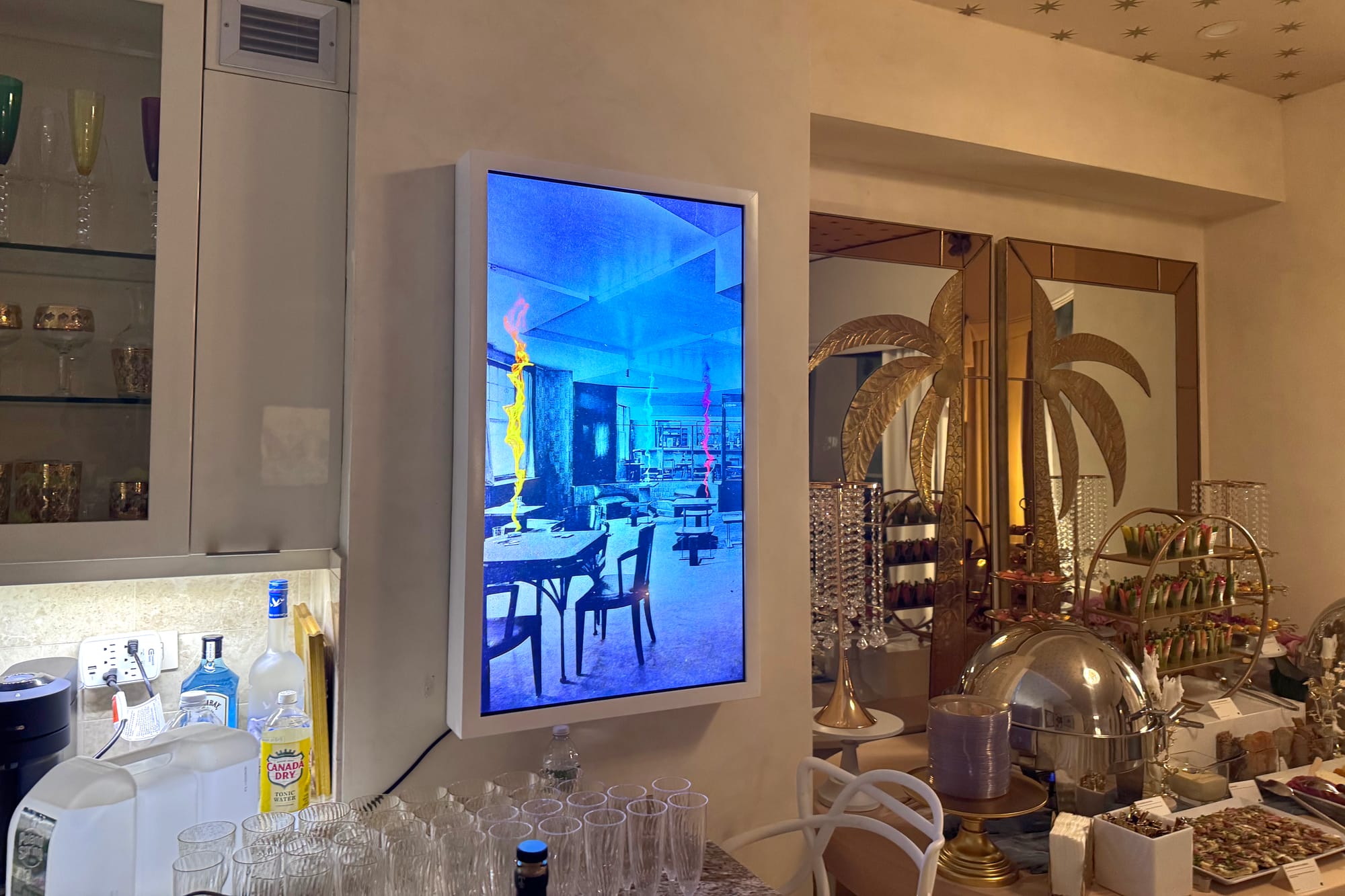
"I think it takes a strong personality to live with a moving image, but I'm really excited because I always try to tell people that it activates the space," Cohen said.
She described one of her videos in the apartment, set in a smoking room, as a Parisian salon that "turns into a perfume, or an aura." Colors appear in the black-and-white scene as it gets darker. "They all play three minutes on a seamless loop," she said.
Another of Cohen's works shows a fountain of pearls. "It's almost like a fountain of youth," Cohen said.
Blackman said a photograph of Cohen's showing a grand room with palm trees "reminded me of the look I was trying to achieve."
"This ain't the Frick museum," she said. "It's a lofty aspiration."
Asked whether finishing the apartment before moving in leaves room to keep collecting, Blackman said yes.
"I think you can rotate," she said. "I have a big storage unit downstairs with more art down there."
Urgent Matter is reader-supported. Please consider subscribing to support independent arts journalism.