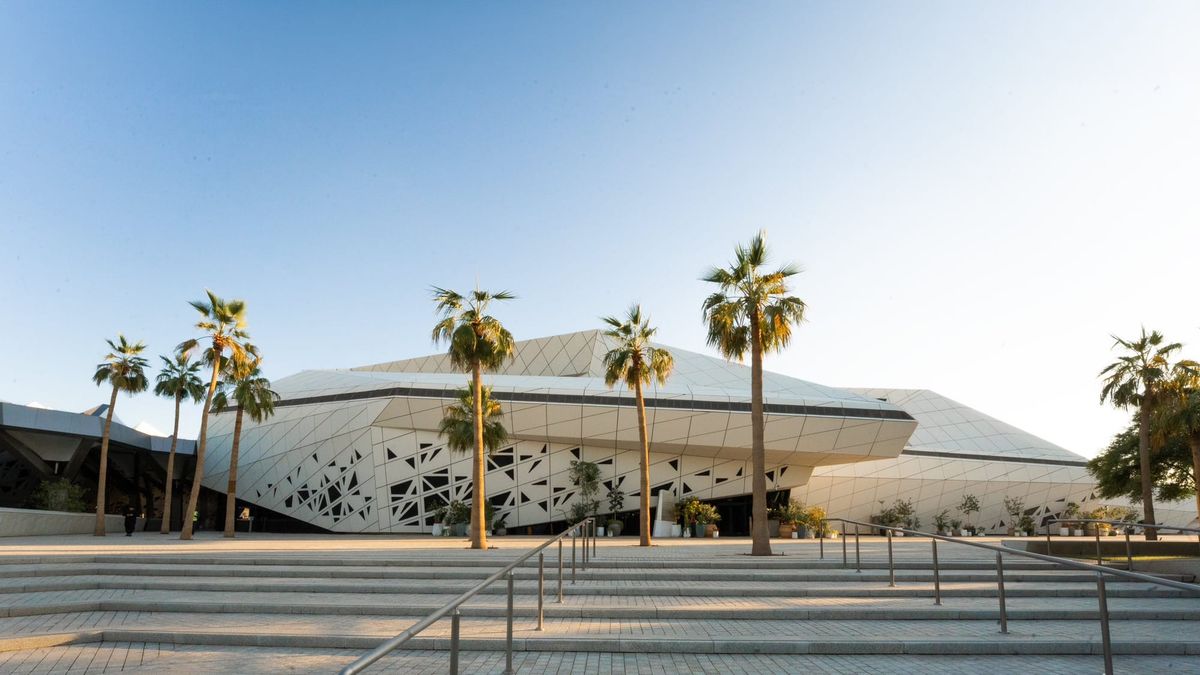
Saudi Arabia on Tuesday inaugurated the Black Gold Museum in Riyadh, a new cultural institution that explores the history and global impact of oil through contemporary art. Photo courtesy of the Black Gold Museum
Saudi Arabia on Tuesday inaugurated the Black Gold Museum in Riyadh, a new cultural institution that explores the history and global impact of oil through contemporary art.
The opening coincides with a tentative two-week ceasefire between the United States and Iran, following disruptions that included the closure of the Strait of Hormuz and strikes on energy infrastructure across the region.
“This new cultural destination reinterprets the story of oil through a human and creative lens, where contemporary art meets one of the most transformative forces shaping our world,” the Saudi Museums Commission said in a statement.
Located at the King Abdullah Petroleum Studies and Research Center in Riyadh, the museum is structured around four immersive chapters — “Encounter,” “Dreams,” “Doubts,” and “Visions” — that bring together contemporary art, archival materials, and visual narratives reflecting oil’s effects on society.
The museum was first announced in September 2020, and its collection includes some 350 artworks by 170 artists worldwide. It is led by Jack Persekian, who was the founding director of the Sharjah Art Foundation in the United Arab Emirates.
“One could not think of a better time than now for this museum to reframe how we look at oil!” Sean Foley, a professor of Middle East and Islamic history at Middle Tennessee State University, said in a post to social media.
The opening also lands as environmental protest groups have spent years targeting museums over ties to the oil industry.
However, Urgent Matter previously reported that such protests have slowed in recent months amid tougher laws, rising legal costs, and declining public support.
Stories like this take time, documents and a commitment to public transparency. Please support independent arts journalism by subscribing to Urgent Matter and supporting our work directly.
Share this article
The link has been copied!
Members Discussion
Your link has expired. Please request a new one.
Your link has expired. Please request a new one.
Your link has expired. Please request a new one.
Great! You've successfully signed up.
Great! You've successfully signed up.
Welcome back! You've successfully signed in.
Success! You now have access to additional content.