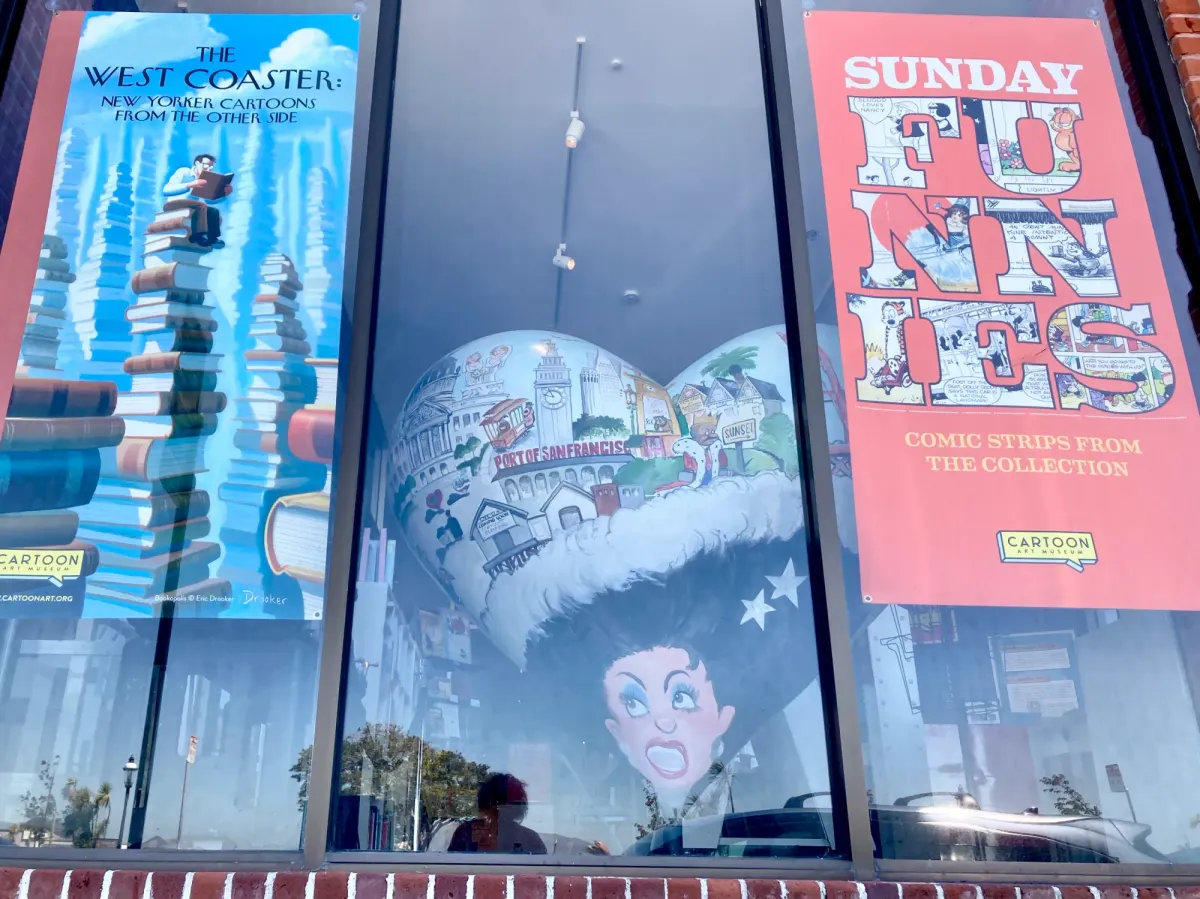
The Cartoon Art Museum closed its gallery in San Francisco’s Fisherman’s Wharf on August 2, ending its run at 781 Beach Street where it had operated since 2016 and leaving the 42-year-old institution without a public home.
Andrew Farago, the museum’s former curator, had been arrested weeks earlier on 20 counts of invasion of privacy, for secretly recording guests — among them children — in his home bathroom.

Executive Director Summerlea Kashar attributed the closure to financial pressure and a difficult recovery from the pandemic. She told SFGate the museum had weighed its future for years as admissions, programs, memberships and private events failed to cover costs ahead of the lease’s expiration in late August.
“The economy has been getting worse, not better, and the feasibility of continuing or even negotiating an extension of our lease was not sustainable,” Kashar told SFGate.
In the museum’s July 31 message announcing the closure, Kashar wrote that “after navigating the pandemic and the difficult recovery that followed, it is time to close this chapter.”
The museum drew more than 80,000 visitors to the Beach Street location, it said. Its website puts the permanent holdings at roughly 9,000 pieces — original comic-book and strip art, gag cartoons from magazines, and concept sketches.
The museum had landed at Beach Street in 2016, in a roughly 8,000-square-foot brick building by Ghirardelli Square, after a rent hike pushed it out of an earlier Mission Street space, SFGate reported.
Farago was arrested by Berkeley police on June 3, the Berkeley Scanner reported. The allegations date to a birthday party he co-hosted May 23 at his home in South Berkeley, where a woman found his cellphone recording video in the bathroom.
The phone showed him “setting the phone up, concealing it with a towel, and aiming it to record people’s genitalia as they used the restroom,” Berkeley police wrote. When the woman confronted him, Farago acknowledged the recordings and said he deleted them from his phone and the cloud, according to police.
Farago emailed the party’s guests to apologize.
“I hid my phone in our bathroom for the purpose of spying on our guests, my closest friends in the world,” he wrote, according to police. “I had never done anything like that before and don’t know what possessed me to do it. This was an inexcusable violation of your privacy and our friendship, and I am prepared to face whatever consequences will come from this tremendous lapse in judgement.”
Officers seized about a dozen electronic devices when they searched his home. As of the Scanner’s June 22 report, prosecutors had not filed charges.
Farago, an author and historian, is no longer employed by the museum. Kashar told SFGate he was placed on administrative leave once the situation became known and was later fired.
The July 31 release did not mention Farago or the arrest. Kashar told SFGate the museum had hoped to make a fuller public announcement and host closing events, but Farago’s arrest derailed those plans and made the museum’s final months “more challenging.”
“We are not disappearing,” Kashar wrote in the release. “We will take this time to recharge, reset and consider what comes next.”
The museum said it would decide on its next location and iteration in the months ahead.
Follow along with other art crime stories at Urgent Matter’s art crime tracker.