Sa’dabad complex latest damaged as blast waves hit more of Iran’s cultural sites
With Iranian authorities reporting damage to 56 cultural sites, Urgent Matter is tracking the locations identified so far.

With Iranian authorities reporting damage to 56 cultural sites, Urgent Matter is tracking the locations identified so far.
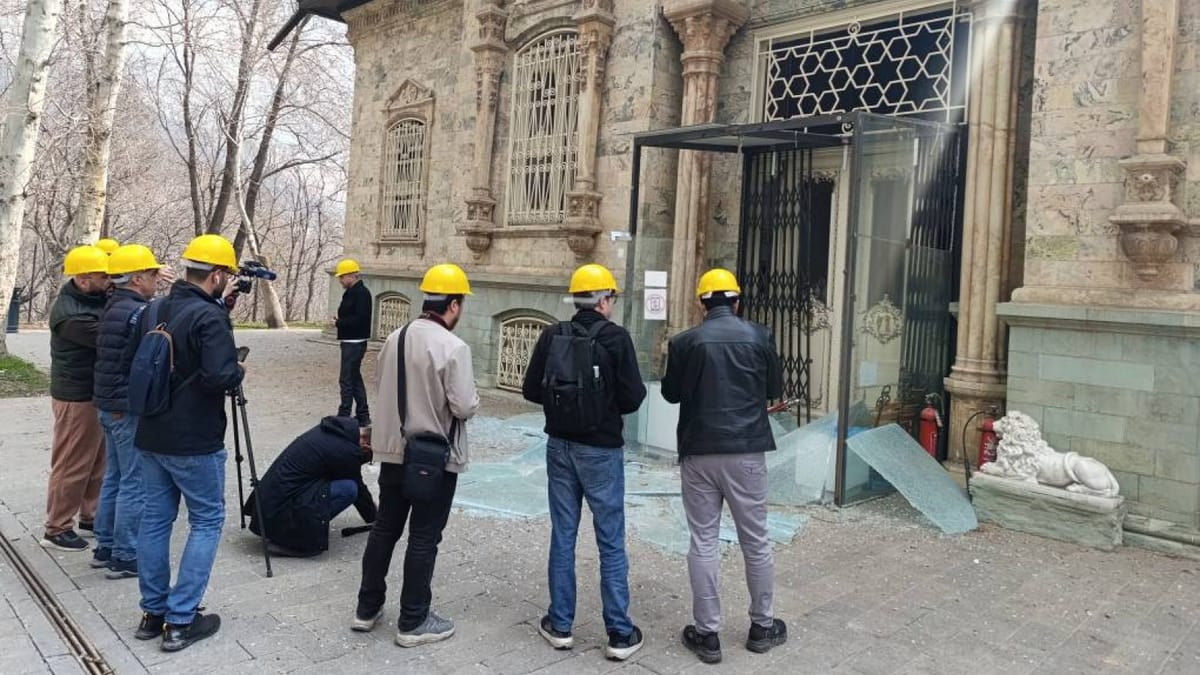
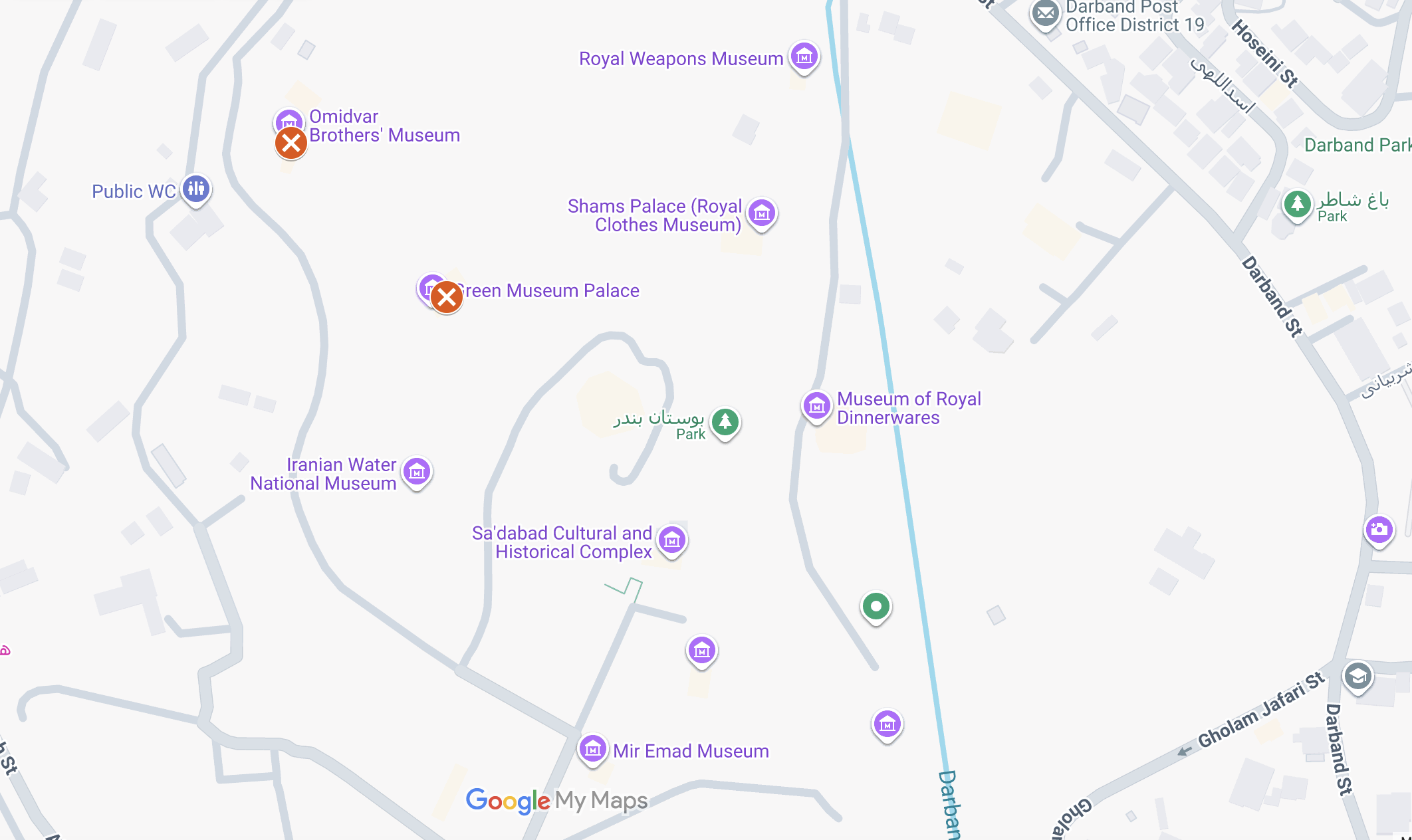
The Sa’dabad Complex, a former royal palace compound in northern Tehran housing several museums, was the latest site to sustain blast-wave damage after Iranian authorities said at least 56 museums and cultural sites across the country had been affected since the start of the war.
Iranian authorities have not provided a full list of the sites damaged. Urgent Matter reviewed those identified so far, finding a mix of clearly defined landmarks and broader historic districts, making the extent of the damage difficult to independently assess as wartime reporting continues to develop.
The Iranian government said that three buildings in the Sa'dabad Complex were damaged following “attacks by the United States and the Zionist regime” early Tuesday.
Those three buildings were identified as the Green Palace, the Omidvar Brothers Museum, and a smaller pavilion identified as the “Kushk (Vali Mansion),” a lesser-known structure within the complex that could not be independently located.
The buildings “sustained serious structural damage” from missile strike blast waves, which also caused damage to other sections and buildings of this complex, the Iranian government said. The complex contains more than 18 palaces, villas, and museum buildings spread across a large, wooded site.
“However, the properties and historical objects located in the palace-museums of Sa’dabad had been transferred to secure storage before the start of the war, and none of the museum artifacts were damaged in this incident,” the Iranian government said in a separate statement.
Reza Salehi Amiri—the Minister of Cultural Heritage, Tourism and Handicrafts—said Wednesday that there are no plans to transfer Iran’s historical objects abroad amid the war for safeguarding.
Forensic Iran, a Scotland-based research organization that tracks crimes against Iran’s cultural heritage, said Wednesday that government claims items had been transferred for safeguarding “must be approached with caution.”
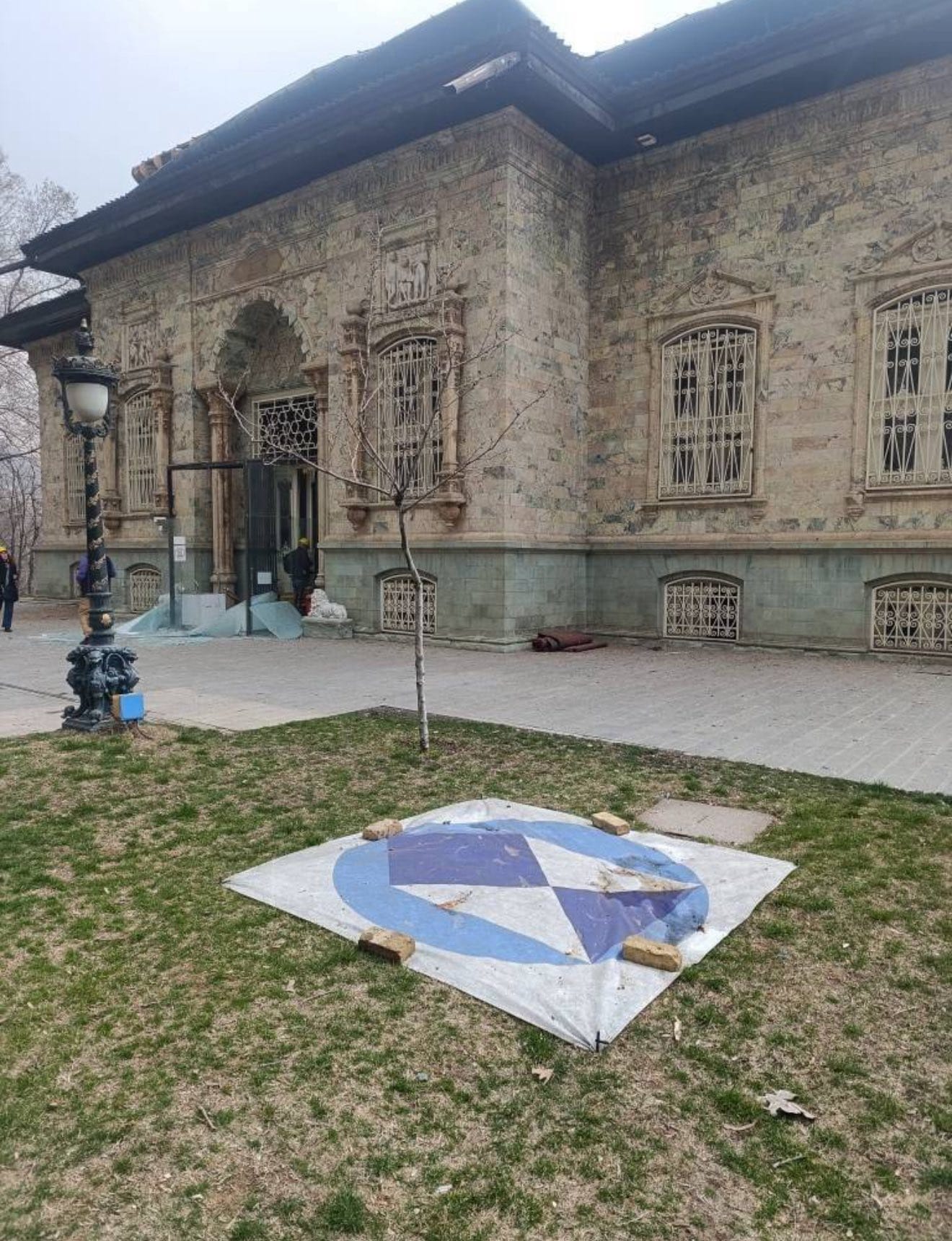
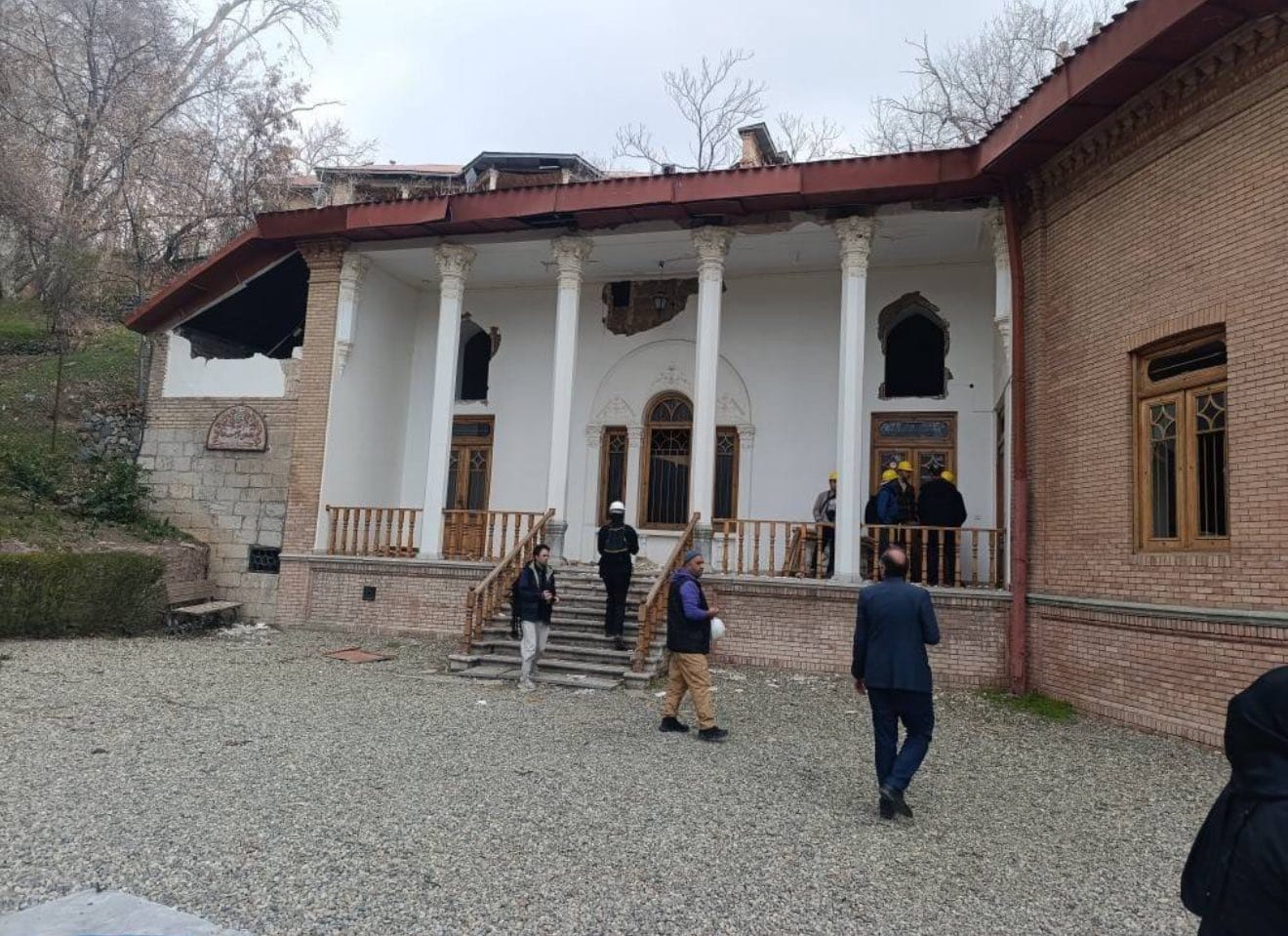
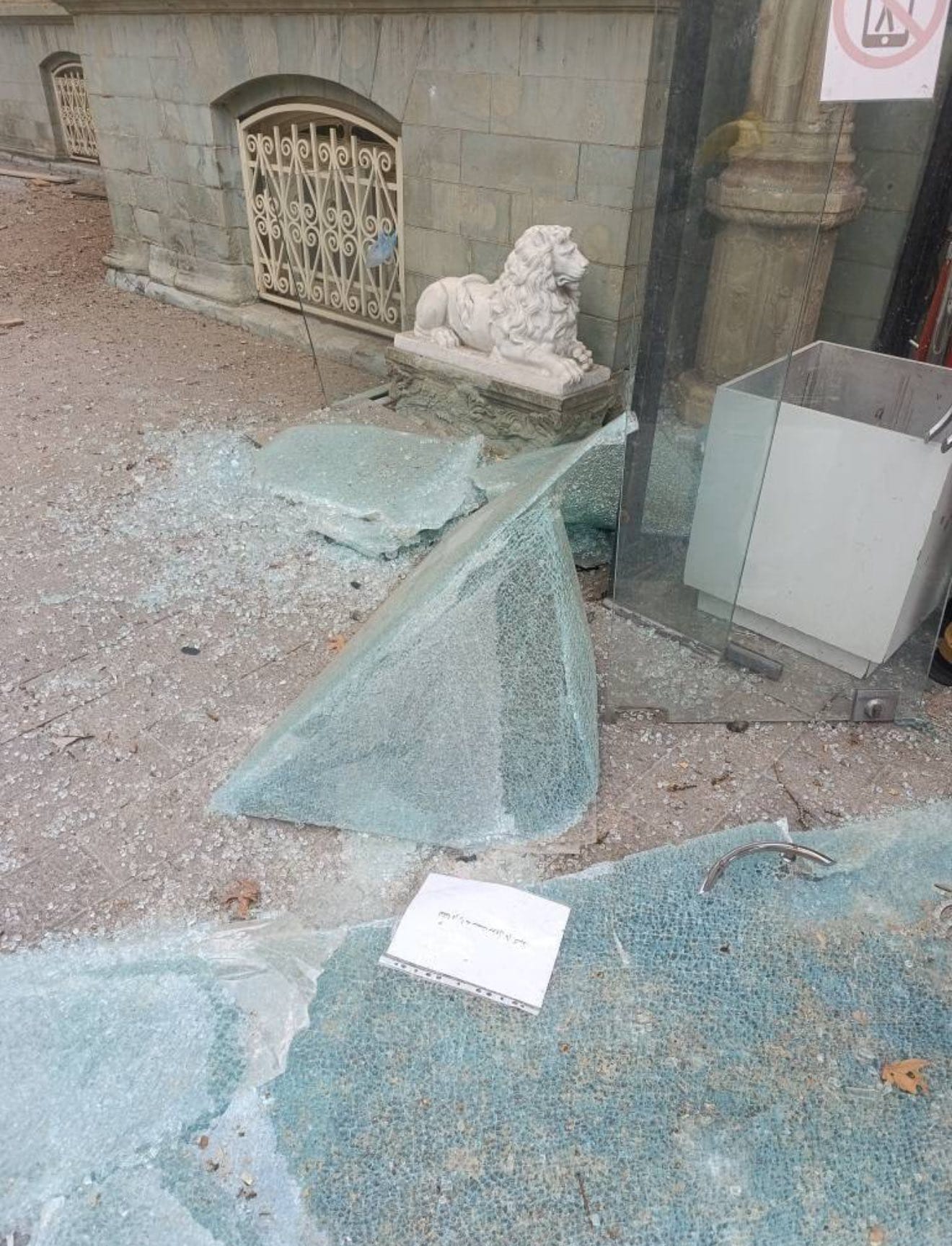
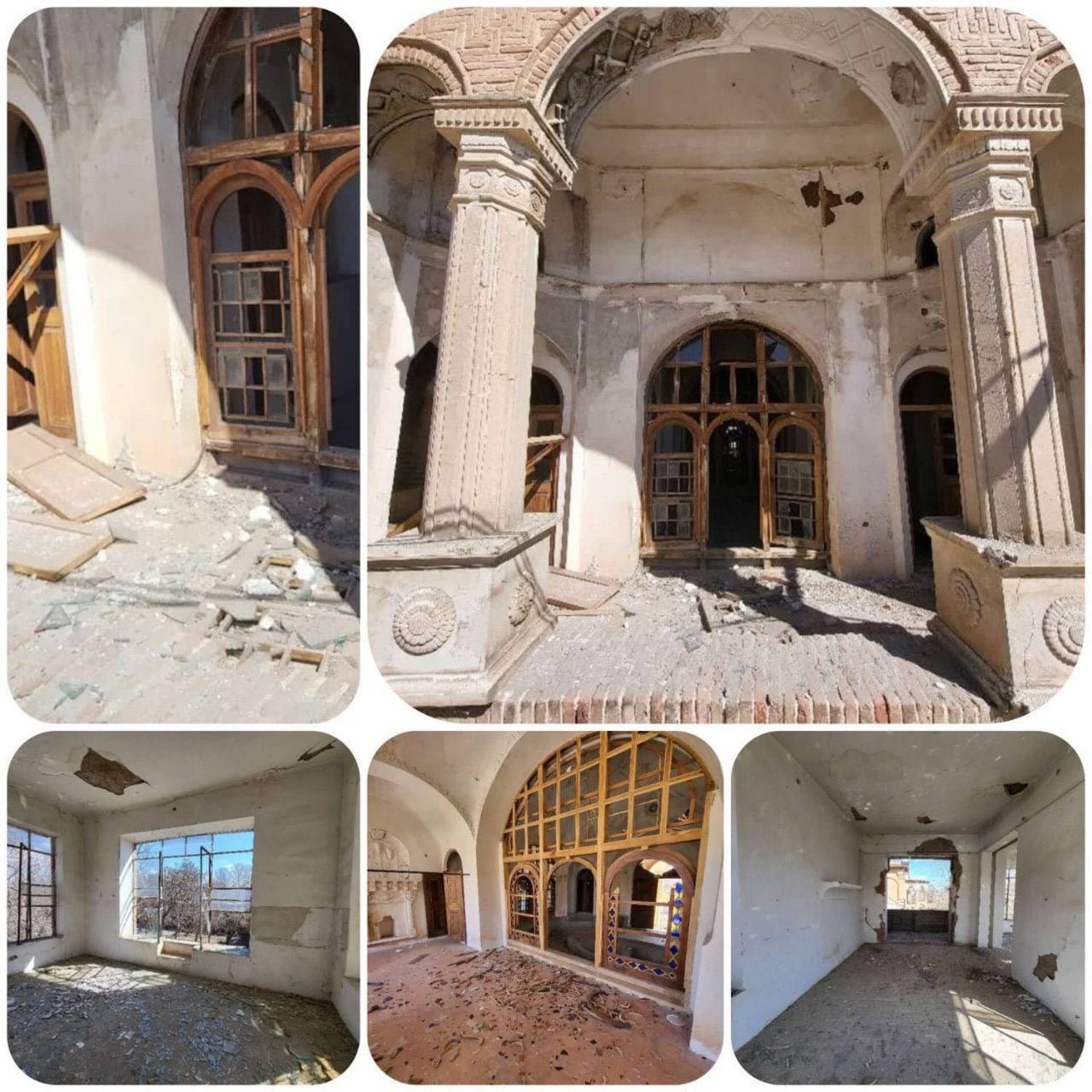
Damage to the Sa’dabad Complex, a former royal palace compound in northern Tehran housing several museums, is pictured. Photos courtesy of Iran's Ministry of Cultural Heritage, Tourism and Handicrafts
The organization pointed to a 2023 report from Fars News, a news agency affiliated with Iran’s Islamic Revolutionary Guard Corps, which said that 48 valuable handwoven carpets from the Sa’dabad complex had already disappeared “under unclear circumstances.”
“These carpets remain missing to this day,” Forensic Iran said. “The question is not only what was damaged yesterday—but what had already vanished long before.”
The Iranian government said Sunday that 56 museums and cultural sites had sustained “serious damage” amid the war, led by 19 sites in Tehran and 12 across the Kurdistan Province.
While it did not list all sites, it revealed damage to some that did not appear to have been separately posted by Iran’s Cultural Heritage Ministry, reflecting the fragmented nature of wartime reporting.
The Marble Palace, a former royal residence now operating as the Iran Art Museum in central Tehran, and the Qajar-era Sepahsalar Mosque, now commonly known as Motahhari Mosque, were said to have come under direct fire in the missile strikes, among other historic government buildings.
Of those sites, one was identified as the “Farahabad Palace-Museum,” a location that could not be clearly matched to a widely recognized museum or palace in Tehran. And another was listed as a former pre-revolution police headquarters in central Tehran--though the exact structure referenced or its precise location were not specified.
While few sites were reported to have suffered direct impacts, blast-wave pressure from high-yield munitions can be significant even hundreds of meters from a strike.
The Tehran Grand Bazaar was also listed, with Iranian media reporting fire damage. In traditional bazaars, the density of timber and the lack of modern fire suppression systems make the structural fabric highly susceptible to fire spread following a strike.
The ministry also listed the “Arg of Tehran,” a Qajar-era royal citadel that no longer exists as a distinct structure and is now largely absorbed into the area around Golestan Palace and the Grand Bazaar, making the extent and nature of any damage unclear.
The province of Kurdistan is home to some of the most distinctive examples of Kurdish-Iranian architecture, particularly the multi-story mansions of Sanandaj.
These mansions, primarily dating to the Qajar era from 1789 to 1925, feature intricate brickwork, stained glass windows and mirrored halls that are vulnerable to shockwaves.
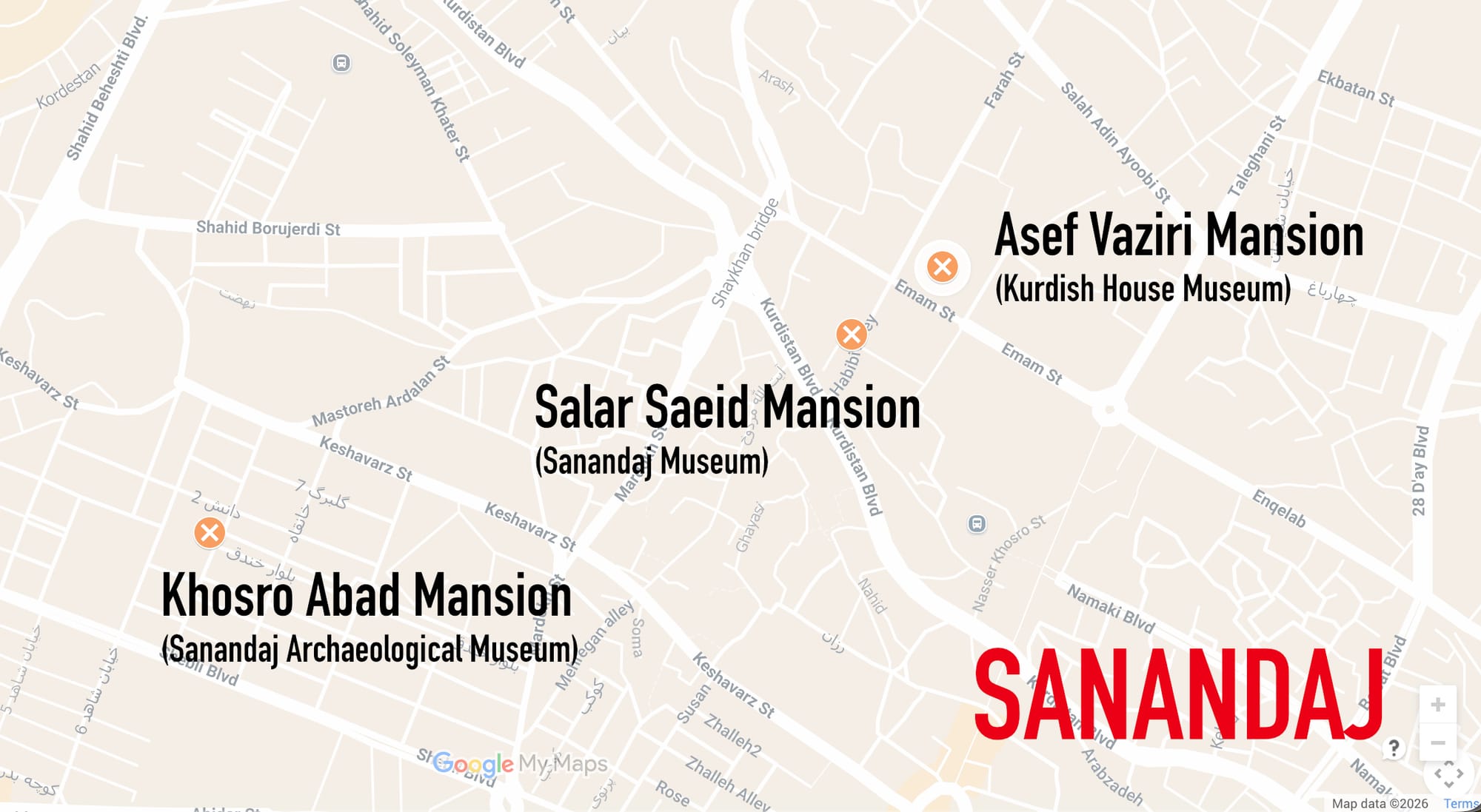
The ministry reported that 12 significant buildings in this province were damaged. Among the buildings damaged were the Salar Saeed Mansion housing the Sanandaj Museum, the Khosro Abad Mansion housing the Sanandaj Archaeology Museum, and the Asef Vaziri Mansion—a historic house that operates as the Kurdish House Museum.
Iranian authorities said in a separate statement that architectural elements, mirror work, and walls and windows were destroyed at the sites in Sanandaj—calling it “a wound upon the body of a nation’s culture and historical memory.”
 Adam Schrader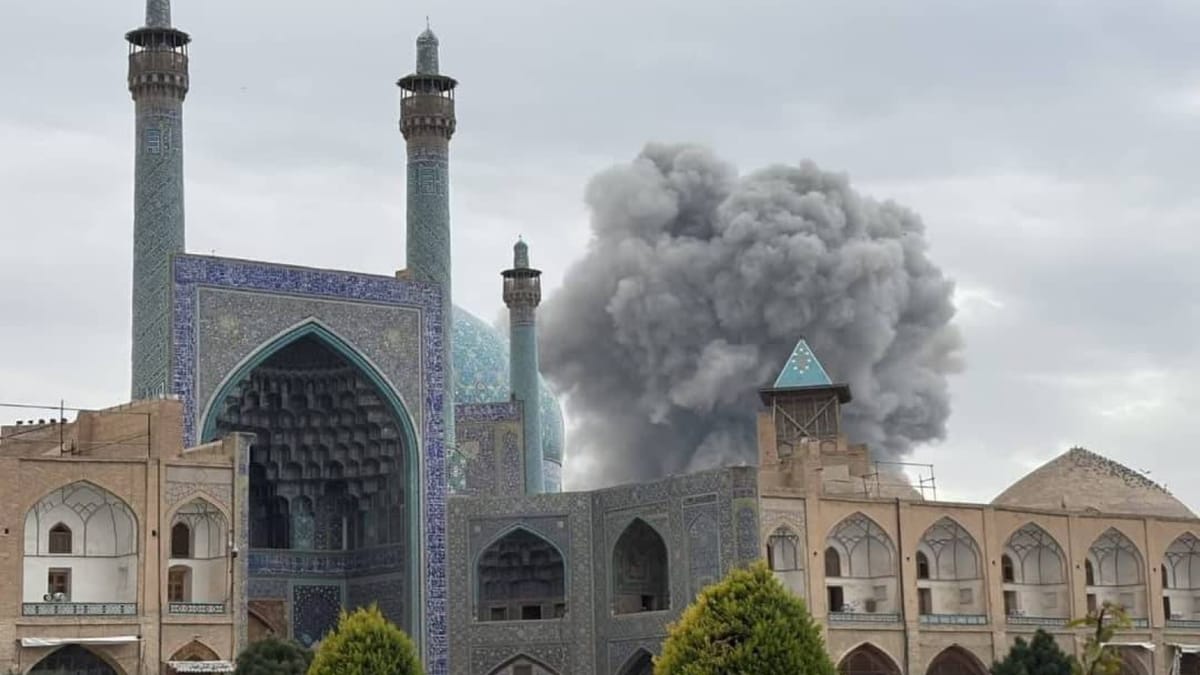
Sabzabad Mansion, housing the Persian Gulf Regional Museum, in Bushehr—a city which sits on the east side of the gulf from Kuwait—also reportedly suffered damage.
Iranian authorities added that “sites in the port of Siraf,” an archaeological area on Iran’s southern coast with the remains of a major early Islamic trading hub, were damaged—though did not identify specific locations.
The area includes cliffside rock-cut tombs carved into the hills above the shoreline, the foundations of large merchant houses that once reflected Siraf’s wealth in Indian Ocean trade, ruins of a congregational mosque, and scattered remnants of port infrastructure such as docks and storage areas.
The reports come as damage has also been identified at major heritage sites elsewhere in the country, including in Isfahan, home to some of Iran’s most significant Safavid-era monuments.
 Adam Schrader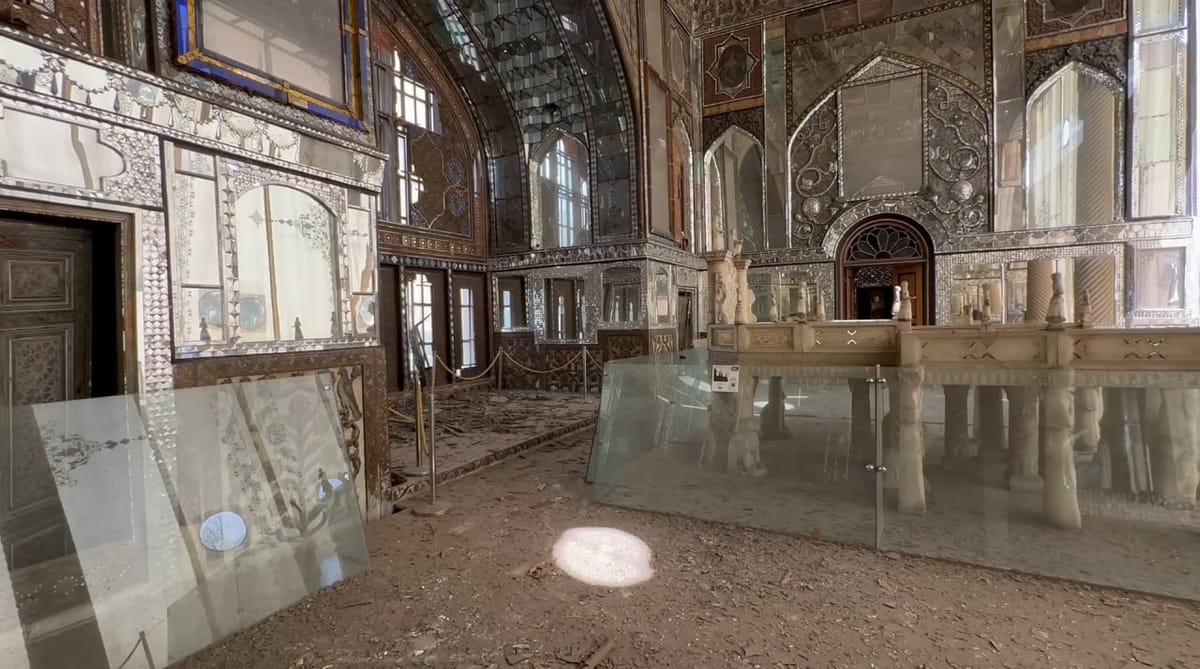
The city’s central Naqsh-e Jahan Square—a UNESCO World Heritage Site surrounded by mosques, palaces and bazaar structures dating to the 17th century—has long been considered one of the most important architectural ensembles in the country.
In Tehran, the Golestan Palace, a Qajar-era complex and the capital’s only UNESCO-listed site, has already sustained damage from nearby strikes, with blast waves shattering windows and damaging decorative elements.
Stories like this take time, documents and a commitment to public transparency. Please support independent arts journalism by subscribing to Urgent Matter and supporting our work directly.