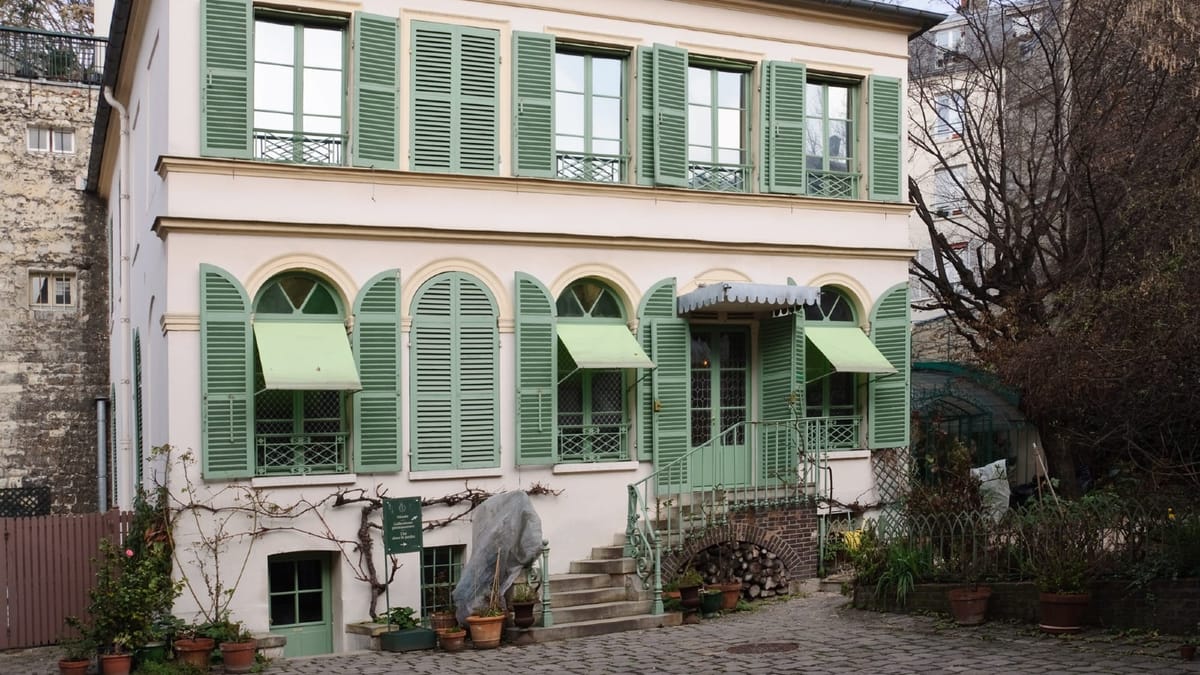
Paris’ Museum of Romantic Life reopened on Valentine’s Day after a year-and-a-half renovation project.
The small museum, in French the Musée de la Vie Romantique, is dedicated to the art and literature of the Romantic era in cultural history located in the former home of Dutch-born Romantic painter Ary Scheffer.
In literature, the Romantic era produced books almost everyone has heard of, including Frankenstein by Mary Shelley and Les Misérables by Victor Hugo. Well-known artists of the era include Eugène Delacroix, Francisco Goya, Caspar David Friedrich and J. M. W. Turner.
The era was defined by heightened emotion, dramatic contrasts of light and shadow, reverence for untamed nature, and a fascination with individual struggle, passion, revolution and the sublime — themes that shaped both its sweeping landscapes and its brooding, often tragic literary heroes.
“What if, for Valentine's Day, we fell in love in a different way?” the museum wrote in an announcement for its reopening event on its website.
The museum held tours for children and adults, with music performances throughout the townhouse, and dancing in its courtyard.
It reopened with an exhibit titled “Facing the Sky, Paul Huet in His Time.” Huet, a pre-Impressionist painter, was a close associate of Scheffer and the show explores his pictorial motif of the sky as inspired by artists like Turner.
The reopening came after a renovation that the museum said aimed “to preserve the spirit of the place while reinforcing its heritage identity.”
It included a restoration of structural and exterior components of the historic building, including its roof and wooden frame, to improve energy performance and conservation conditions.
“The shutters have been returned to their original brown-beige hue, and the facade plaster to its historical color, in accordance with the recommendations of the Île-de-France Regional Directorate of Cultural Affairs,” the museum said.
And the renovation included a redesign the layout of the permanent collection, according to the museum, as well as “significant” improvements made for visitor comfort.
Stories like this take time, documents and a commitment to public transparency. Please support independent arts journalism by subscribing to Urgent Matter and supporting our work directly.
Share this article
The link has been copied!
Members Discussion
Your link has expired. Please request a new one.
Your link has expired. Please request a new one.
Your link has expired. Please request a new one.
Great! You've successfully signed up.
Great! You've successfully signed up.
Welcome back! You've successfully signed in.
Success! You now have access to additional content.