Orbán’s election defeat offers a test case for unwinding politicized culture policy
Hungary’s new government may unwind a centralized cultural system, testing how politically driven arts policy can be reversed.

Hungary’s new government may unwind a centralized cultural system, testing how politically driven arts policy can be reversed.
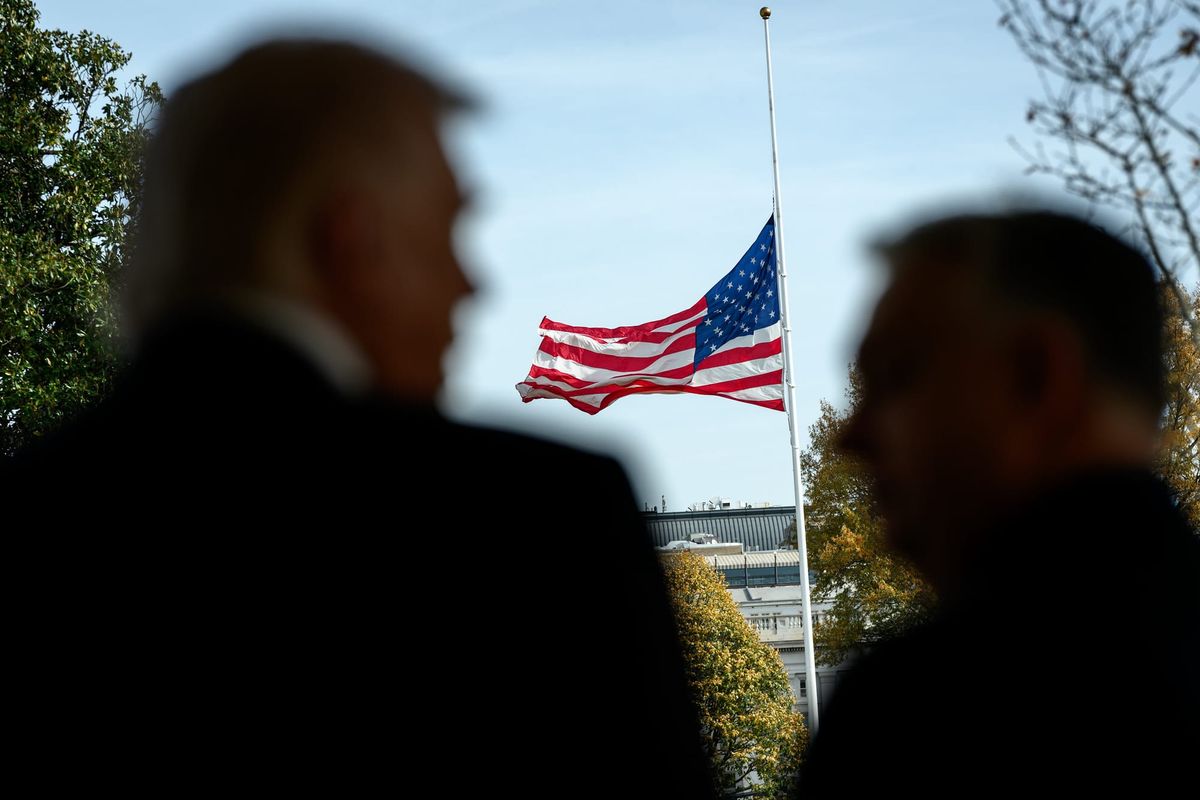
The concession by Hungarian Prime Minister Viktor Orbán after a landslide defeat to Péter Magyar and the TISZA party ends a 16-year period in which the country’s cultural institutions were systematically centralized under political control.
With a projected two-thirds parliamentary supermajority, the incoming government has the legal authority to rewrite the institutional framework that tightened cultural policy and centralized authority in Hungary. That includes the power to unwind leadership structures and funding that aligned the arts with the ruling FIDESZ party’s ideology.
Many of the most popular and influential artists in Hungary celebrated Orban’s decisive election loss Sunday. The news has also been celebrated by artists in the United States, where President Donald Trump’s cultural policies have followed a parallel path.
 Adam Schrader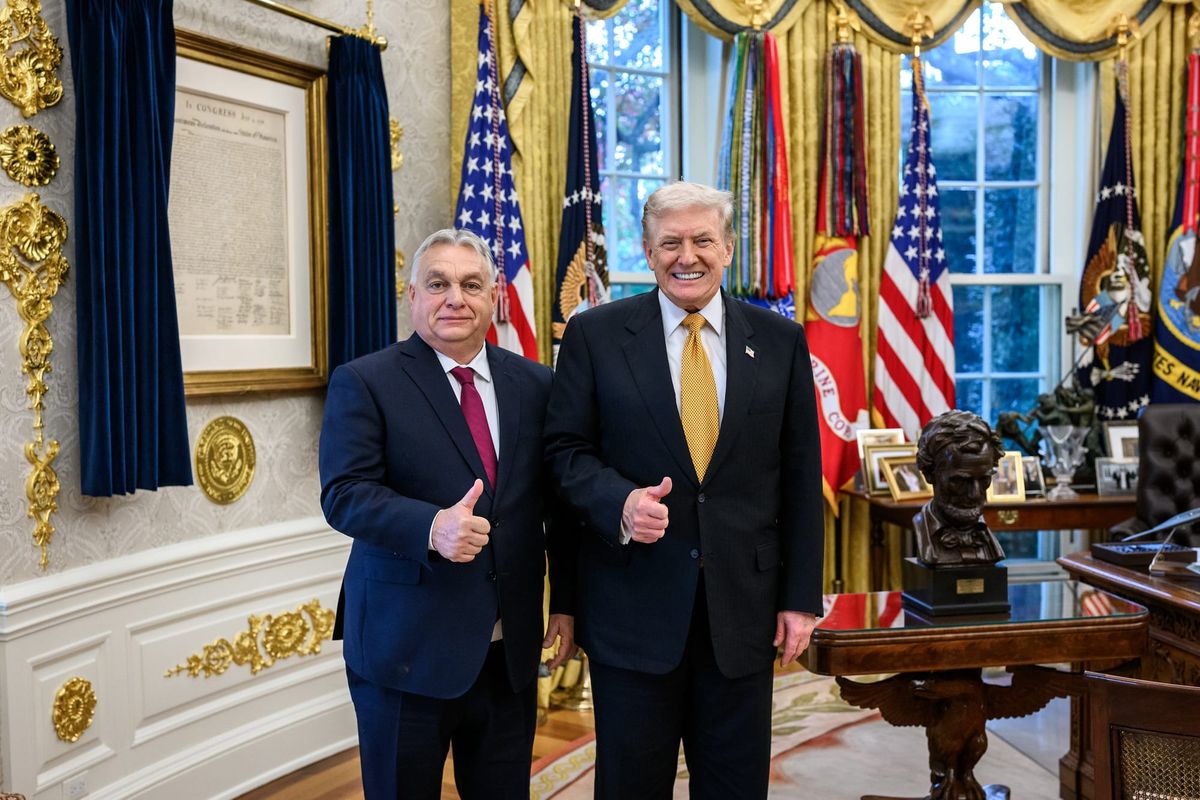
A central pillar under Orbán was the elevation of the Hungarian Academy of Arts into a constitutionally recognized body with significant influence over cultural funding and institutional appointments.
In December, Urgent Matter revealed through a public records request that the National Endowment for the Arts continued to approve millions of dollars for military-linked and Trump-aligned initiatives even as it canceled grants to community organizations.
Last year, the NEA publicly announced it was canceling or winding down a range of grants, including its Challenge America program, alongside similar actions at the Institute of Museum and Library Services and the National Endowment for the Humanities.
In a widely cited 2022 report titled Hungary’s Arts and Culture in Crisis, the Artistic Freedom Initiative detailed the transformation of the Hungarian Academy of Arts under Orbán, which began in 2010 when the ruling party FIDESZ codified its authority under the country’s constitution to “defend” the “artistic freedom” of the academy.
The Hungarian Academy of Arts was founded in 1992 as a private association of conservative artists, according to the report. Artistic Freedom Initiative called that decision “highly unusual” and an “early signal” of Orbán’s encroachment on the arts.
György Fekete was later appointed the head of the academy in 2011 and announced that it would prioritize state support for artwork reflecting a Christian-Nationalist ideology. He held that position until 2017.
Richard Grenell, appointed by Trump last year to head the John F. Kennedy Center for the Performing Arts, did not last as long.
“The [academy] was invited to participate in all key ministry decisions regarding arts and culture and were also given one-third of the board seats in every decision-making body governing the arts,” Artistic Freedom Initiative said.
In Hungary, funding and leadership decisions increasingly favored artists and institutions aligned with the ruling FIDESZ party’s cultural agenda. Independent artists, particularly those working in conceptual, socially critical or experimental modes, faced reduced access to grants and exhibition opportunities.
The government also centralized its authority over major institutions like the Ludwig Museum of Contemporary Art and the Hungarian National Museum, tapping political appointees aligned with government priorities to lead them.
“Almost all the key positions are occupied by an Orbán supporter,” cultural and political analyst Zoltán Lakner told Artnet in 2019. The Artnet report focused on Ludwig Museum director Júlia Fabényi censoring artist János Brückner’s work depicting Orbán at 30 with a mustache and the text “This Too Shall Pass.”
At the same time, public art became a site of ideological messaging, most visibly through a wave of state-backed monuments that promoted a selective historical narrative—a model that has become apparent in the second administration of President Donald Trump. On Friday, the White House shared new renderings of a triumphal arch planned in Washington.
Projects like the Memorial to the Victims of the German Occupation drew sustained criticism for minimizing Hungary’s role in the Holocaust, reflecting a broader effort to reshape historical memory through state-sponsored cultural production.
In Philadelphia, the city filed a lawsuit against the Trump administration on the day it learned that educational panels referencing slavery were quietly removed from a President’s House Site exhibit at Independence National Historic Park.
The scale of Tisza’s victory matters. A two-thirds majority allows the new government to amend or repeal laws governing cultural institutions, funding bodies, and appointments without opposition support.
In Hungary, likely early moves may include reforms to the National Cultural Fund and the rebalancing—or outright rollback—of the Hungarian Academy of Arts’ authority over grants and professional recognition.
While it is improbable that Democrats ever get that kind of power alone, it reflects a growing possibility that some Republicans may join them in reversing Trump’s policies. And Congress has repeatedly already acted to preserve federal arts funding despite Trump proposals to cut it.
And in Hungary, a wave of leadership changes is expected across major museums and cultural bodies. That could lead to the return of curators and scholars who were previously sidelined.
Restoring institutional independence is not just a domestic issue. It is also a prerequisite for unlocking billions of euros in EU funds that have been frozen over rule-of-law concerns. The EU has specifically cited academic freedom as a condition.
The funds come from mechanisms like the EU Recovery and Resilience Facility and cohesion funds, and once released, could flow back into public spending and grant systems that support cultural institutions, museums and heritage projects.
And Budapest’s position as a regional cultural hub—maintained in part through independent galleries and events like Art Market Budapest—could strengthen as international partnerships resume and foreign institutions re-engage.
For Hungarian artists, the change may be felt first in the working climate. Pressure around gender-focused, experimental and politically critical work is likely to ease.
In the United States, those pressures have played out through efforts by Trump to prevent Diversity, Equity and Inclusion initiatives, especially those tied to race and transgender issues—turning DEI into a flashpoint in a broader fight over cultural control.
Stories like this take time, documents and a commitment to public transparency. Please support independent arts journalism by subscribing to Urgent Matter and supporting our work directly.