North Korea pairs party spectacle, arts reforms and heritage push after congress
Kim Jong Un was re-elected in the Ninth Congress of the Workers' Party of Korea, held in Pyongyang in February.

Kim Jong Un was re-elected in the Ninth Congress of the Workers' Party of Korea, held in Pyongyang in February.
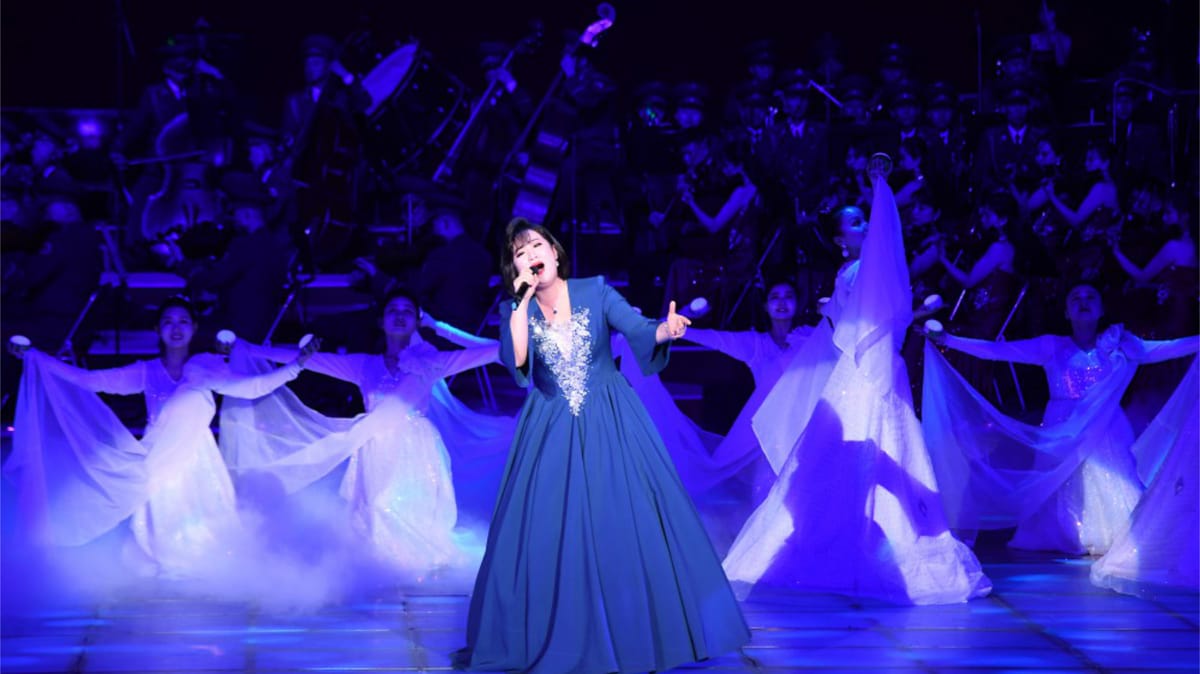
North Korea capped its ruling party’s Ninth Congress with nightly mass performances in Pyongyang, while state media simultaneously touted changes to arts education and promoted traditional Lunar New Year customs.
The flurry of activity reveals how Pyongyang deploys culture across multiple fronts—mass spectacle, arts education and heritage policy—as part of a broader effort to reinforce political loyalty and national identity following the congress.
The Ninth Congress of the Workers' Party of Korea was held in Pyongyang from February 19-25, bringing together thousands of party delegates to review policy, elect new leadership bodies, and outline the country’s political and economic priorities for the coming years. During the meeting, leader Kim Jong Un was re-elected as the party’s general secretary.
While party rules call for such meetings roughly every five years, they have historically been irregular. They are often accompanied by mass performances, parades, and cultural programming designed to reinforce party unity and signal political continuity to the public.
A large-scale performance titled Song to the Motherly Party is being staged daily at the Pyongyang Indoor Stadium in the wake of the Ninth Congress, state media reported Tuesday. The performance includes a combination of vocal and instrumental music, dance and gymnastics.
Songs performed include "Long Live the Workers' Party of Korea" and "Ever-victorious Workers' Party of Korea."
State media said the audience included soldiers who participated in the military parade marking the congress, along with workers, students and youth groups in the capital.
The parade itself served as the capstone spectacle for the congress and included displays tied to North Korea’s expanding nuclear weapons program.
The juxtaposition of such performances with nuclear program displays demonstrates how the regime pairs cultural unity with military strength in its messaging.
The event was framed by state media as a celebration of the party's role in building what it called a "rich country with a strong army," emphasizing patriotic themes and the contributions of the military and youth to socialist construction. No closing date for the performances was announced.
The production follows a pattern Pyongyang has used repeatedly to translate major political events into public cultural programming — a strategy that keeps party ideology visible in daily life while giving citizens a form of sanctioned mass entertainment. Following the party's Eighth Congress in January 2021, state media similarly commissioned exhibitions, performances and commemorative events.
Pyongyang has used similar cultural programming to reinforce previous political milestones. In January, North Korea opened a national photo exhibition celebrating what state media called the "immortal exploits" of Supreme Leader Kim Jong Un, presenting a curated retrospective on his leadership since the Eighth Congress.
 Adam Schrader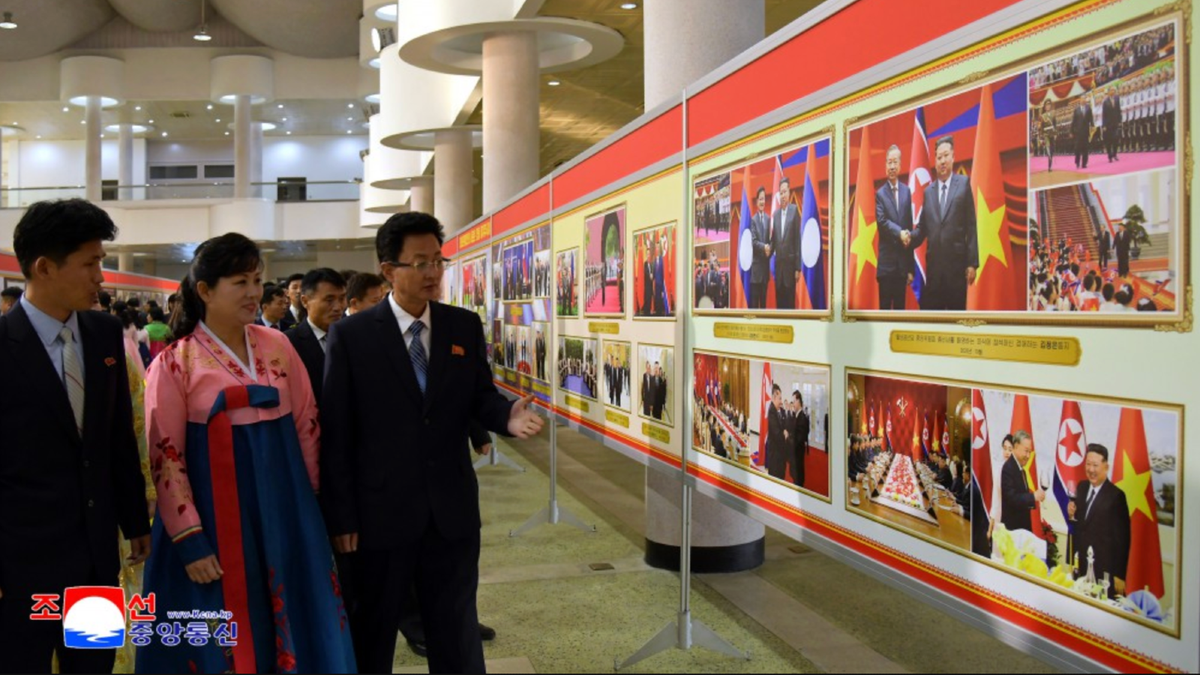
That exhibition, titled "Ushering in an Era of Gigantic Transformation for Comprehensive Development of Korean-Style Socialism," opened at Pyongyang's Okryu Exhibition House and featured photographs of Kim at podiums, with troops and at diplomatic meetings, arranged to move visitors through a single narrative of his rule.
And North Korea said Saturday that its art schools are introducing new teaching methods and expanding practical training, though state media offered few details about the substance of those changes.
During the congress, Kim Jong Un also called on the country’s literature and arts sector to orient its creative work toward raising “revolutionary consciousness” and mobilizing the public behind party policy, linking cultural production directly to the ideological goals of the new five-year plan.
State media said institutions across the country are working to produce artists with stronger practical abilities by emphasizing major coursework, exhibition experience and increased hands-on training. The report described the initiatives in general terms as part of an effort to cultivate, in the agency's phrasing, "promising talented artistes."
At Pyongyang Kim Won Gyun University of Music and Dance, instructors are reportedly intensifying specialized instruction and exploring teaching methods tailored to arts education. The report did not specify what those methods entail.
Pyongyang University of Fine Arts has encouraged students to participate in national exhibitions, which state media said reinforces classroom instruction.
Institutions in Haeju and Sinuiju have expanded the use of multimedia tools and educational software, while schools in Hamhung, Hyesan and Phyongsong are organizing student performances and exhibitions alongside additional practical training, according to the report.
North Korean state media this week also highlighted traditional customs associated with the first full moon of the lunar year, describing the holiday — observed on the first full moon of the first lunar month — as a longstanding folk observance tied to wishes for good fortune and a strong harvest.
In a report published Sunday, state media said the holiday has historically included communal games, ritual agricultural practices and shared meals across Korean villages. Families traditionally gathered on hills or mountain slopes in the evening to watch the first full moon of the year rise, while children played games and sang songs to celebrate.
Among the customs described were hanging crops from a tall pole in a communal display, and spreading compost in fields early in the morning as a symbol of hope for a productive farming season.
Participants were also said to drink a traditional liquor sometimes described as "ear-quickening wine," a folk practice believed to sharpen hearing for the coming year. Foods associated with the holiday include boiled rice mixed with multiple grains and dishes made from nine varieties of dried herbs.
The traditions associated with the first full moon holiday were formally registered as a national intangible cultural heritage in North Korea in 2014, state media said.
North Korea acceded to the UNESCO Convention for the Safeguarding of the Intangible Cultural Heritage in 2016, and has since used the framework's language, domestically and externally, as a vehicle for cultural legitimacy.
 Adam Schrader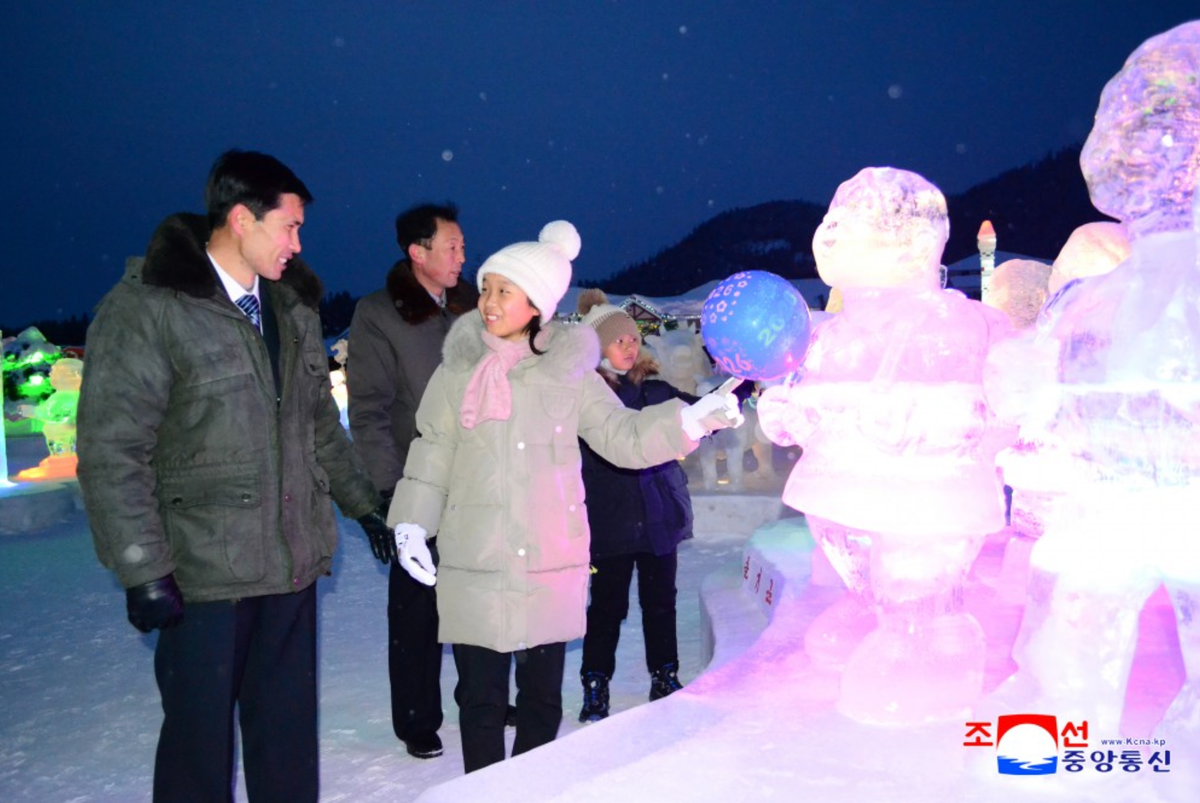
The emphasis on national heritage also comes as Kim Jong Un has recently defined relations with South Korea as those between “two hostile states,” a shift accompanied by messaging that positions North Korea as the authentic guardian of Korean identity.
In 2017, North Korea registered sleighing as a national intangible cultural heritage, situating the pastime within a lineage of folk games dating to the Joseon dynasty—which the country announced last month as it held an Ice Sculpture Festival to celebrate the birthday of Chairman Kim Jong Il.
The country remains largely closed to independent observers, making state media the primary public record of domestic cultural life. As a result, it is difficult to assess how these programs are experienced by ordinary North Koreans, or what the changes in arts instruction specifically involve beyond the general terms used by state media.
Stories like this take time, documents and a commitment to public transparency. Please support independent arts journalism by subscribing to Urgent Matter and supporting our work directly.