New York exhibition examines how artists confront genocide, colonial violence
The group show brings together artists addressing political violence, missing archives and the limits of historical accountability.

The group show brings together artists addressing political violence, missing archives and the limits of historical accountability.
An exhibition of artists examining how art responds to genocide, colonial violence and the loss of cultural records will open this month in New York, with works addressing subjects ranging from the Guatemalan civil war to Palestinian artworks that have been lost or destroyed.
The show, titled “An Inherent Undoing,” is curated by Jamaican scholar Gervais Marsh and will be presented at The 8th Floor in Manhattan through the Shelley & Donald Rubin Foundation’s curatorial open call program. It runs from March 12 through June 6 and includes installation, video and photography.
The exhibition is framed around what Marsh describes as “societal fractures and structural violence.” Asked what they meant by the phrase, Marsh said it refers to both current conflicts and long histories of colonialism, racism and political violence that continue to affect communities around the world.
“I am thinking about the ongoing genocide against Palestinians, in Sudan, in Congo, against the Rohingya people. Legacies of settler colonialism that have displaced and sought to annihilate Indigenous communities, both in the past and its continuation into this moment,” Marsh said.
Marsh said anti-Blackness also shaped the economic and political systems that developed in the Americas, influencing who faced systemic violence.
“We are witnessing the U.S. ongoing attack on numerous countries, including Iran, which is rooted in its imperial history,” Marsh said.
“It is also a discussion of the continued hyper-capitalism that funds the prison industrial complex and detention centers, while also causing mass economic instability. And the violent targeting of immigrant communities across the U.S., within a rise of dangerous nationalism.”
With the show featuring artists addressing different political issues around the world, Marsh was asked what connects them. They rejected the premise that the artists needed to form a unified group, saying the exhibition instead questions who gets to decide what counts as a coherent theme.
“Ultimately, I’m not focused on agreement or contradiction, but opening up space for questions and reflection,” Marsh said.
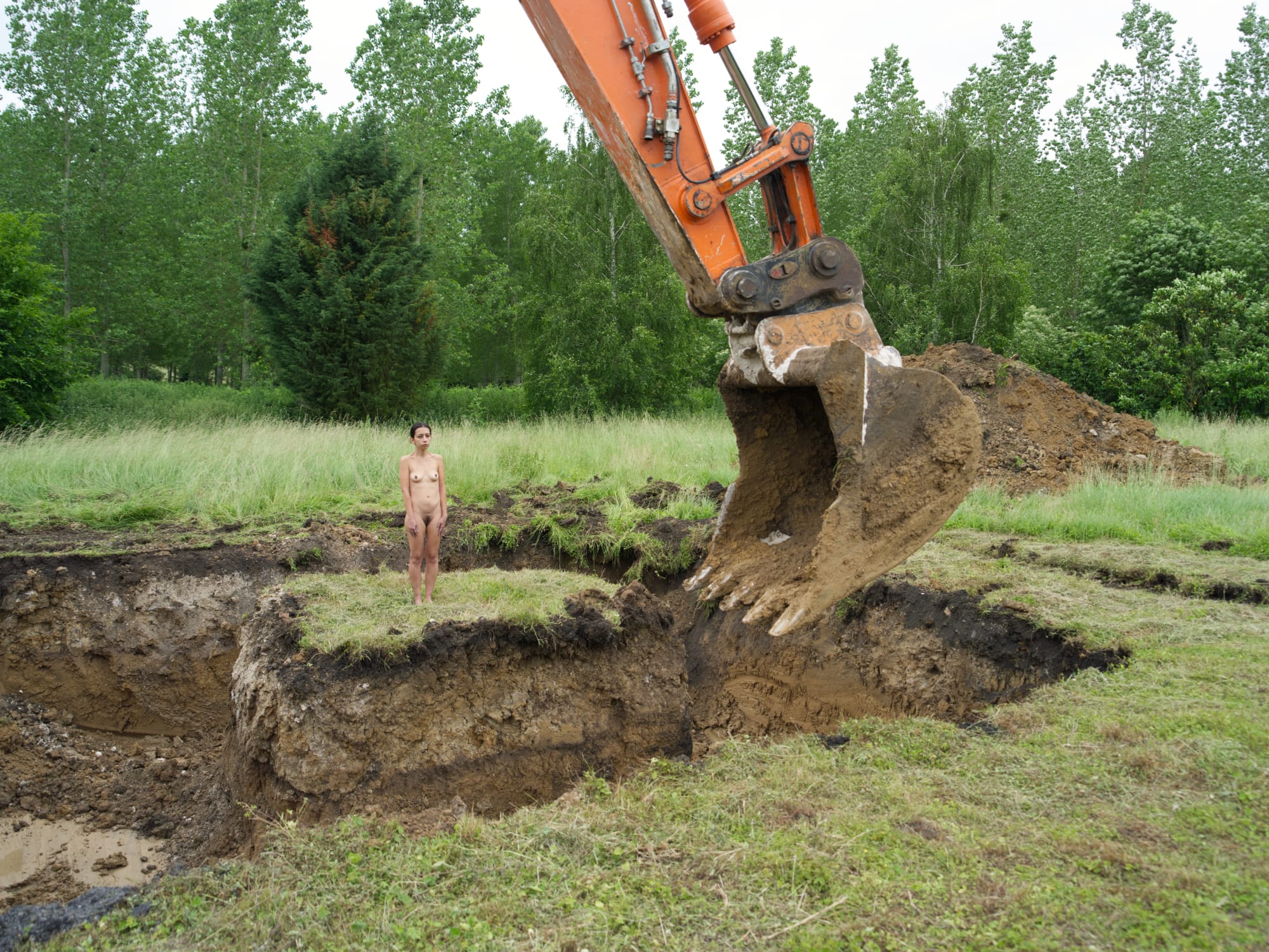
Two artists in the exhibition, Regina José Galindo and New Red Order, question whether government apologies or prosecutions really count as justice after mass violence or colonial abuses, Marsh said.
Galindo’s work examines the genocide of Maya Ixil people during the Guatemalan civil war.
“While the former President Efraín Ríos Montt went to jail, ultimately what does that mean regarding notions of justice when so many of those who were murdered still can’t be identified and their deaths go unacknowledged as crimes caused by the State,” Marsh said. “How do you quantify what justice means in the face of genocide?”
Similarly, New Red Order uses humor to question whether government apologies to Indigenous communities meaningfully address past abuses.
“There is little to no recognition [among governments] of the continued impacts of settler colonialism in the present,” Marsh said. “Apologies from governmental authorities are hollow without tangible actions.”
Artists Zaina Zarour and Faris Shomali examine historical records of Palestinian artworks that have been lost or destroyed, using archival materials to explore how conflict and displacement have shaped what survives in the historical record.
“They are complicating notions of a coherent archive, recognizing that Israel’s ongoing settler colonialism and the violence of genocide against Palestinian people have shaped art historical archives in relationships to loss,” Marsh said.
In the video “Negation of the Exile,” Zarour and Shomali examine an archival postcard from the World Zionist Congress, a series of international political meetings organized by the Zionist movement beginning in 1897, Marsh said.
Zarour and Shomali, the curator said, examine the role of the World Zionist Congress “in mapping out ideas of manifest destiny that were integral to Israel’s settler colonial project.”
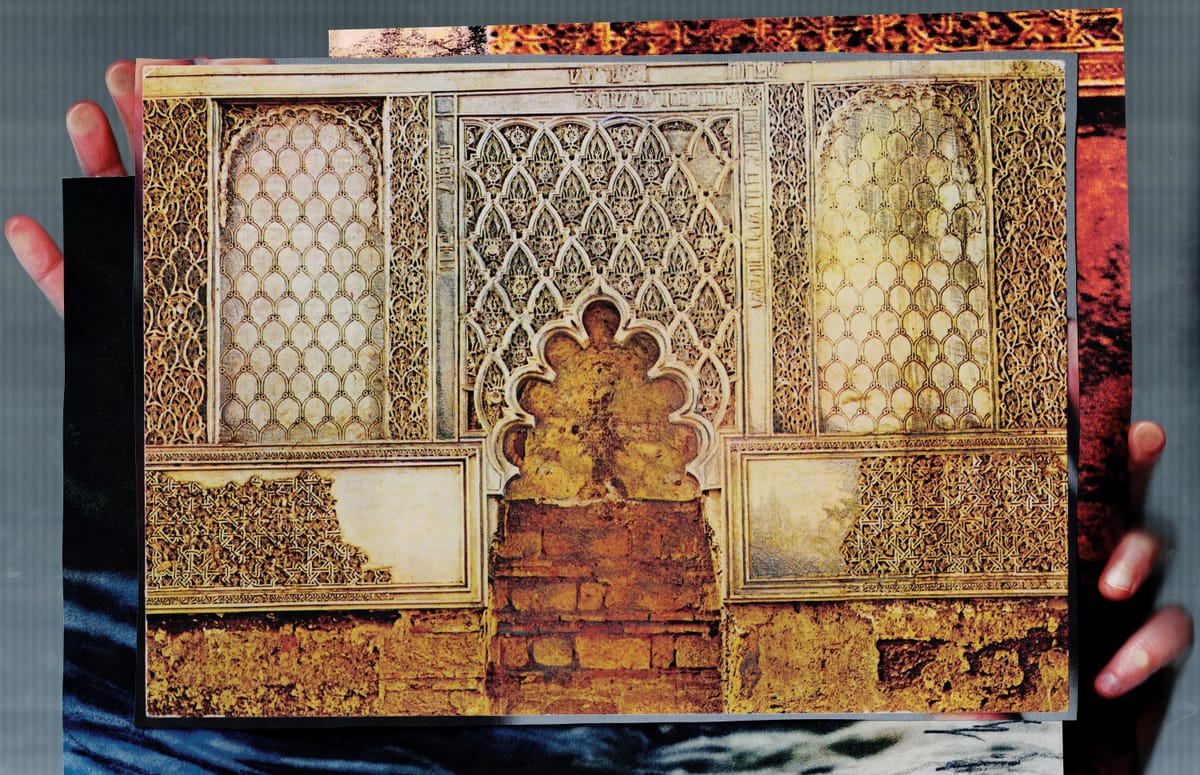
The work by artist Kimi Malka Hanauer examines historical records from Andalusia, focusing on a period when Muslim, Christian and Jewish communities lived in the same region, Marsh said.
“They contend with this history as it extends in the lives of those who once inhabited Andalusia, while reckoning with the continued acts of Zionism and settler colonial expansion that fuel the genocide against Palestine,” Marsh said. The archives help show how the past continues to shape the present.
Marsh was asked what was missing from the official record that these artists are trying to surface.
“I actually think the artists are complicating notions of what an official record may be. Who designates it as official, and what is strategically left out in order to construct a particular narrative?” Marsh said.
The curator pointed to the work of Danielle Brathwaite-Shirley, whose art is focused on Black trans life and the complexities that shape it.
“She draws from the news, her own experiences, and discussions with the Black trans community. These realities are interwoven into the visual novel, and shape the world each player navigates,” Marsh said.
“Much of her work also imagines other realities, and what it could mean to orient towards protecting and nourishing Black trans life- another record is being constructed.”
The show was selected through the Shelley and Donald Rubin Foundation curatorial open call, a process that allowed Marsh to incubate the exhibition idea with the foundation’s team and receive their support in bringing it to life.
“This was particularly helpful to brainstorm with the curators, and receive major installation support, connections with fabricators, and collective problem solving,” Marsh said.
“While I had been working on this exhibition project prior to open call, and it builds on my research, the curators supported as thought partners throughout the process.”
Stories like this take time, documents and a commitment to public transparency. Please support independent arts journalism by subscribing to Urgent Matter and supporting our work directly.