Museum of the Earth pays off mortgage, will remain open after funding crisis
The museum ultimately raised $4,469,603, enough to remain solvent through the end of June 2026.

The museum ultimately raised $4,469,603, enough to remain solvent through the end of June 2026.
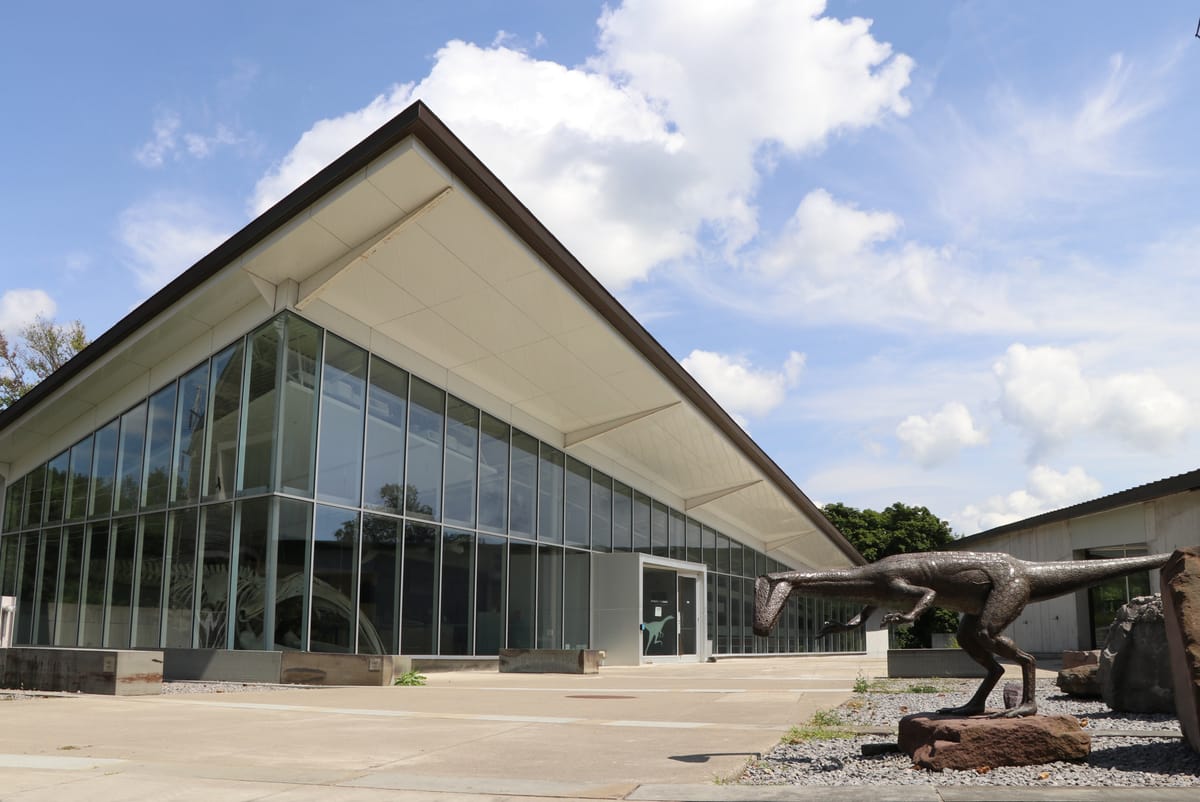
The Museum of the Earth, a natural history museum and research facility in upstate New York, has paid off its mortgage after a donation drive to address deep financial woes threatening the institution’s survival.
Management announced in December 2023 that the Paleontological Research Institution, the Ithaca museum’s parent nonprofit, was facing financial challenges and would be implementing a “strategic downsizing plan” that included laying off half of its staff and decreasing exhibitions and program offerings, among other measures.
Last January, after local news reports on the museum’s struggles, management clarified that it had no plans to close and had not been placed into foreclosure but that there was a real risk they would not be able to cover the mortgage and “other critical costs.”
The PRI’s finances once relied heavily on a single anonymous benefactor who contributed about $20 million over two decades to support the organization and complete construction of the Museum of the Earth in 2003.
 Adam Schrader
But its financial crisis began around 2022, when the donor defaulted on an additional $30 million in pledged support. The donor had also been paying the museum’s mortgage, but those payments stopped in August 2023, leaving PRI to face the debt on its own.
PRI went a year without making mortgage payments while attempting to restore support from the donor, maintaining a flexible arrangement with a local bank. But the bank sold the loan to an Arizona-based holding company in December 2024, and the debt began accruing 13% interest.
The institution reached a deal to pay only interest through the end of 2025 on the condition that it fully retires the debt, about $3 million, by the end of the year. It then launched an online donation campaign to help it reach that goal.
The Museum of the Earth announced late last month that it reached the fundraising goal and was able to pay off the mortgage in full after “an incredible outpouring of support.
“The Institution and our Museum of the Earth will remain open and operating and serving our audiences!” a notice on the museum’s website reads.
“We want to extend our deepest gratitude and appreciation to all those near and far who answered the call to save this organization. Because of these efforts, PRI will continue its scientific and educational mission for future generations.”
Warren Allmon, the director of the museum, penned a blog post on its website reflecting on this past year as the institution raced to secure donations.
“Although in retrospect it seems like we should have known that depending so much on a single donor was risky, this donor had given us more than $20 million over the past 20 years, and had always come through before. We depended on them and did not have a fallback plan,” Allmon wrote in the post.
Allmon revealed that the museum’s financial prospects took a turn for the better after a donor who had known its second director, Katherine Palmer, in the 1960s gave $1 million. Then in May, the museum received a second $1 million donation from another donor.
He noted those donations came in as sales of its plush toy line rose. Museum directors who previously spoke to Urgent Matter have noted that gift shops are increasingly becoming a lifeline for museums.
“By late summer, although gifts continued to arrive at roughly twice the rate of previous ‘normal’ years, larger gifts had slowed and we were still about $1 million away from being able to pay off our mortgage,” Allmon said.
What ultimately saved the institution was a late-stage publicity blitz. It began with a board member's letter to The Ithaca Times and culminated in a CBS Mornings profile featuring 14-year-old Alex Howard, who raised $2,400 by gifting fossils from his own collection to donors.
And an 8-year-old girl sent $40.80 she had saved to the museum with a hand-written note saying she did not want the museum to close. The girl’s family later sent the museum a check for $1,000.
“As a result of all of this activity, plus a few unexpected windfalls of government funding and bequests, altogether PRI raised $4,469,603 in calendar 2025, enough to pay off our entire mortgage and remain solvent through the June 30, 2026, the end of our fiscal year,” Allmon said.
“We have mattered to a lot of people, from a lot of different places and backgrounds, and those people gave generously in our hour of need.”