MFA Boston says recent layoffs did not change racial makeup of staff
Leadership points to unchanged diversity figures as petitions and mutual aid efforts emerge.

Leadership points to unchanged diversity figures as petitions and mutual aid efforts emerge.
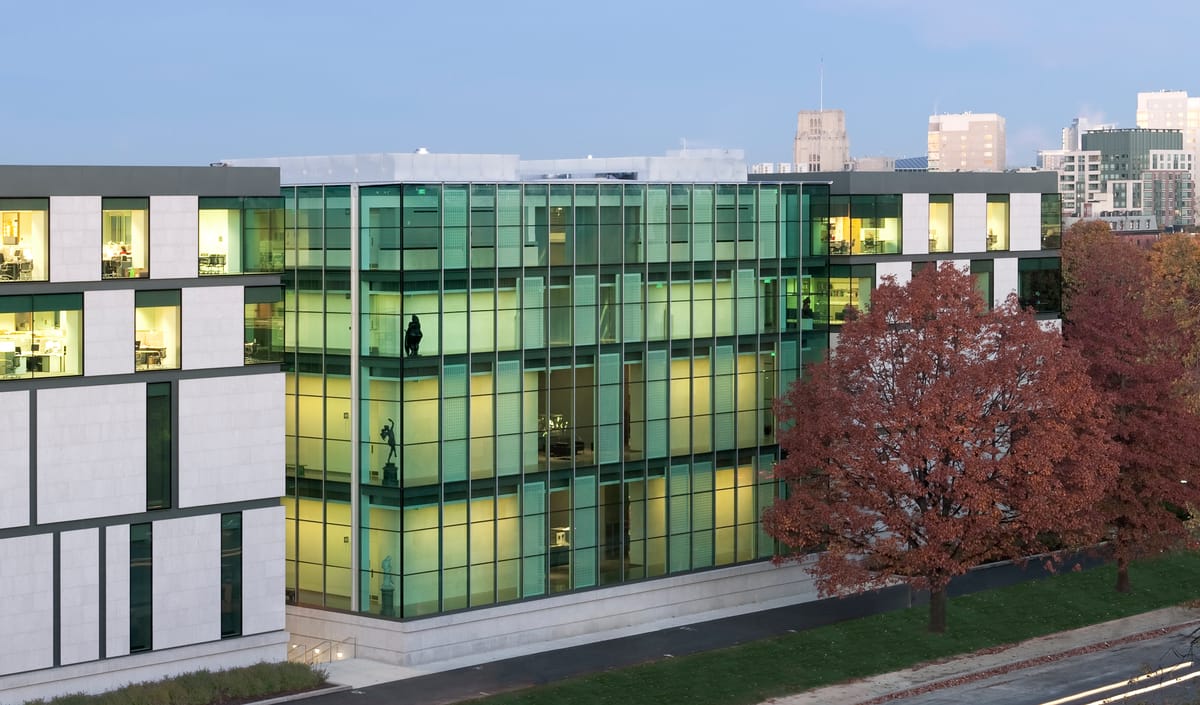
The Museum of Fine Arts, Boston said Friday that recent staff layoffs did not disproportionately affect employees of color, stating that roughly one third of its workforce identified as people of color both before and after the restructuring.
Museum director Pierre Terjanian penned the statement explaining the museum’s decision last month to lay off 33 active employees, about 6.3% of its total active staff. Terjanian said that seven of those laid off were in curatorial roles.
“All along, we took steps to ensure that cuts would not disproportionately impact any groups based on their background or identity,” Terjanian wrote. “One third of our entire staff identified as people of color prior to the restructuring—and those numbers are the same today.”
After the layoffs were announced, a Change.org petition was started seeking to have several workers reinstated. Those workers included Islamic Art assistant curator Nadirah Mansour, Native American Art curator Marina Tyquiengco, and fashion curator Theo Tyson—whom petition organizers described as the museum’s only Black curator.
It also called for teens educator Ruby Rosenwaser to be reinstated.
 Adam Schrader
The petition centered on Mansour, described as one of the few practicing Muslims curating Islamic art at a major museum.
“Nadirah’s role carried significance far beyond a single position. Eliminating her role sends a troubling message about whose histories and communities are valued, particularly at a time when cultural institutions claim to prioritize diversity, equity and inclusion,” petition organizer Shima Khan wrote.
“This decision was not simply an internal staffing matter. It has real consequences for public trust, community relationships, and the integrity of the MFA’s Islamic art collection and programming.”
Community events organized by Mansour for Ramadan in February were cancelled after she was laid off, Northeastern University’s student newspaper reported.
And the Boston Art Review wrote that the layoffs signaled “a de-prioritization of diversity, equity, and inclusion initiatives” at the museum under the administration of President Donald Trump and showed how labor law “has defanged” the power of unions.
Terjanian said the museum retains 489 active staff, including 34 curators and 55 educators and community liaisons.
“Our commitment to inclusion, diversity, equity, and access is unwavering and core to who we are,” Terjanian said.
He pointed to a current exhibition on Hindu prints from modern Bengal and another that “focuses on the ways artists use grand scale, references to painful histories, and images of power” as examples of such DEI commitments.
Still, he said the reorganization and staff reduction “were required” to address the museum’s financial woes, which he said “preceded the pandemic and has compounded over years of systemic pressures facing museums and cultural institutions.”
“Inaction would have caused even greater hardship in the future,” Terjanian said.
MFA Boston said the majority of roles terminated, about three-quarters, were in areas including administration, operations, marketing and fundraising.
“Bearing in mind our mission and the steep financial challenges we face, we had to prioritize the direct care of the collection and the building along with the direct service of our visitors,” he said.
Victoria Reed, the provenance chair at MFA Boston, said in a post to social media Friday that it has “been a difficult couple of weeks” since the layoffs were announced. “But there are ways to help,” she said.
The Coalition for MFA Boston Mutual Aid 2026, a coalition of colleagues from across departments and job titles at the museum, has organized a fundraiser to support former staff. So far, it has raised $22,095 from 169 supporters.
“The effects of this loss and its impact will be felt for a long time to come. What is immediately clear is the difficulty of being suddenly unemployed during an uncertain job market and with unstable options for healthcare,” the coalition wrote.
“Many MFA Boston colleagues and friends of the museum have asked how they might show their support for their affected colleagues and the answer is this campaign to raise funds and gather in-kind professional support and other mutual aid for any of the dismissed employees who wish to participate.”
Stories like this take time, documents and a commitment to public transparency. Please support independent arts journalism by subscribing to Urgent Matter and supporting our work directly.