London fine book bindery expands with new purpose-built workshop
The bindery’s relocation coincides with its 25th anniversary and the release of a new catalogue of fine bindings.

The bindery’s relocation coincides with its 25th anniversary and the release of a new catalogue of fine bindings.
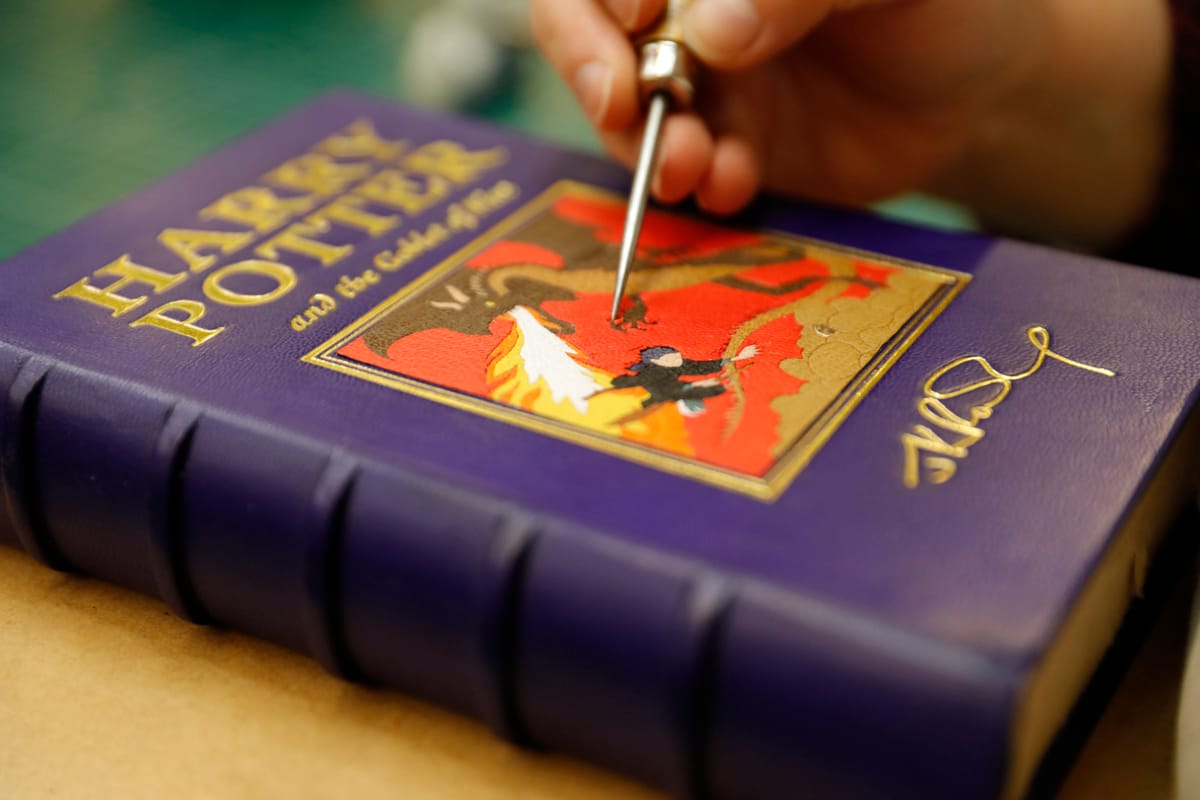
The Chelsea Bindery, the in-house bookbinding workshop of rare book dealer Peter Harrington, has relocated to a new purpose-built workshop near its Chelsea headquarters, expanding its production capacity and creating space for new apprentices, the company said.
The move coincides with the bindery’s 25th anniversary and follows the release of a catalog documenting 140 newly completed fine bindings produced by the workshop.
The new workshop provides additional benches and a more organized working environment for staff, Bindery Manager Emma Doyle told Urgent Matter. The expanded space allows the bindery to manage multiple projects simultaneously and grow its staff.
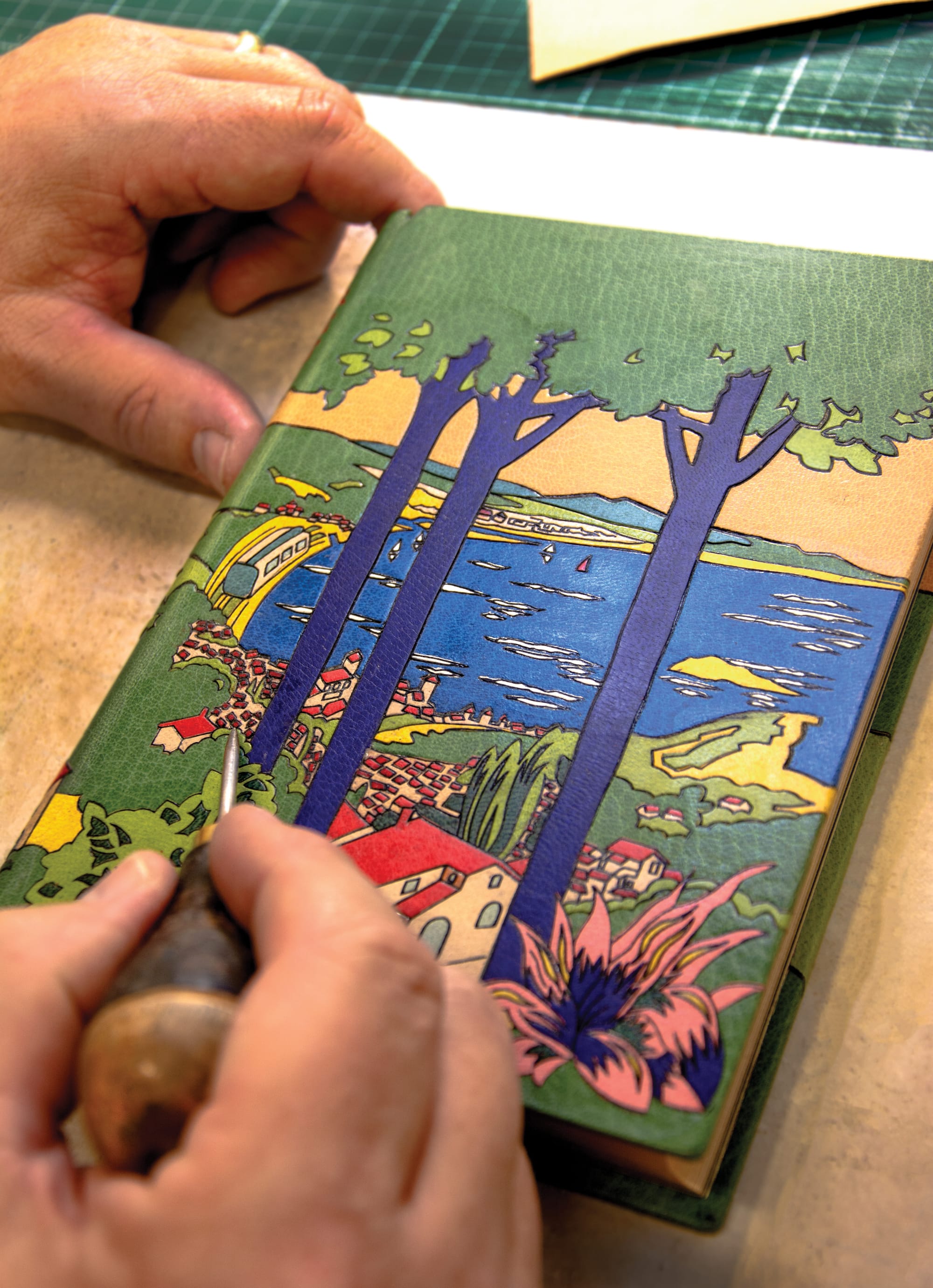
The Chelsea Bindery specializes in traditional leather bookbinding, a manual craft in which printed pages are sewn together, covered with hand-dyed leather and decorated using techniques such as tooling and gilt lettering. Each binding can take eight to 20 weeks to complete and passes through multiple stages.
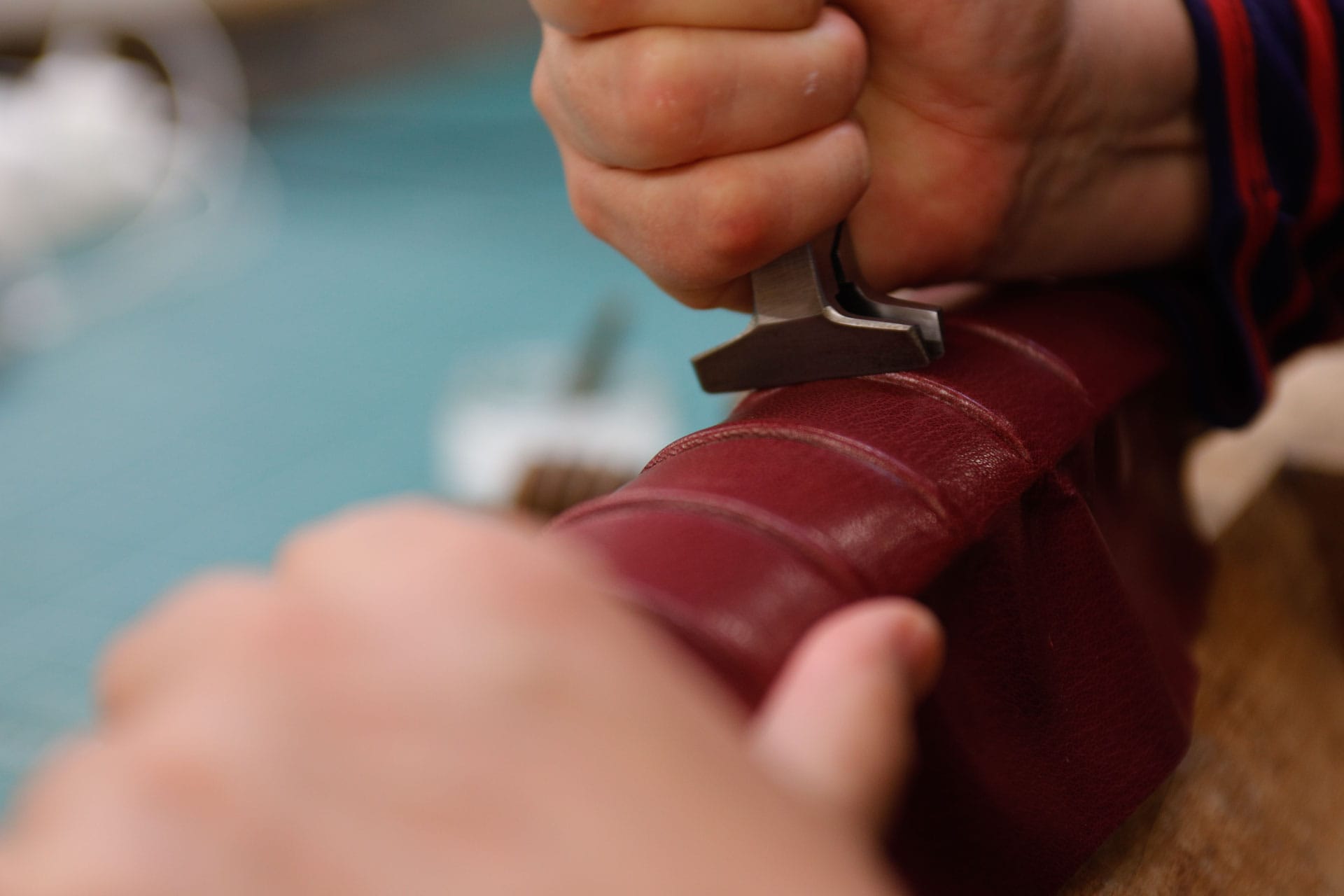
Doyle said staffing and training remain among the biggest operational challenges for the bindery. In traditional fine bookbinding, the work is divided into highly specialized roles, such as forwarders, who sew the pages together and round and back the spines and finishers, who complete the decorative and final surface work.
“There are far fewer formal bookbinding courses and apprenticeship schemes than there once were, and developing skilled binders takes time — around five years to train a forwarder and closer to ten for a finisher,” she said.
The finishing stage, particularly gilt lettering and decoration, requires “the highest level of precision,” she said. During the process, the finisher must keep spacing, alignment and pressure exact, and tools must be at precisely the right temperature “to avoid scorching the leather or losing definition.”
The final decoration involves applying a substance called glaire to the leather and impressing 22-carat gold leaf using heated brass tools. Excess gold is then carefully removed, leaving a crisp finish.
Training takes place largely through hands-on work in the bindery. Doyle said the workshop plans to bring on new apprentices and is exploring partnerships with art courses and student placements, as well as potential collaborations with other binderies to share training resources.
“It is also less common for people to stay in the same job for a lifetime,” she added. “But we see genuine interest from people keen to learn a hands-on craft. The focus for us now is on creating sustainable routes into the profession and ensuring that skills are passed on within an active, working bindery.”
Founded by Peter Harrington in 2000, the bindery initially brought conservation and repair work in-house for the bookshop before expanding into the production of new fine bindings for collectors and clients. Doyle said the corporate structure gives the bindery “a high degree of creative freedom.” She said all designs are developed in-house.
The bindery also produces solander boxes and slipcases to accompany bound volumes sold through Peter Harrington’s galleries and private sales.
“Being part of Peter Harrington means the bindery is kept consistently busy, which allows us to plan long-term and work without the pressure of sourcing commissions,” Doyle said.
The bindery released its 25th anniversary catalog this year, continuing an annual practice of publishing catalogues of newly bound first, limited and illustrated editions. Doyle said the catalog reflects the bindery’s current output rather than serving as a retrospective.
“The Chelsea Bindery has for several years now presented an annual catalog of finely bound first, limited and special illustrated editions,” Doyle said. “This year’s selection highlights our increasing focus on 20th-century literature and increasingly ambitious and elaborate onlays.”
She cited titles including The Old Man and the Sea, The Catcher in the Rye and Rebecca and said the designs “demonstrate how traditional techniques continue to support fresh, contemporary interpretations.”
Doyle said children’s books have drawn particular interest because their illustrations and original dust jackets translate well into leather onlay designs.
The catalog also includes rebindings of every book by Roald Dahl, a rebinding of The Very Hungry Caterpillar using hand-dyed leathers and multicolored onlays, a three-volume Moby Dick set featuring Rockwell Kent’s whale motif blocked in silver, and a geometric minimalist redesign of Nineteen Eighty-Four by senior designer Nigel Bents.
Books selected for contemporary fine binding typically reflect a combination of rarity, condition and cultural popularity.
“Many 20th-century first editions survive with excellent internal pages but damaged bindings or missing dust jackets, making them ideal candidates for rebinding,” Doyle said.
The craft of binding has roots in medieval manuscript production and developed alongside the spread of printing in Europe, where finely bound books functioned both as utilitarian objects and as works of decorative art.
“Where we have modernized and evolved is in design,” Doyle said. “Our bindings are visually more contemporary, with bolder color and more complex onlays, while remaining grounded in traditional techniques and craftsmanship.”
London has a recorded history of fine bookbinding dating back at least to the 19th century. One influential workshop was the Zaehnsdorf Bindery, established in 1842 by Joseph Zaehnsdorf, which produced bindings that remain sought after by collectors. Several early Chelsea Bindery staff members trained in historic London workshops, including those associated with Zaehnsdorf.
Peter Harrington’s promotional materials describe the Chelsea Bindery as “one of only a handful of binderies in London that still practice the centuries-old tradition of fine leather bookbinding.” Urgent Matter could not independently determine by press time how many fine book binders are practicing in London.
The U.K.’s Heritage Crafts Red List of Endangered Crafts, a report modeled after UNESCO’s work safeguarding intangible cultural heritage, categorizes bookbinding as “currently viable” — meaning the industry is “in a healthy state” and has enough practitioners able to impart skills to the next generation.
Collectors and gift buyers commission work from the bindery, Doyle said. The clientele includes private collectors building personal libraries as well as buyers seeking bindings to mark significant occasions.
“There is a clear and growing interest in objects made with skill, care and intention. Each fine binding transforms a story into something tangible – a work of art that embodies the affection and connection readers feel for the books that have shaped them,” Doyle said.
“For many of our customers, a fine binding embodies this increasing appreciation for handcrafted items just like it has in many other avenues, such as fashion or homeware.”
Urgent Matter is an independent publication. This reporting is made possible by subscriber support. If you value independent, non-promotional coverage of the art world, consider subscribing.