Lee Friedlander’s new book traces decades of American politics in everyday scenes
The book, published by Aperture, is out March 24 and includes 136 images.

The book, published by Aperture, is out March 24 and includes 136 images.
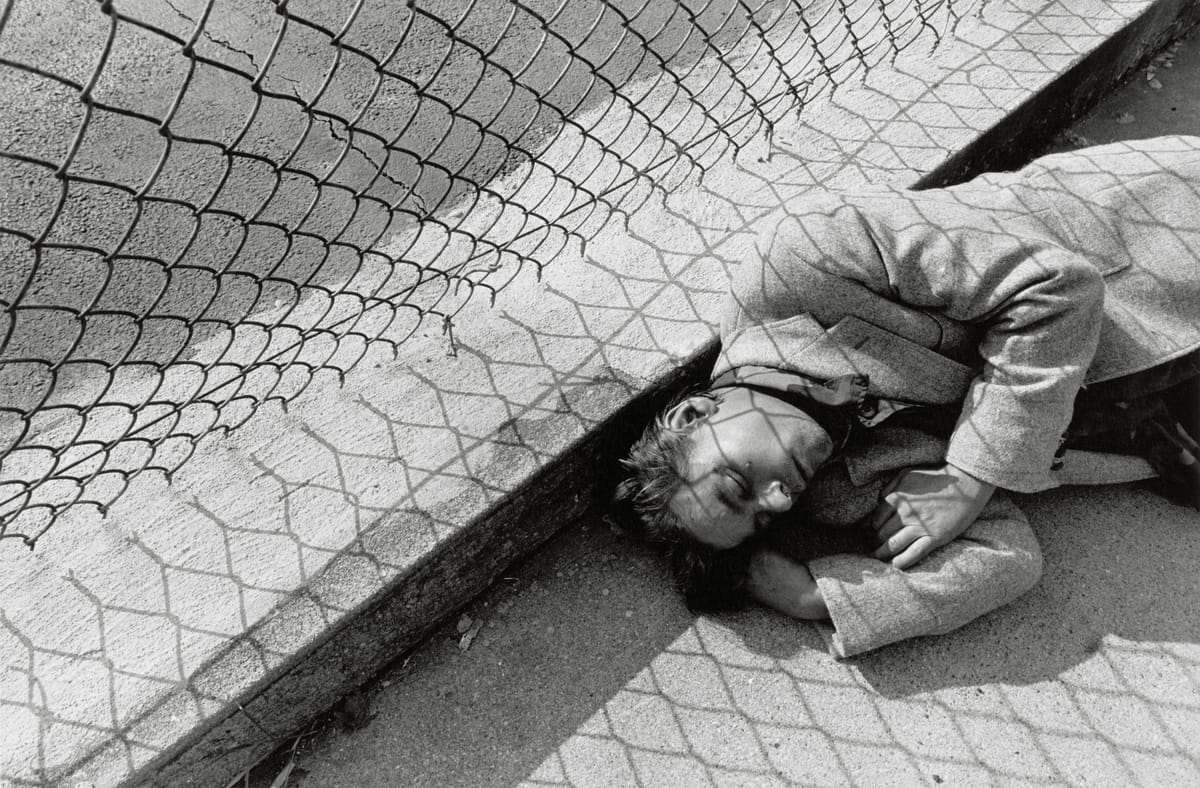
A new monograph by photographer Lee Friedlander brings together decades of images that quietly chart the political and cultural textures of American life, from campaign memorabilia and Vietnam-era protest imagery to labor organizing and street-level satire.
Published by Aperture on March 24, Lee Friedlander: Life Still features mostly previously unpublished photographs drawn from the artist’s vast archive, pairing older work with newer images to create unexpected dialogues across time.
The book includes 136 images, all rendered in tritone, with an essay by Pulitzer Prize–winning critic and New Yorker staff writer Hua Hsu.
“Few people have taught us to see America quite like the photographer Lee Friedlander. He has been making pictures since the 1950s, focusing largely on what critics and historians describe as the urban social landscape, all these little, jigsaw scenes of our built environment,” Hsu wrote.
“He notices the everyday moments that go unnoticed by most, moments so inconsequential that we probably wouldn’t even bother dismissing them as mundane.”
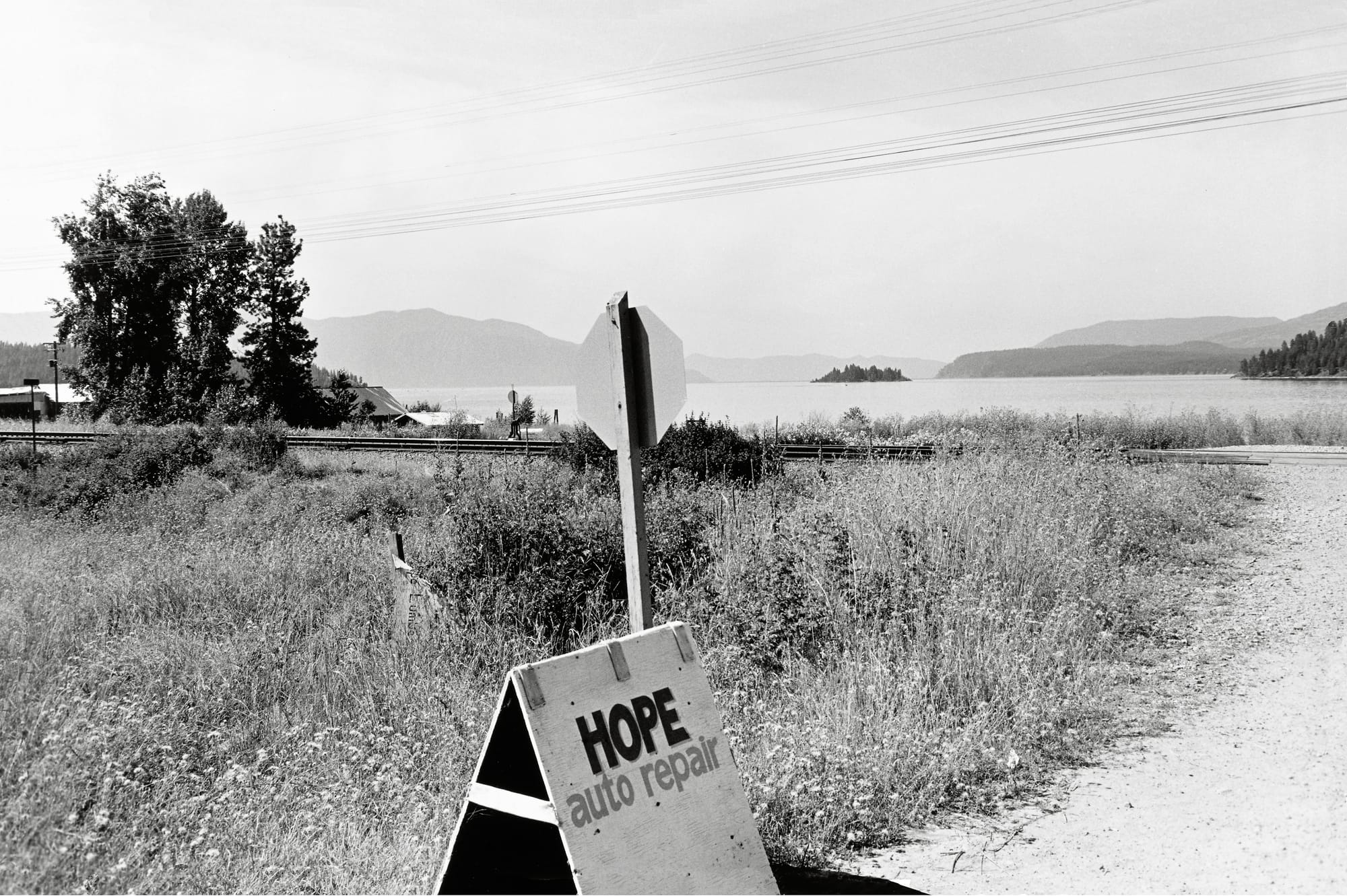
The book starts with pictures of Americana—the decaying entrance to a ranch in Kentucky, an empty chair and a welcome sign seemingly in a hotel lobby—but quickly turns political with the seventh photograph in the book depicting a commemorative plate honoring Lyndon B. Johnson and his wife, Lady Bird, taken in New Orleans in 1973.
One spread a few pages later pairs a photograph of a ripped-up flier for Johnson in Chicago in 1968 with a photograph of Shepard Fairey’s portrait of Barack Obama, rendered as a bumper sticker on a car in New York in 2010. Another image much later in the book features the same Obama portrait, on the magazine cover of Time when he was named Person of the Year.
There’s a photograph of a smiling man wearing a hat covered in campaign buttons supporting John F. Kennedy in Atlantic City in 1962.
Another shows “Damage Control,” a satirical street-art poster created in 1991 by political artist Robbie Conal. The poster features a caricature of Dan Quayle, who served as vice president under George H. W. Bush from 1989 to 1993. The phrase “Damage Control” references the repeated efforts by the Bush administration to manage the fallout from Quayle’s widely mocked public verbal gaffes.
In another spread, a photograph on the left page features a woman holding an official game program that highlights the Army Black Knights roster at West Point during the 1972 football season in the final years of the Vietnam War.
The photograph on the right page shows a protester wearing the iconic “Fuck the Draft” poster, created in 1968 by activist Kiyoshi Kuromiya, as a cape. The poster features a photograph of Detroit resident Bill Greenshields burning his draft card during the 1967 march on the Pentagon, an image that became a symbol of resistance.
Another photograph from 2016 shows a poster of the legendary singer and actress Eartha Kitt in a strapless dress pinned to a wall.
Though Kitt was a global star known for her distinctive voice and her role as Catwoman in the 1960s Batman TV series, she famously confronted Lady Bird Johnson and President Lyndon B. Johnson at a 1968 White House luncheon, where she spoke out forcefully against the Vietnam War, leading to her being blacklisted.
There is a photograph of a wall full of rifles above the head of a female mannequin wearing a wig in Nashville in 1966. Like it, many seem to comment on society’s views of women. One image shows a “Girls Wanted: No Experience Necessary” sign in a storefront while another has broken limbs of female mannequins with a “For Sale” sign. And a woman in a burqa is pictured window shopping for dresses in London in 1975.
Other photographs appear to comment on labor conditions in the United States, a poignant topic amid increased labor unionization efforts since the COVID-19 pandemic and current economic conditions.
“Fuck the Rich,” reads graffiti seen in one image. Another includes a message painted onto the side of a building: “No Credit, Not Even to the President.”
One photograph shows a display in a shop window with a “Union Shop” card issued by the Journeymen Barbers, Hairdressers and Cosmetologists’ International Union of America.
 Adam Schrader
Further in the book is a 2010 picture of “Scabby the Rat,” a grotesque inflatable rat frequently seen outside construction sites and protests in New York City. He is a mascot used by organized labor to call attention to companies accused of unfair labor practices. Scabby’s name references the term “scab,” a derogatory label used since the 1800s for workers who cross picket lines.
“Rail chiefs talk merger,” reads a headline from the Boston Herald in the background of a photograph from 1958.
A woman in a hair net and curlers buys something, maybe a lottery ticket, from a New York newsstand in 1993. The Luxor casino in Las Vegas is pictured behind a drainage ditch filled with debris.
“Sorry to disappoint you. I have partly retired,” reads a sign in a shop window. “Will be open Thursday, Friday and Saturday.”
 Adam Schrader
The photographs are often taken through glass and the images explore what is meant to be seen as much as what is reflected from the background. And not all the images feel so overtly political. Many simply have funny juxtapositions of their subjects or are simply aesthetically pleasing.
“I recently taught a class on the American dream, a concept that feels most legible in its absence: Every generation feels as though they’ve shown up late to the party. In recent years, I’ve noticed more students raising the topic unironically—kids, born in the mid-2000s, who are genuinely curious about this fantasy of yesteryear,” Hsu wrote.
“What was it like to believe there was something exceptional about America? And what scrap of hope remained?”
Stories like this take time, documents and a commitment to public transparency. Please support independent arts journalism by subscribing to Urgent Matter and supporting our work directly.