Justice Department urges Supreme Court to reject A.I. copyright claim
The case, which tests the definition of authorship, could redefine the multibillion-dollar generative A.I. industry.

The case, which tests the definition of authorship, could redefine the multibillion-dollar generative A.I. industry.
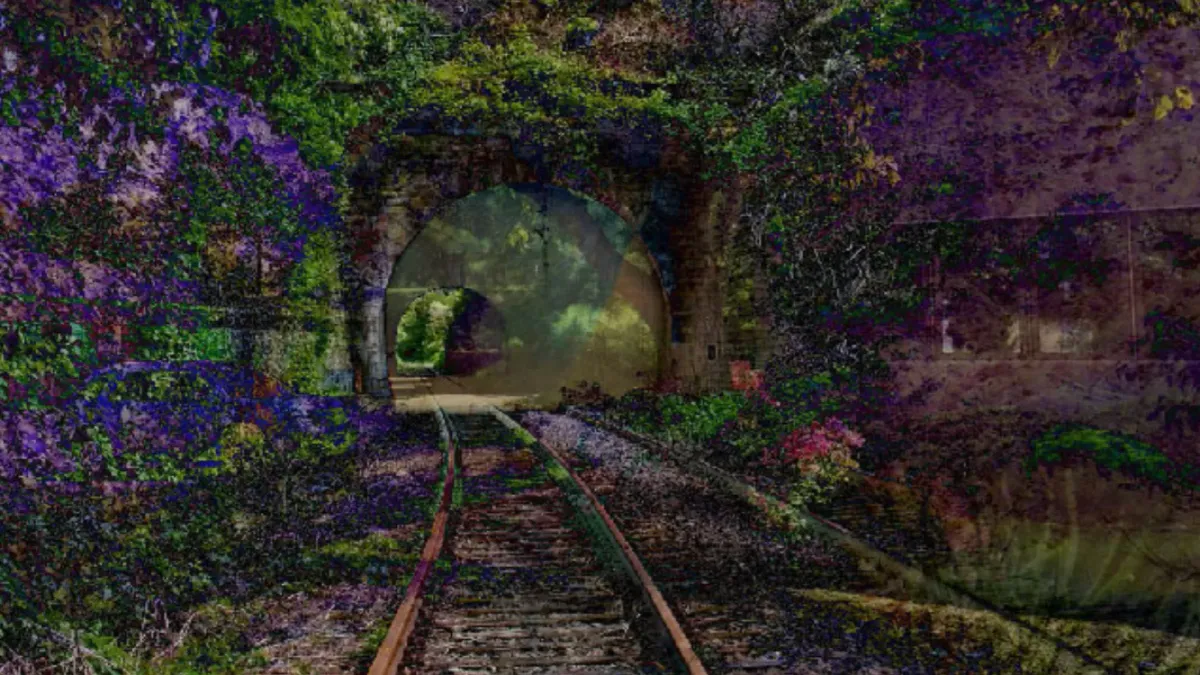
The U.S. Justice Department has asked the Supreme Court to decline to review a case that seeks to extend U.S. copyright protection to a work created entirely by artificial intelligence, arguing that federal law requires a human author.
The case, Thaler v. Perlmutter, stems from a 2018 application for copyright protections that computer scientist Stephen Thaler filed with the U.S. Copyright Office for an artwork titled A Recent Entrance to Paradise, which was generated using an A.I. system he created.
Thaler is the president of Imagination Engines, which has developed new artificial intelligence capabilities for institutions from defense contractor Raytheon to NASA.
In his application, Thaler had listed his system, the “Creativity Machine,” as the author of the artwork, which depicts train tracks running through a floral landscape. Thaler had left a note in his application that the work was autonomously made by his A.I. system but that he was seeking to register it as a work made for hire as the owner of the algorithm.
 Adam Schrader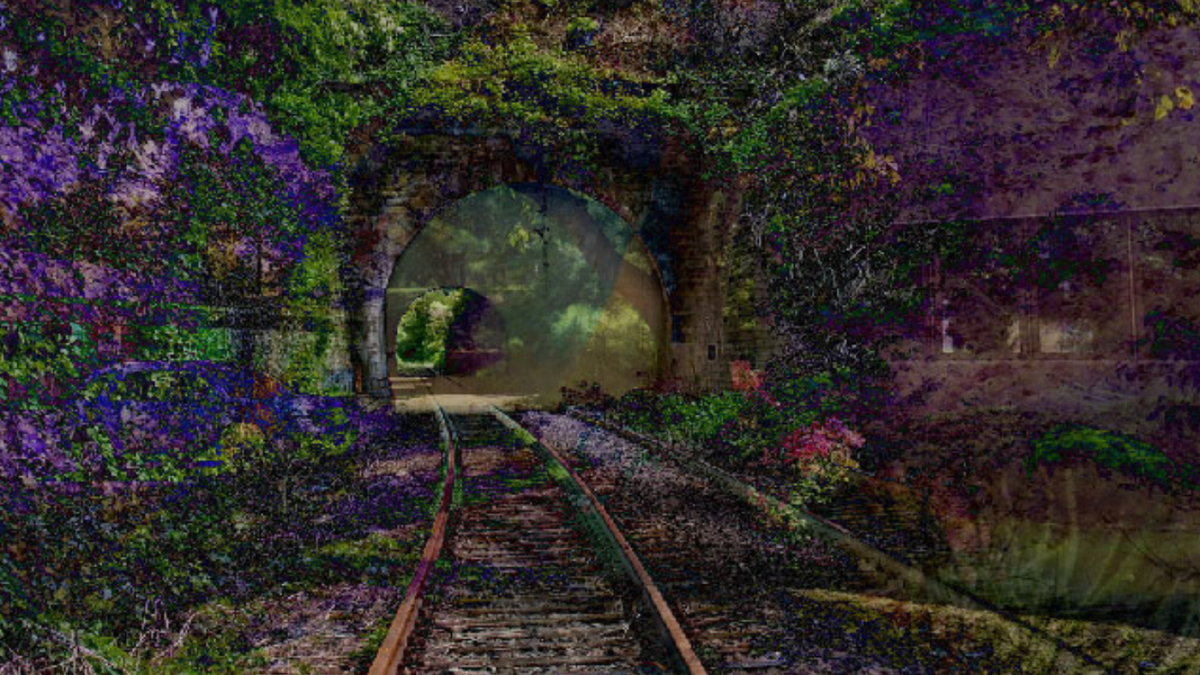
The Copyright Review Board denied the application in February 2022, records show, after a Copyright Office registration specialist had earlier refused to register the claim in August 2019, finding that it “lacks the human authorship necessary to support a copyright claim.”
At the time, the Copyright Review Board noted that the only issue before the board for its consideration was whether, as Thaler argued, the Copyright Office’s requirement of human authorship is unconstitutional or unsupported by statutory law and precedent. The U.S. Copyright Office has long held that it will not register works not made by a human author.
After the denial by the Copyright Review Board, Thaler filed a federal lawsuit against the Copyright Office and its director, Shira Perlmutter. In August 2023, amid the boom in generative A.I., a federal district court judge determined that the Copyright Office was “correct that human authorship is an essential part of a valid copyright claim.”
In March 2025, a three-judge panel with the U.S. Court of Appeals for the District of Columbia Circuit affirmed that only works with human authorship could be granted copyright protections under U.S. copyright law.
"Because many of the Copyright Act's provisions make sense only if an author is a human being, the best reading of the Copyright Act is that human authorship is required for registration," the appeals court said.
Thaler filed his petition for a writ of certiorari with the Supreme Court to challenge the constitutionality of human authorship requirements in early October.
“This case presents the question of whether a work outputted by an artificial-intelligence system without a direct, traditional authorial contribution by a natural person can be copyrighted. A straightforward reading of the Copyright Act leads to the conclusion that it can and should be,” lawyers for Thaler wrote in the application.
“The U.S. Copyright Office, however, imports words into the Act that Congress never drafted and requires vague elements of human authorship that arose from the Copyright Office itself—without statutory support.”
Government lawyers filed a brief in opposition to Thaler’s petition with the Supreme Court on January 23, court documents show. In it, they urged the justices to leave in place a lower court ruling that upheld the U.S. Copyright Office’s refusal.
“Petitioner contends (Pet. 11-30) that copyright protection under the Copyright Act does not require human authorship. The court of appeals correctly rejected that contention, and its decision does not conflict with any decision of this Court or another court of appeals,” government lawyers wrote. “The petition for a writ of certiorari should be denied.”
In its filing opposing Supreme Court review, the Justice Department said the rulings from the lower courts had followed the structure of the Copyright Act and decades of settled practice. Although the statute does not define the term “author,” the government argued that multiple provisions make clear that Congress intended authorship to be human.
The Justice Department noted that copyright generally lasts for a term consisting of the life of the author and 70 years after the author’s death.
“But machines do not have ‘lives’ nor is the length of their operability generally measured in the same terms as human life,” the Justice Department argued.
When an author dies, certain rights to take back control of the copyright can pass to the author’s spouse or children, who can then decide what happens to it. “But machines ‘have no surviving spouses or heirs,’” the Justice Department argued.
To transfer a copyright, the owner has to sign a written document agreeing to the transfer. But the Justice Department argued that “machines do not have signatures.”
Between March 2023 and January 2025, the U.S. Copyright Office “registered hundreds of works that incorporate A.I.-generated material,” the Justice Department said.
The government lawyers said that the number has continued to grow, with copyright officials making case-by-case determinations as to whether human contributions to A.I.-generated outputs are sufficient to constitute authorship.
“In this case, however, petitioner expressly disavowed making the sort of contribution that the Copyright Office has previously found sufficient, instead representing that the image he sought to register involved no ‘creative contribution from a human actor’ at all,” the Justice Department lawyers told the Supreme Court.
“The court of appeals correctly resolved the narrow question that petitioner’s application presented, without addressing any broader issue concerning the circumstances in which a human user of A.I. technology can qualify as the ‘author’ of an A.I.-assisted work. The decision below accordingly does not warrant further review.”
Thaler’s case could potentially have widespread ramifications for copyright protections for A.I.-generated art. But Thaler asserted in his petition that if his petition is denied, even if the Copyright Office’s human authorship test is later overturned, it “will be too late.”
Stories like this take time, documents and a commitment to public transparency. Please support independent arts journalism by subscribing to Urgent Matter and supporting our work directly.