Iran to hold first national conference on art policymaking
The conference comes as Iranian officials link art policy, heritage preservation and cultural influence amid growing regional competition.

The conference comes as Iranian officials link art policy, heritage preservation and cultural influence amid growing regional competition.
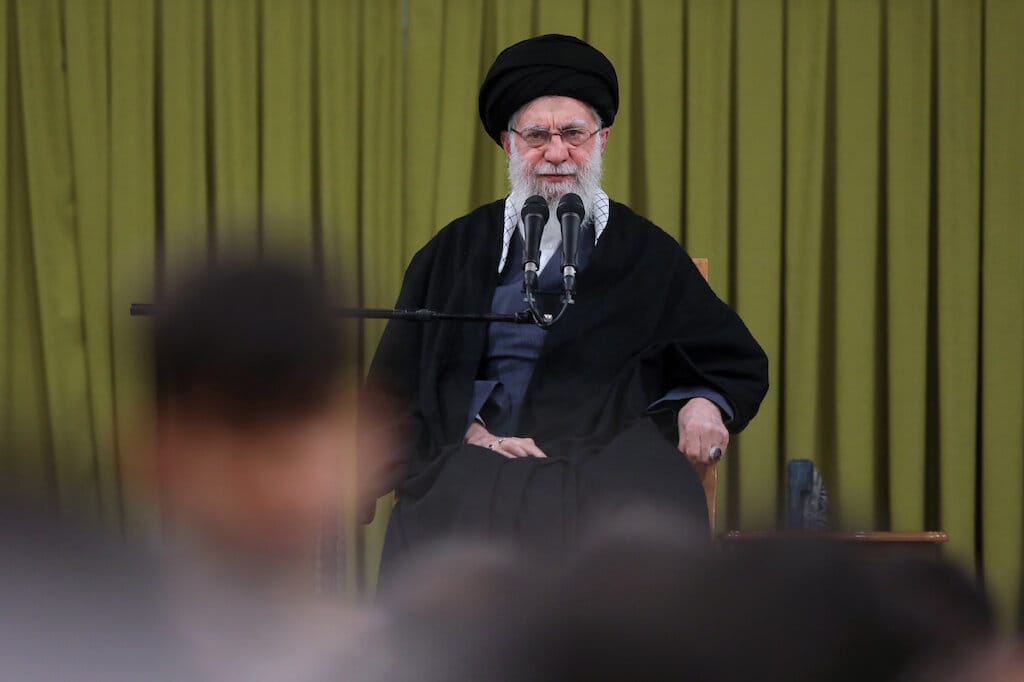
Iran will convene its first-ever national conference on art policymaking this February, a strategic attempt by the Islamic Republic to reclaim cultural influence in an increasingly competitive Middle Eastern landscape.
The conference will take place February 15 at the Academy of Arts near Talaghani Square in central Tehran, according to Iranian state media. It is being held in cooperation with the Research Institute of Culture, Arts, and Communications, as well as various universities and cultural stakeholders and policymakers.
Researchers at the conference aim to evaluate the country’s art policies, covering the period since Ayatollah Ali Khamenei assumed power in 1989.
Iranian state media reported that the researchers are expected to “diagnose problems,” examine the government’s role in the arts and advance art-related policies.
The news came as Iranian state media also reported that top officials overseeing historical monuments and cultural heritage have cited urban development and a lack of funding as the most significant challenges to the national and global registration of historical and natural monuments.
In December, Urgent Matter reported that Iranian authorities were facing internal criticism from cultural heritage experts amid delays in submitting its rosewater practices for United Nations protection, following a similar registration by regional rival Saudi Arabia that was recently successful.
The Damask Rose has become the center of a subtle "heritage war" across the Middle East. Three countries—Syria, Saudi Arabia and Iran—all boast ancient traditions of cultivating the flower and distilling its prized rosewater and oil.
Those disputes over the registration of the Damask Rose reflects the broader rivalry between Iran and Saudi Arabia, where even cultural heritage becomes entangled with questions of identity and regional influence. While UNESCO does not arbitrate ownership of traditions, nominations are often read domestically as markers of national prestige.
Alireza Izadi, Iran’s head official for the registration and protection of historical monuments, said in a recent interview with IRNA that “sustainable urban development must pay serious attention to cultural heritage.”
“Historic buildings and sites play a crucial role in the development of urban tourism. Tourists in a destination like Iran are looking for historical identity, and the main attraction for them is the cultural and historical background of the cities,” he said.
Iranian authorities noted that the registering of historic monuments prevents renovation and requires the owners of the site to carry out restoration according to regulations, which sometimes causes the owner to suffer a loss.
“Of course, the rate of destruction of historical sites has decreased significantly compared to past decades, but we still face challenges in this regard,” Izadi said.
Iran’s Ministry of Cultural Heritage, Tourism and Handicrafts, however, does not have the funds or resources to acquire, restore and provide long-term supervision of such sites.
“Although there have been increases in funding in recent years,” Izadi said, “we are still a long way from an ideal situation.”
 Adam Schrader
Across the Middle East and North Africa, governments have increasingly expanded their cultural efforts to advance diplomatic interests, strengthen international partnerships, and project influence through museums, heritage policy and high-profile arts initiatives.
Art Basel’s first fair in Qatar, the organization’s debut in the Middle East, ended over the weekend. In the United Arab Emirates, cabinet officials in December moved to draft a federal heritage law after a period of major museum openings and increased investment in cultural infrastructure.
Stories like this take time, documents and a commitment to public transparency. Please support independent arts journalism by subscribing to Urgent Matter and supporting our work directly.