Interlochen report details decades of sexual abuse by 47 adults
Two alumni told investigators that Jeffrey Epstein, a former donor, abused them.

Two alumni told investigators that Jeffrey Epstein, a former donor, abused them.
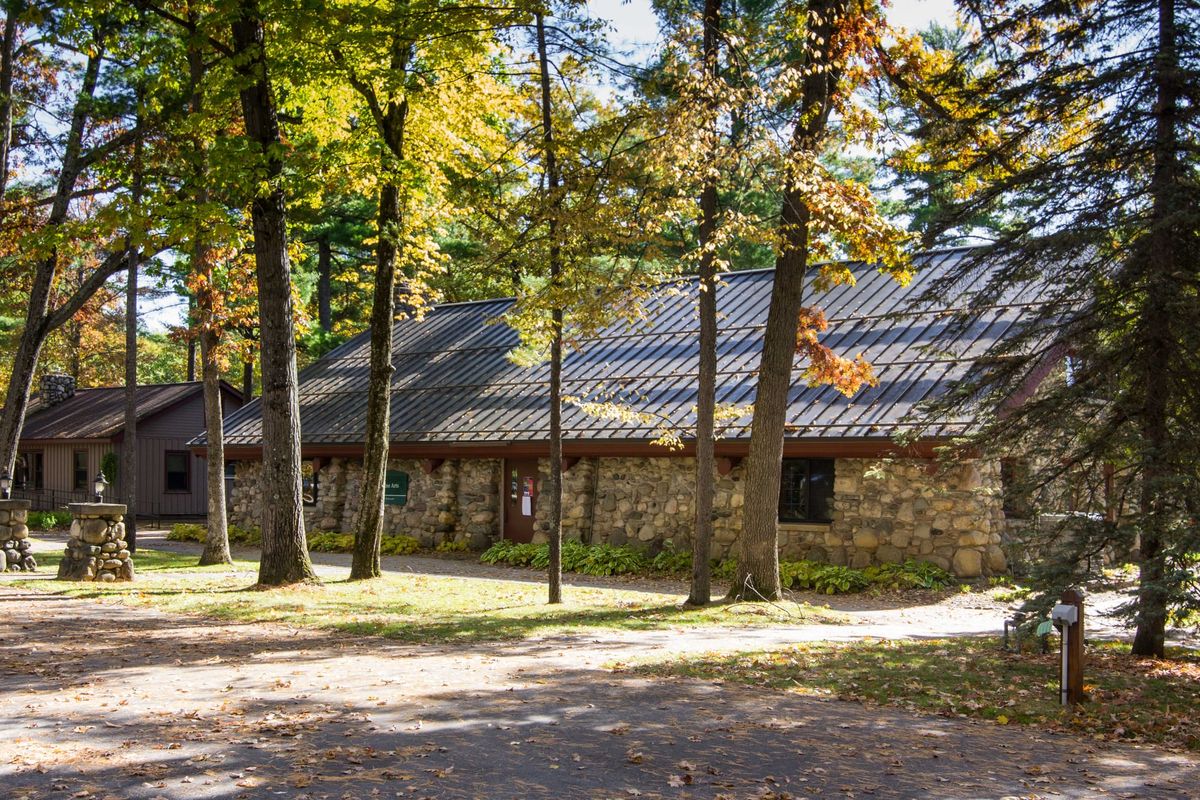
An external investigation into Interlochen Center for the Arts documented about 70 firsthand accounts of sexual abuse by 47 adults affiliated with the northern Michigan arts school and summer camp, spanning the 1950s through the 2010s, according to a report the institution commissioned.
Two former students told the investigators that Jeffrey Epstein, a former Interlochen donor, engaged in physical conduct of a sexual nature with them while he was connected to the school.
The 97-page report, dated July 27 and prepared by Sanghavi Law Office of Brookline, Massachusetts, caps a nearly two-year inquiry that began in September 2024.
“The information gathered during this investigation is, simply, devastating,” the report said.
Interlochen, founded in 1928 as a summer music camp, runs a boarding high school known as the Interlochen Arts Academy and a summer program known as the Interlochen Arts Camp. The Academy has about 580 students.
The investigators conducted roughly 180 interviews with about 150 people, mostly former students, and gathered additional written accounts. They received about 70 firsthand reports of adults engaging in sexual conduct with students, naming 47 people, some reported to have abused students across more than one decade. Seventeen of the 47 are dead, Interlochen said.
The reported conduct included grooming, sexual comments, touching, and vaginal, anal, and oral intercourse, and in some cases long-term “relationships” with students, records show. The investigators noted that any conduct between an adult and a student is not appropriate in an educational setting regardless of description.
The people accused held a range of roles — arts faculty, academic teachers, residence life staff, donors, trustees, board members, and campus visitors, the report found. The abuse was reported to have taken place in faculty homes, dorm rooms, cars, campus bathrooms, on school and personal trips, and on a lake near campus.
The investigators did not determine whether the reported conduct occurred, and did not judge whether Interlochen’s response to any report was sufficient, timely, or appropriate. The report chronicles the accounts as they were given.
This article is provided free with the support of paying subscribers. Not ready for a paid subscription? Sign up for a free account today.
No spam. Unsubscribe anytime.
Interlochen expanded the inquiry at its own request to seek people who might have information about Epstein, a donor from 1990 to 2003 who funded scholarships and the construction of a named lodge on campus. Of eight former students the school connected to the investigators, six responded, and two said Epstein had abused them.
One said she met Epstein and Ghislaine Maxwell at Interlochen, that they offered and paid her tuition, and withdrew support for her later schooling after she declined to engage in conduct they requested.
She said Epstein brushed against her body at his lodge on campus in a way he described as accidental, and that she visited him in New York three times as a student on flights he paid for.
In New York, she said, Epstein put his hands on her, and she would freeze each time he was “handsy” with her until he stopped. She said she massaged his feet and rubbed his back, and that he put his hand on her crotch as they crossed a road. She did not tell anyone for decades.
The second former student said that the summer after she graduated, Epstein paid for her to fly to New York, gave her a tour of his home, brought her into a room with a massage table, and may have asked her to remove her top, the report states. Two people corroborated her account.
Her mother reported the conduct at the time, the report said. She called Interlochen’s main number, gave Epstein’s name and noted he was a benefactor. She was told the school was not aware of any problems with him, that he was not a teacher, and that the conduct had not happened on campus. No one from Interlochen followed up, she said.
Interlochen provided no records showing notice of misconduct by Epstein, and no current or former employee interviewed said they were aware of it, the report said. One former student said two adults affiliated with Interlochen had warned him about Epstein.
Urgent Matter previously reported that internal Interlochen documents released under the Epstein Files Transparency Act showed a $185,000 donation from the Wexner Foundation and Epstein.
In a December statement, Interlochen said Epstein attended the camp in the summer of 1967 and was a donor from 1990 to 2003, and that internal reviews in 2008 and after his 2019 arrest found no record of complaint involving him.
Interlochen renamed the building it had named for Epstein, calling it Green Lake Lodge in 2009, and demolished it in June, after allowing local law enforcement to photograph the interior and exterior for possible use as evidence, the report said.
Beyond Epstein, the report chronicles cases where the school learned of concerns at the time. In several, administrators wrote letters of recommendation for faculty members after receiving reports about their conduct, records show. One former student said she was told a teacher was allowed to resign so it would not go on his record.
Another former student said an administrator called him a “slut” after he reported a faculty member who he said sexually assaulted him during a school trip. The faculty member did not respond to the investigators’ outreach.
A longtime arts faculty member identified in the report as Respondent 18 told the investigators he became “obsessed” with a student and described “at least an emotional affair” that lasted months and that he said was “not appropriate.” He said that when it ended, the student told him, “Thanks for ruining my life.” He said he did not go “over the line” with any other student.
An academic teacher identified as Respondent 32 said he did not have intercourse with students “but there was touching,” some of it sexual, and that he had engaged in touching with one student and “probably” another, the report said. He described his relationship with one of them as “sort of father-daughter for quite some time,” then ended the interview.
Another former faculty member, identified as Respondent 43, pleaded guilty to a count of attempted fourth-degree criminal sexual conduct after an incident in the 2000s in which he was reported to have touched a student under a blanket at his home, the report states.
Former students tied the abuse to how open the campus was and how much access adults, including outsiders, had to students. One wrote that in the 1990s donors were “given virtually free rein.” Another described the campus as “a free and open” place. Former students said one trustee was allowed to walk through an all-female dorm and flew students out of state to stay with him.
Others described why they stayed silent — fear of losing scholarships or being disciplined for drinking or breaking curfew, reluctance to get well-liked teachers in trouble, and for some, fear of being sent home to situations worse than school. “I didn’t want to get him in trouble,” one former student from the 1950s said.
Alumni described lasting effects on their careers, mental health, and relationships. “Abuse and trauma are heartbreaking for generations,” one told the investigators. Another said of the school, “It makes me so conflicted – this wonderful institution that negatively impacted my friends in lifelong ways.”
Interlochen commissioned the investigation after an Academy alum from the 1970s contacted the school in April 2024 about a longtime faculty member and division director, identified in the report as Respondent 1, who is dead.
The report identified the accused by number. In the statement it published with the report, Interlochen named several of them.
Respondent 1 was named as Byron Hanson, a faculty member and administrator from 1960 to 2015; Respondent 8 as John “Jack” Hood, a faculty member and administrator from 1963 to 1979 who returned in seasonal roles through 2004; and Respondent 19 as Charlie McWhorter, a trustee from 1970 to 1999.
The school said it named them because they had died and because the investigators had gathered multiple firsthand accounts against each.
Interlochen also pointed to accused people whose cases were already public.
Thomas Clower, an arts faculty member from 2003 to 2005, was convicted of criminal sexual conduct in 2005 after the school reported him and fired him. Jeremy Eden, a camp counselor in 1997 and 1998, was fired when reports of sexual misconduct arose and was convicted in 1998.
The school said three other former employees — Tom Jalovec, Casey Fall and Jonathan Ciepiela — were convicted on child-pornography charges between 2007 and 2024 that it said were unrelated to their work there.
Interlochen said it turned over the names of everyone accused to the Grand Traverse County prosecutor’s office and the county sheriff’s office. It said neither the report nor the school would name the living accused, to avoid interfering with any law enforcement review and to protect the alumni who took part.
The school said it would review namings on campus tied to people “whose conduct does not reflect our values,” set up a fund for survivors’ counseling and commission an artwork honoring them. It said the violinist Lara St. John, who has spoken publicly about being abused as a young music student, would give the keynote at its 2027-28 orientation.
Interlochen’s current records-retention policy keeps personnel files for seven years, and some older files had been purged before the investigation began, the report said. The investigators said their work would continue if more people come forward.
Urgent Matter is reader-supported. Please consider subscribing to support independent arts journalism.