Instagram’s Threads censors nude image of Marina Abramović’s ‘Imponderabilia’
The platform removed a post showing a museum performance and flagged it as “adult sexual solicitation,” despite Meta’s exceptions for art.

The platform removed a post showing a museum performance and flagged it as “adult sexual solicitation,” despite Meta’s exceptions for art.
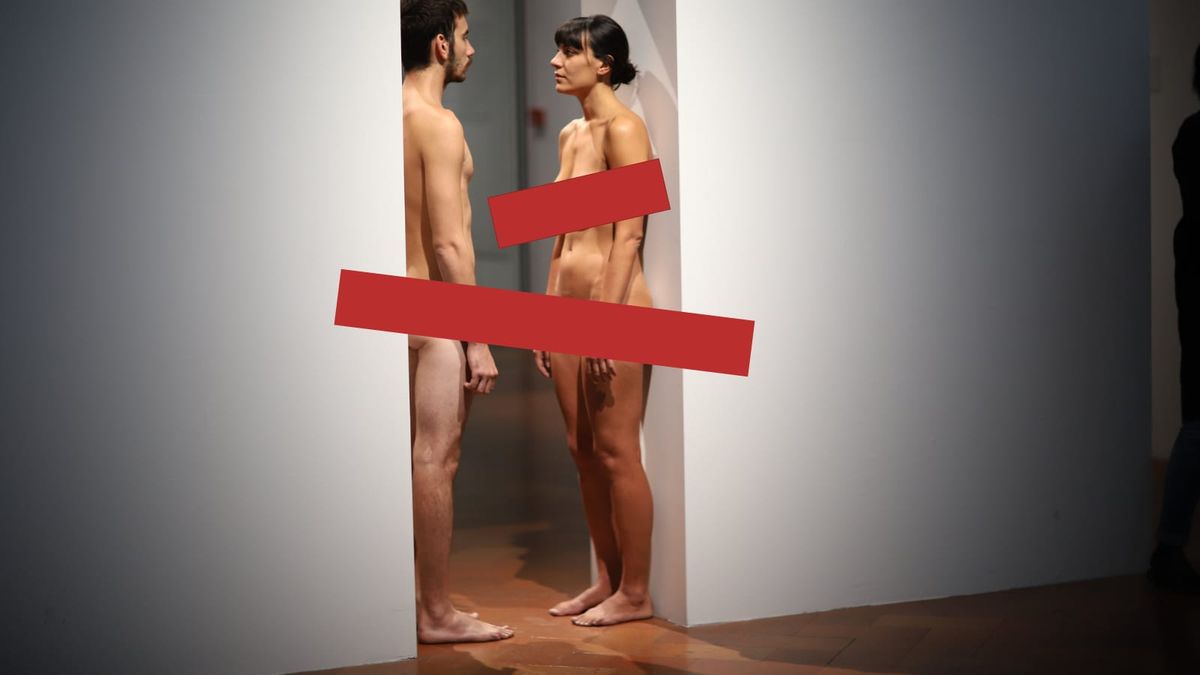
Instagram’s Threads platform has censored an image of a performance of Marina Abramović’s Imponderabilia.
Last Week, Urgent Matter reported that the Museum of Modern Art has submitted a formal answer to a 2024 sex abuse lawsuit filed by a man who performed nude during the 2010 staging of Imponderabilia.
Originally staged in 1977 in Bologna by Abramović and her then-partner Ulay, Imponderabilia required museum visitors to pass directly between the nude artists in a single narrow doorway, leaving no alternate route into the gallery.
Performer John Bonafede accused MoMA in his lawsuit of failing to protect him from repeated sexual abuse by visitors despite knowing it was happening during a staging as part of Abramović’s 2010 retrospective.
When MoMA presented the work, visitors were permitted to bypass the performance entirely by using another entrance, making the act of squeezing between the nude performers optional rather than unavoidable.
Still, Bonafede said he was sexually assaulted seven times by five different visitors, who he said groped his genitals as they passed through the narrow doorway where he was required to stand still and silent.
 Adam Schrader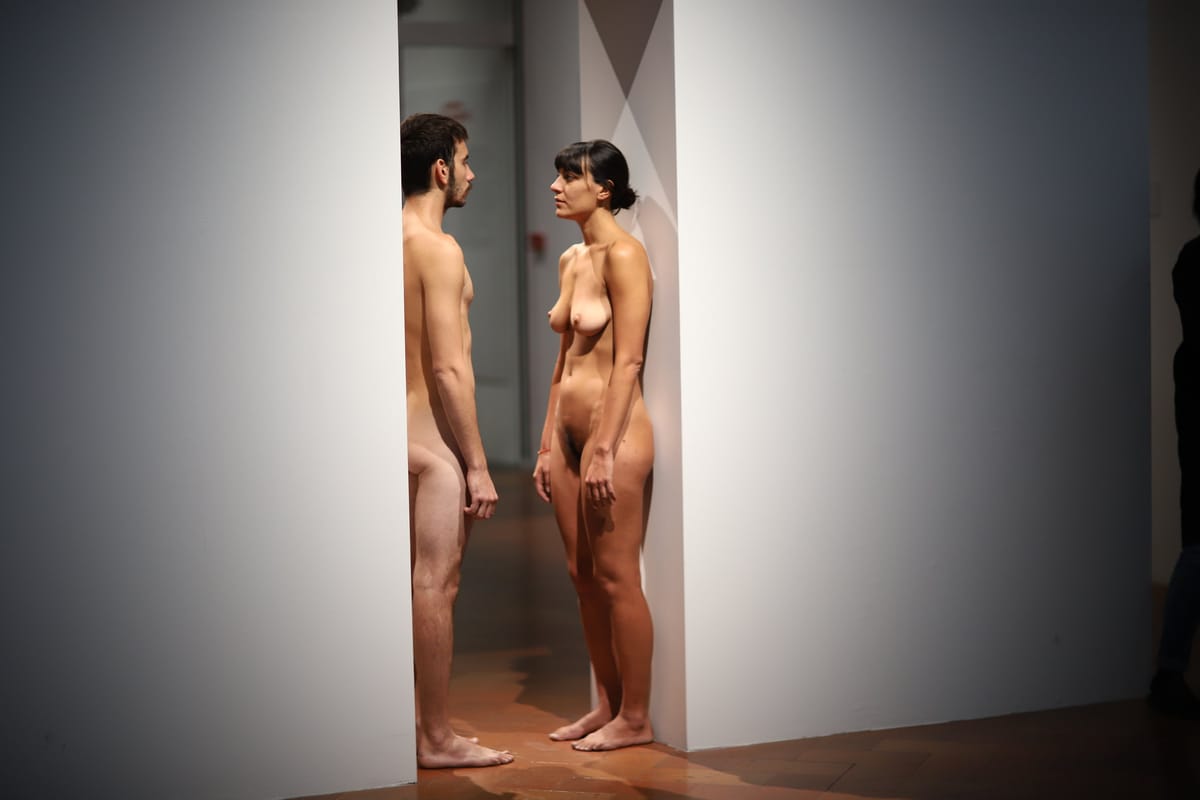
In reporting the story, Urgent Matter used an image of a staging of Imponderabilia during a show titled "The Cleaner" at Palazzo Strozzi in 2018 for illustrative purposes.
Using that image was necessary to give readers visual context for how the performance is structured, specifically the narrow doorway and proximity between performer and visitor, which are central to understanding both the work itself and the allegations described in the lawsuit.
After publishing the story, Urgent Matter shared the article across social media platforms to drive traffic to the article.
Yet, within seconds of posting on Threads, it was removed and Urgent Matter’s account was flagged for a violation.
“This goes against our community standards on adult sexual solicitation,” Threads said in its automated warning.
Urgent Matter used an automated appeal panel within Threads, seeking to have the post reinstated.
“Hi Urgent Matter, We reviewed your post again. We confirmed that it does not follow our Community Standards on adult sexual solicitation,” Threads responded seconds later. “We know this is disappointing, but we want to keep Instagram safe and welcoming for everyone.”
Meta's public-facing Community Standards state that they generally restrict images of "female nipples" and "genitals." However, they provide an explicit exception for art.
As for flagging the post as solicitation, Meta generally refers to content that offers or requests sexual services or directly invites sexual contact to target things prostitution ads and escort solicitations. It is not meant to apply to museum documentation, journalism, historical photography or artistic nudity shown in contextual reporting.
The incident highlights a tension long faced by artists and news organizations alike when it comes to nudity and publication on media, predating the internet.
In 1972, the Associated Press photograph of a naked 9-year-old girl, Phan Thi Kim Phuc, running after a napalm attack during the Vietnam War initially raised internal debate because of newsroom rules about frontal nudity. Editors ultimately published it on news value grounds, and the image won the Pulitzer Prize.
And when Robert Mapplethorpe faced an obscenity trial in 1990 for explicit photographs, newspapers faced heated debate about whether the press could reproduce his work without being accused of distributing obscenity.
Automated moderation systems across major platforms have since repeatedly flagged or removed images of historically significant artworks that contain nudity, even when shared in clear journalistic or educational contexts.
In 2016, Facebook removed posts by the Norwegian newspaper Aftenposten that included the “Napalm Girl” photo because it showed child nudity. The removal sparked international backlash. Norway’s prime minister publicly criticized Facebook and the company reversed the decision, restoring the image.
Fotografiska, a contemporary photography museum in Stockholm, later self-censored promotional material for a Mapplethorpe exhibition after its posts with the artist’s photographs were censored by Facebook.
“Facebook thinks that naked bodies cause offence. They remove our photos. For them, it does not matter if it is art or not,” a spokesperson for Fotografiska previously said.
The censorship has become so pervasive that the Vienna Tourist Board launched a new channel on the adult content website OnlyFans to share images of nude art, Hyperallergic reported in 2021.
Meta Platforms—the company behind Facebook, Instagram and Threads—did not return a request Urgent Matter’s request for comment by press time.
Don’t Delete Art is a project convened in March 2020 by the National Coalition Against Censorship to push social platforms to better protect artistic expression online. It works with artists and free-expression organizations to push for clearer policies and consistent enforcement when art is flagged or removed for nudity.
“If ever we needed a wake-up call that content moderation is not working, it’s when a work is displayed in a museum but prohibited from circulation on social media simply because they involve nudity,” Elizabeth Larison, member of Don’t Delete Art and director of arts and culture advocacy at the National Coalition Against Censorship, told Urgent Matter.
“Unfortunately, for all the works shown in museums that face this issue, there is an exponentially greater number of works from unknown, emerging, and mid-career artists that can never benefit from platform visibility in the first place. This absence undoubtedly shapes both popular culture and the field of art as we know it.”
Stories like this take time, documents and a commitment to public transparency. Please support independent arts journalism by subscribing to Urgent Matter and supporting our work directly.“