In Bay Ridge’s Little Palestine, ‘Dear Laila’ reconstructs a lost home
Brought to Brooklyn by PlayCo, Basel Zaraa’s Dear Laila made its New York debut at Stand4 Gallery.

Brought to Brooklyn by PlayCo, Basel Zaraa’s Dear Laila made its New York debut at Stand4 Gallery.
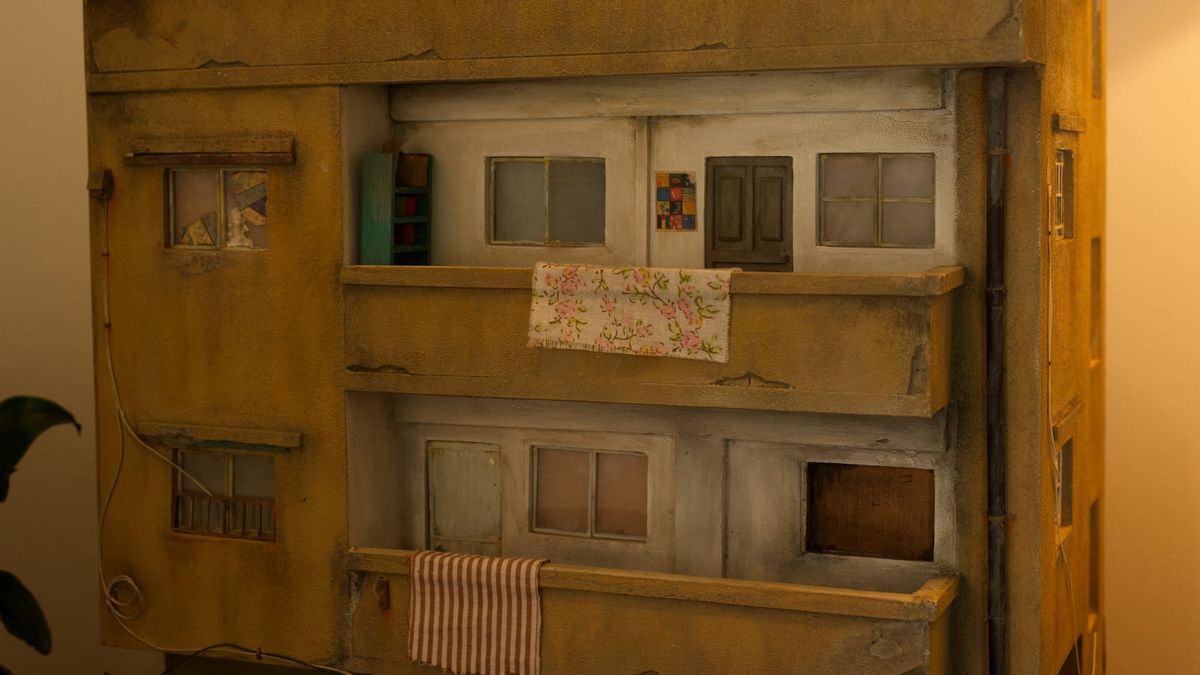
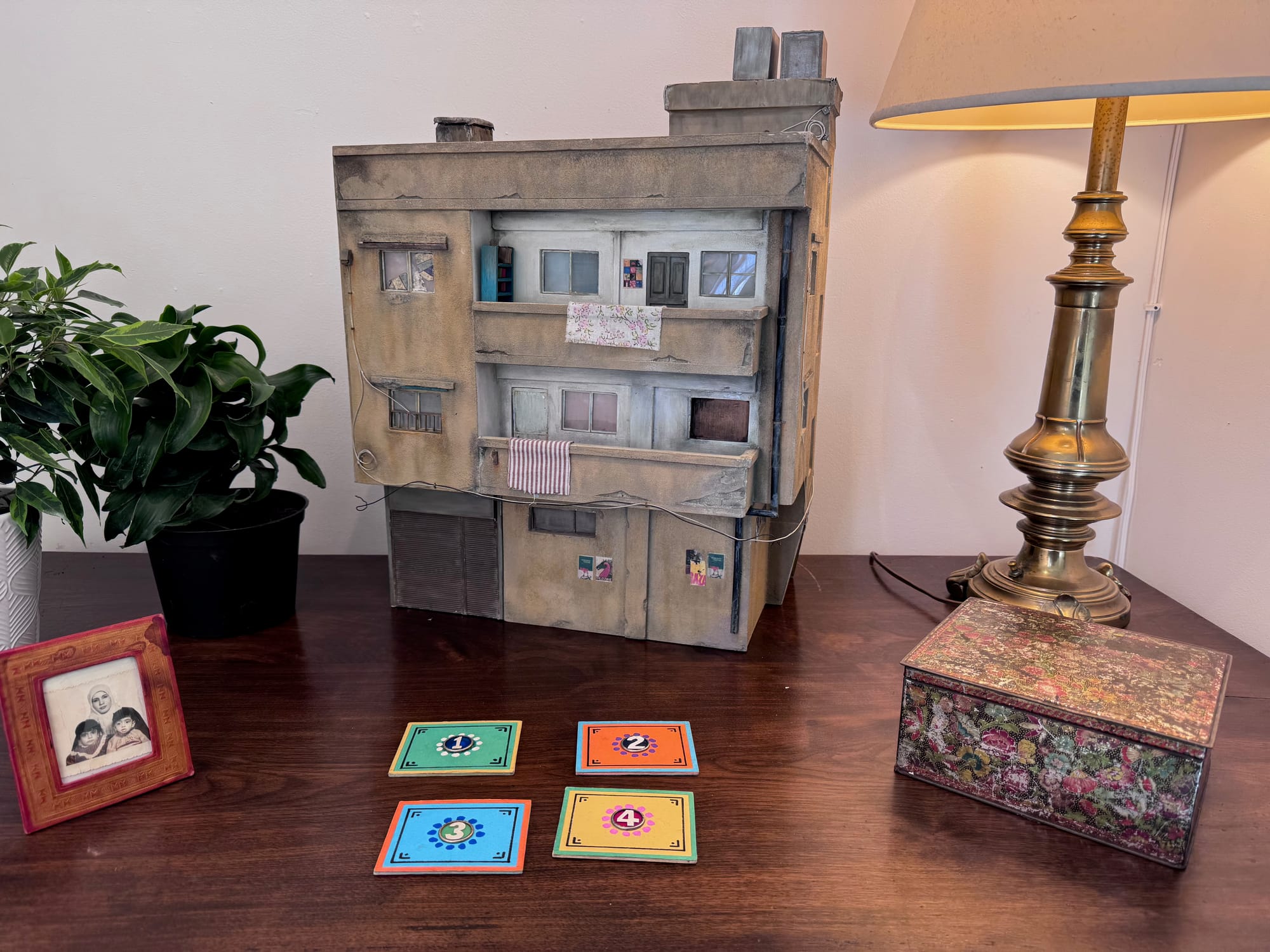
In a small room inside a former home in Bay Ridge’s Little Palestine, I sat at a desk facing a detailed reconstruction of a Palestinian refugee home in Damascus.
Basel Zaraa’s Dear Laila made its New York debut at Stand4 Gallery in a former home off 78th Street and Fourth Avenue. Brought to Brooklyn by PlayCo, it will run through April 19 before moving to Salam Arabic Church from April 22-25 and Atelier at Theaterlab from April 27 to May 3. Flyers in shop windows across the neighborhood promote the exhibition.
After navigating the neighborhood, I entered the room alone. The work is designed to be experienced one person at a time. Inside the room is a desk, and on that desk is a replica of the house where artist Zaraa—now based in the U.K.—was raised.
Zaraa was born in 1985 in Yarmouk, the refugee camp where his grandmother landed when Zionist armed groups drove her and his grandfather from their home in Tantoura, a village near Haifa.
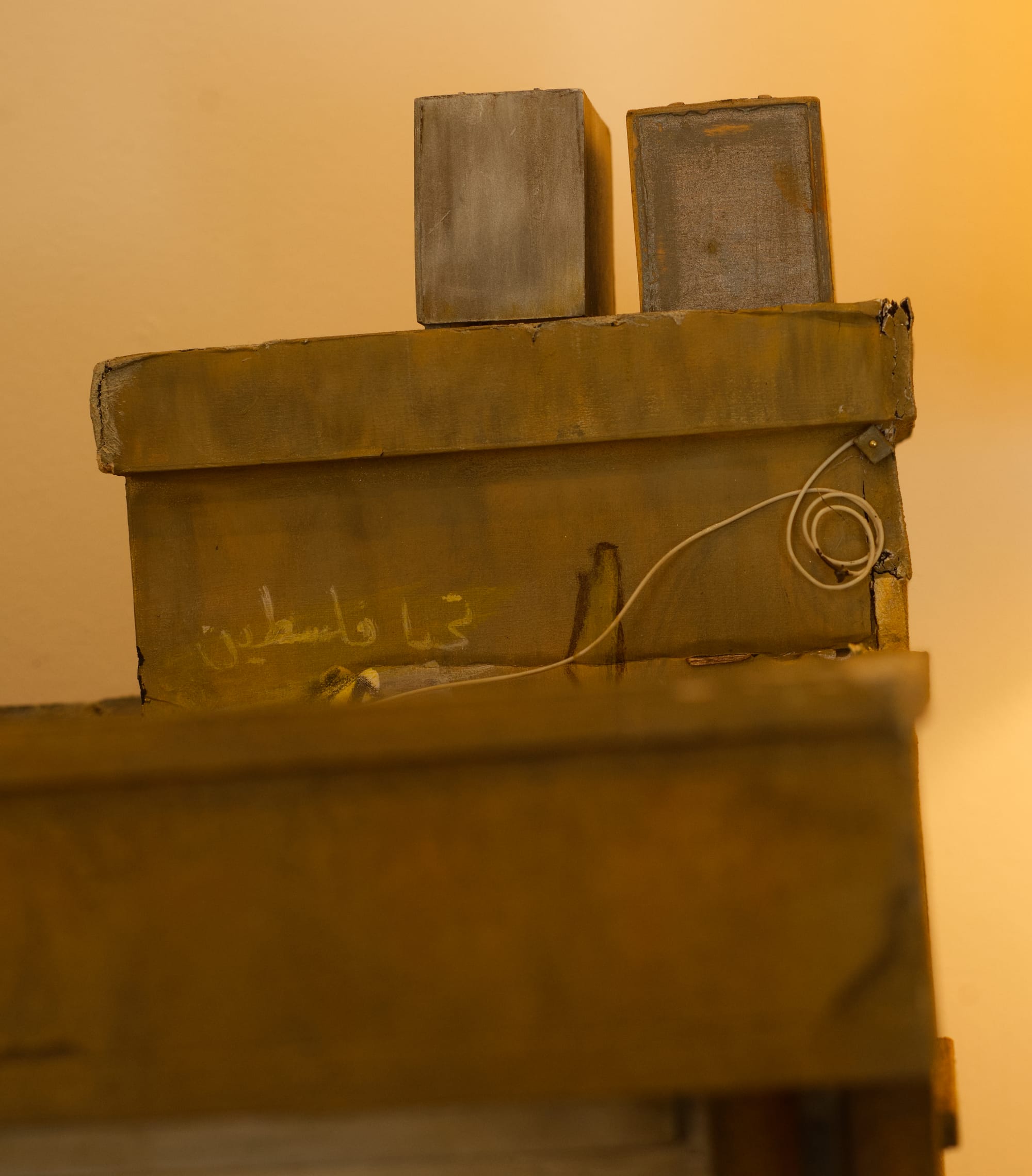
The model includes a miniature of Hatha Huwa Al-'Urs Al-Falastini (“This is the Palestinian Wedding”), a political poster designed by Emile Menhem in Beirut around 1982, incorporating text by Palestinian poet Mahmoud Darwish.
It is among other posters on the house expressing support for Gaza and Palestine. Zaraa is the second generation of his family born and raised as a refugee. He created the installation to answer questions from his young daughter, Laila, about the home he grew up in.
When I entered the room, I paused to examine the realism of the sculpture and the family photos on the wall behind it before sitting at the desk and flipping the first of four cards explaining how to experience the work.
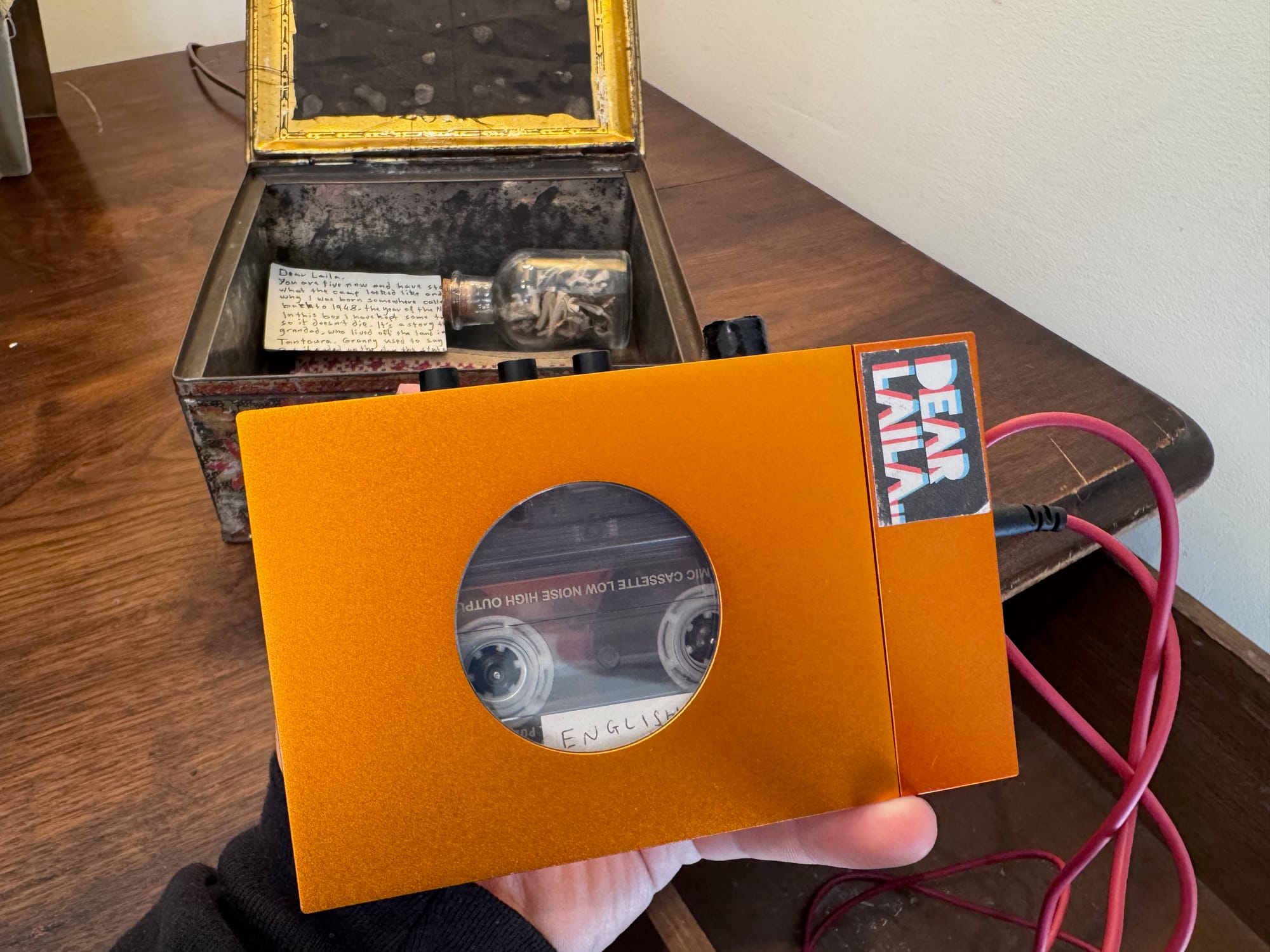
The experience begins with opening a box. Inside it is a small glass bottle filled with dried gray-green leaves, likely sage, though I couldn’t quite place the scent, which sits beside a note and a beaded necklace.
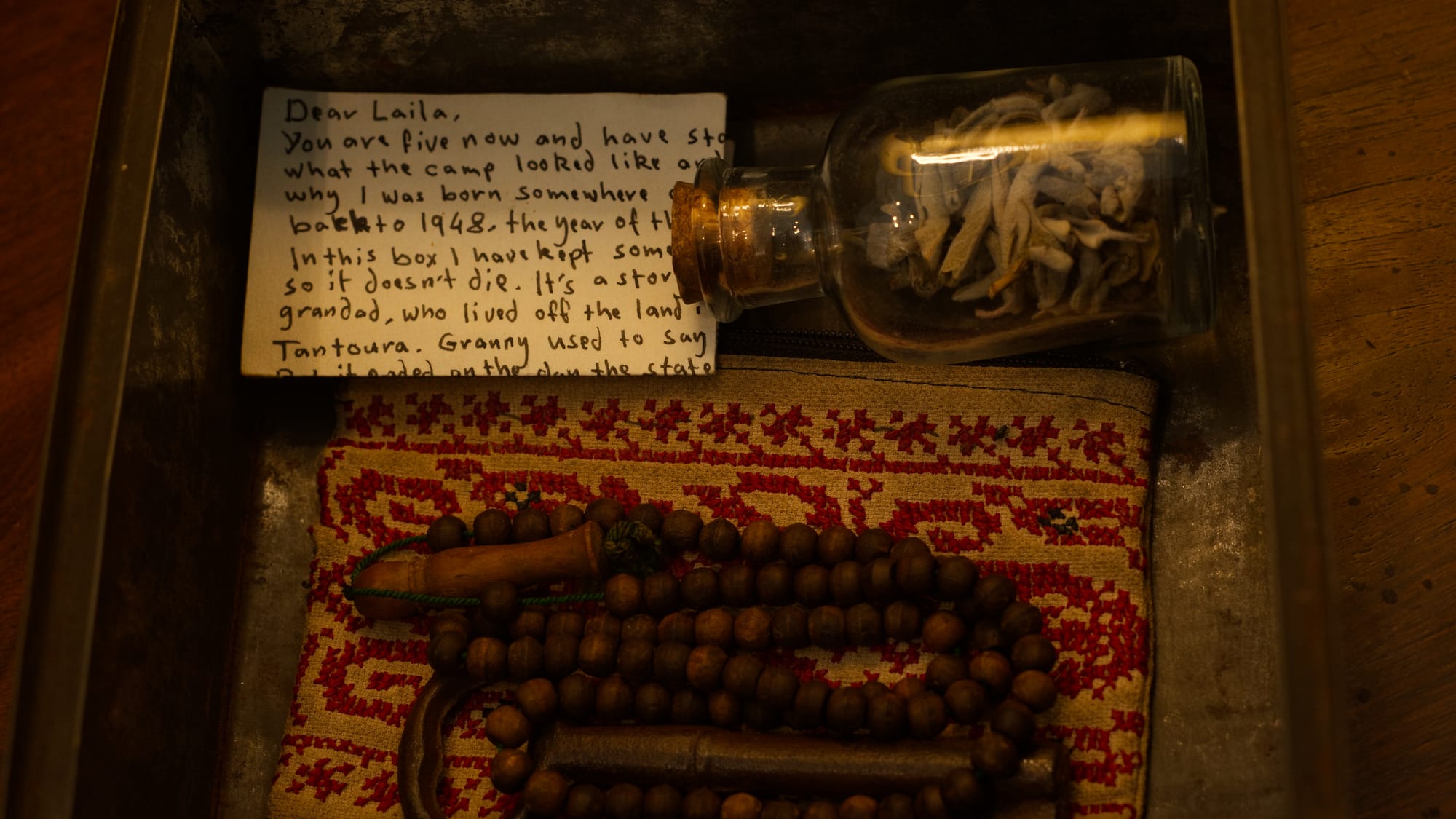
“Dear Laila, You are five now and have started to ask me where I’m from, what the camp looked like and why we can’t go there. To tell you why I was born somewhere called a refugee camp, we have to go back to 1948, the year of the Nakba, the Palestinian catastrophe,” Zaraa wrote in the note.
He said that his grandmother said Tantoura was like heaven on earth, which “ended on the day the state of Israel was declared on the land of Palestine.”
“Israeli armed groups carried out massacres in the villages, drove the inhabitants out, stole their land and burned their houses. My grandad stayed behind with the other young men to resist, but granny went to seek safety with their children,” he wrote.
“She was wearing these beads around her neck, all her prayers hanging from them, and holding the key to their house. She thought they would go back after a few days, but we have been waiting for over 70 years. We have passed the key down the generations, and now it is yours, Laila, you are the fourth generation after the Nakba.”
I then flipped over the next card which instructed me to put on a pair of headphones plugged into a Walkman with a tape that included an account tracing the family’s history from Zaraa’s grandmother in Tantoura to discovering their home in the refugee camp, too, had been destroyed.
“Dear Laila, make yourself comfortable. I want to take you somewhere. When you're ready, close your eyes and imagine the color grey. The grey of cement. This was the color of the camps. It was a maze of cement cubes stacked on top of each other,” the audio begins.
I took my two toddlers to the exhibit. Carolina Đỗ, PlayCo's head of community engagement, kept them entertained making origami houses—a separate Yoko Ono wishing tree-like experience tied to the exhibit. I became emotional thinking about them.
Yarmouk, established in 1957 and less than a single square mile, once housed more than 100,000 registered Palestinian refugees before being largely depopulated during the Syrian civil war.
“Like all Palestinian camps, space in Yarmouk was limited, so you built upwards instead of outwards. And in 1993, our house went from a two- to a three-story building,” Zaraa said.
Zaraa described homes marked by Palestinian flags and pigeon houses. He said the story of the home began in 1956 when his grandparents arrived in Yarmouk.
“They built the ground floor of this house, with two rooms. One to live in, and the other they turned into a vegetable shop,” Zaraa said. “Life was tough, but your great-granny and granddad were strong. They went on to have a total of eleven children, including your granddad, Ibrahim. And the house began to grow, room by room.
Zaraa tells his daughter her grandfather went to Lebanon to join the Palestinian Liberation Movement in 1976 and returned one day to visit his parents, when he met his future wife, Dalal. Their wedding was held on the roof of the home. Zaraa himself later held his own wedding party there, too.
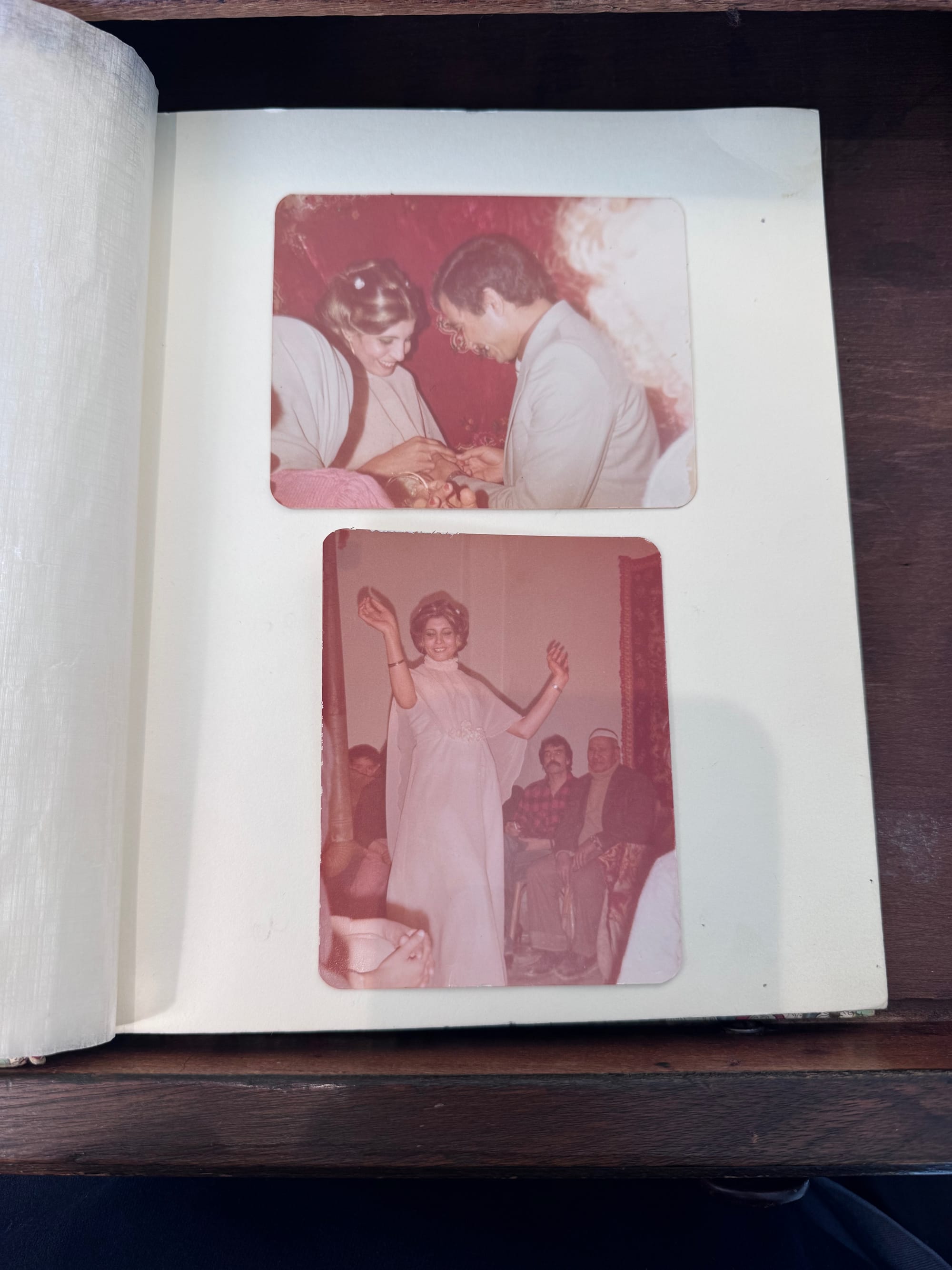
As I listened to the audio, I paged through a family photo album showing domestic scenes from within the home. In one photo, a couple faces each other holding hands and in another a woman is seen dancing with her arms raised while several men sit behind her.
In December 2012, early in the Syrian Civil War, the mosque and hospital behind the family’s home were shelled.
“They thought the bomb had landed on them. That day was our second Nakba,” Zaraa tells his daughter in the audio. Zaraa said his family is now spread across the globe.
“They thought they would be able to go back in a few days, just like your great-grandparents had thought in 1948 when they were forced to leave Palestine. Today the Nakba has become another Nakba, and the refugees have become refugees again.”
In 2018, Zaraa said his father returned to the camp to check on the house, but the destruction was so bad he could hardly recognize the street.
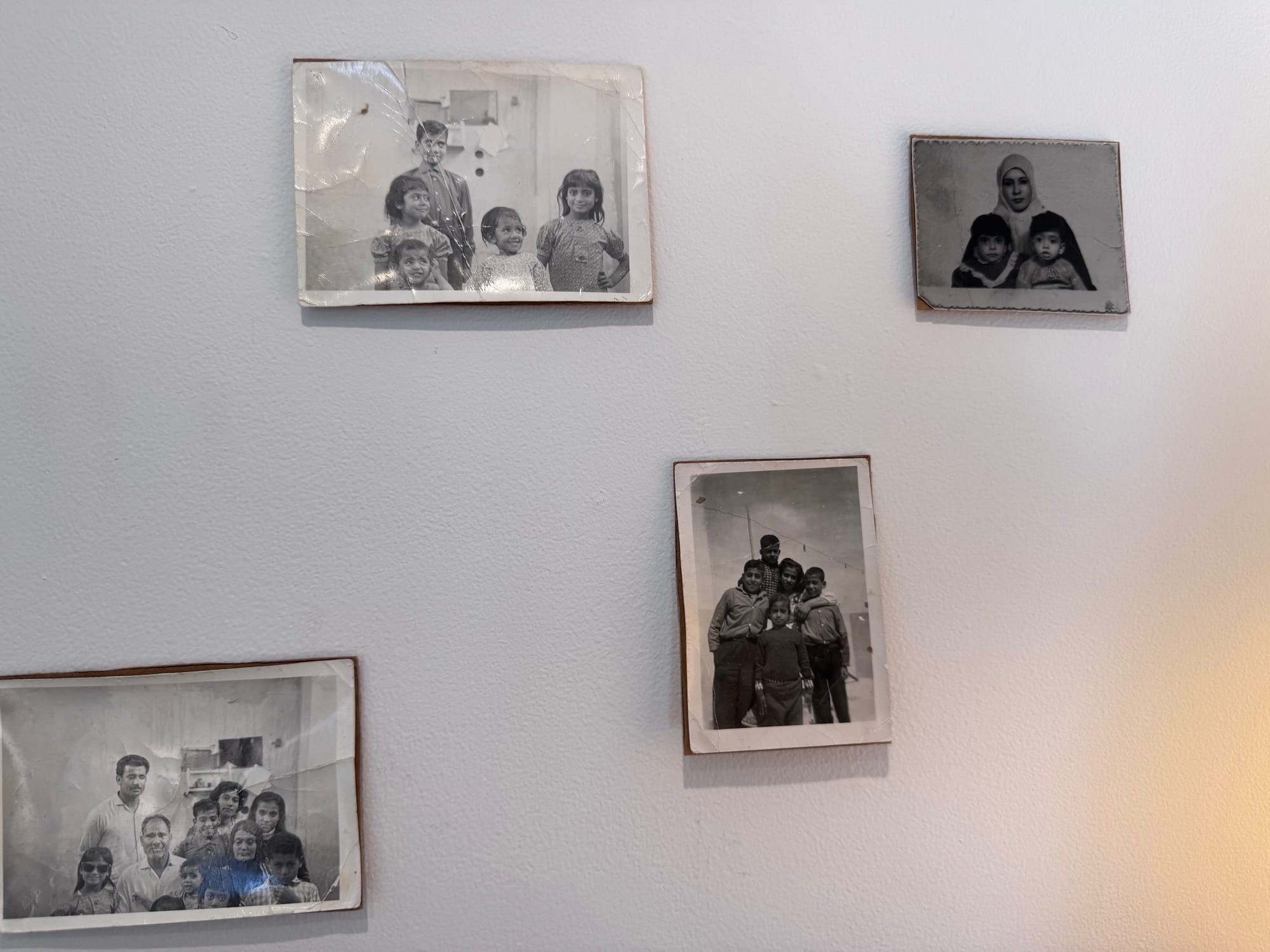
“There were a few photos on the floor, covered in dust and rubble. He picked them up, brushed them off and left,” Zaraa tells Laila. “That evening, he showed me the photos on WhatsApp, and we remembered the old days.”
“It blows my mind that he's sending these original photos of his family to people, strangers whom he'll never meet, and I think it speaks a lot to him as a person, his hope, his deep love, and also his deep love for his daughter,” Đỗ said.
Đỗ, the daughter of Vietnamese refugees, said working on the project helped her better understand her parents and gave her words to speak with them about their experiences.
“It's a big question that children of the diaspora are having, here in this country, what happens three generations from now?” she said. “Are we fully assimilated, or do we still manage to hold on to something of the soil?”
 Adam Schrader
In the audio, Zaraa describes life in the home—the bustle of children running around, uncles and aunties telling stories, and a ritual in which his grandmother would sprinkle salt over their heads to keep evil away. His grandmother died in Yarmouk in 2010.
The installation invites guests to take a matchbox of salt from a little bowl home with them.
“I spoke to your great-uncle in Sudan recently, and he said laughing, ‘The problem is that we didn't take Granny's salt seriously. If she had stayed alive to sprinkle salt on us, none of this would have happened’,” Zaraa said in the audio.
I made sure to sprinkle salt on the heads of my children before we walked out.
Stories like this take time, documents and a commitment to public transparency. Please support independent arts journalism by subscribing to Urgent Matter and supporting our work directly.