FBI returns 48 artifacts to Peru as records show Interpol inquiry activity in U.S. market
The recovery follows investigations in New Mexico and Nevada and coordination with Peruvian authorities.

The recovery follows investigations in New Mexico and Nevada and coordination with Peruvian authorities.
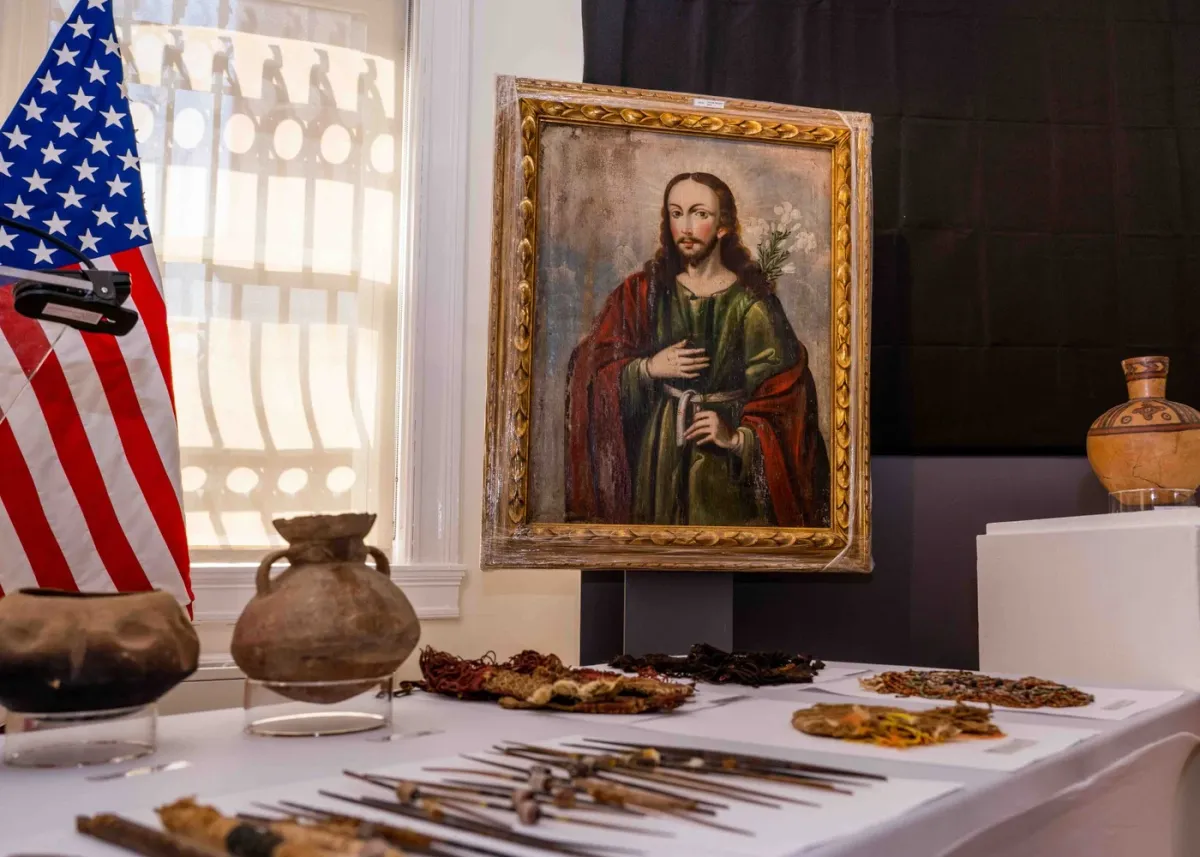
The FBI returned 48 cultural artifacts to Peru last week, including colonial-era paintings, textiles, ceramics and silver ornaments spanning centuries of the country’s history, the agency said Monday.
The items were recovered through investigations conducted by FBI field offices in Santa Fe, New Mexico, and Las Vegas, Nevada, and were formally returned during a March 24 ceremony at the Peruvian Embassy in Washington, D.C.
The artifacts range from colonial-era works to objects linked to pre-Columbian cultures, including the Chancay, according to the FBI, which said the investigation confirmed the items are part of Peru’s cultural heritage.
“The FBI is proud to work with the Peruvian minister of culture to return artifacts significant to the cultural heritage of their nation,” Assistant Director Heith Janke of the FBI’s Criminal Division said in a statement. “We are happy to see these items returned home so that they can be further appreciated and enjoyed.”
The return comes as records obtained by Urgent Matter through a Freedom of Information Act request show Interpol-linked inquiry activity involving cultural property connected to the United States, including material that appears to relate to Peruvian cultural property.
 Adam Schrader
Those records, released by Interpol Washington, include cross-border communications, case-related inquiries, and coordination with foreign National Central Bureaus concerning cultural property investigations.
The records also reflect inquiries into cultural property appearing on the U.S. market, including material offered through online auction platforms, indicating efforts to monitor commercial sales for objects that may have been looted or illicitly exported.
The FOIA response indicated that some responsive records were referred to the FBI for a releasability determination, suggesting the FBI was the originating or primary agency for at least some investigative leads reflected within the Interpol Washington files.
While heavily redacted, the released documents reflect a pattern of information requests and case activity consistent with efforts to identify and track cultural objects that may have been looted or illicitly exported.
Some of the inquiry activity reflected in the records dates to 2025, indicating relatively recent investigative work.
It is not yet clear whether the artifacts returned to Peru are connected to the Interpol-linked inquiries reflected in those records, or whether the FBI’s investigation developed independently.
Interpol Washington said it identified responsive materials tied to cultural property investigations and released 37 pages with redactions, while withholding hundreds of additional pages originating from foreign partners under law enforcement exemptions.
The FBI said the return reflects coordination between its Art Crime Program, the Peruvian government, and U.S. and foreign authorities. The FBI did not specify how any of the recovered objects had circulated in the market or how they were identified as being illicitly trafficked.
Urgent Matter has asked the FBI whether the repatriation is connected to Interpol-linked case materials referenced in the FOIA records and will update this story with any response.
Stories like this take time, documents and a commitment to public transparency. Please support independent arts journalism by subscribing to Urgent Matter and supporting our work directly.