FBI records show collector Les Wexner appeared in Epstein probe before arrest
FBI tracked Wexner months before Epstein's 2019 arrest and internally grappled with questions about who owned Epstein's mansion.

FBI tracked Wexner months before Epstein's 2019 arrest and internally grappled with questions about who owned Epstein's mansion.
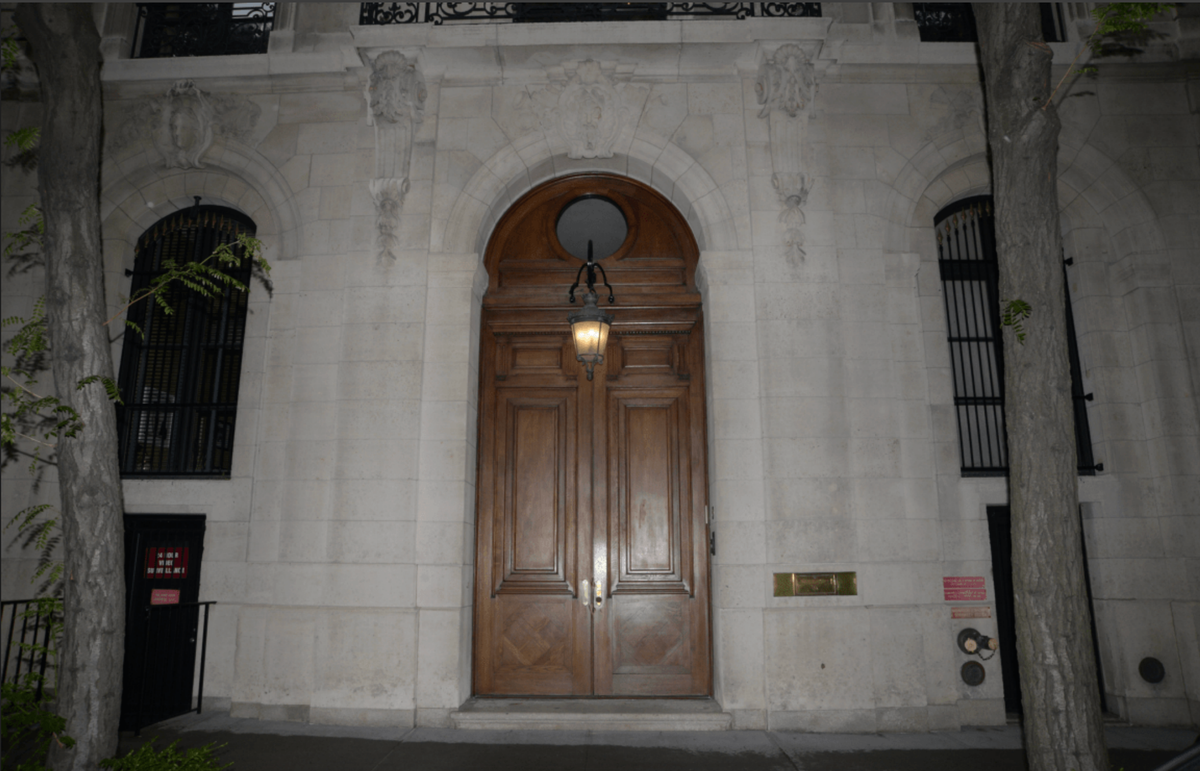
Federal investigators identified Victoria’s Secret billionaire Les Wexner, a major art collector and donor, in investigative materials months before Jeffrey Epstein’s July 2019 arrest, according to records newly released by the Justice Department.
FBI records released in the Justice Department’s latest Epstein files dump Tuesday include a March 14, 2019, email requesting photographs of people connected to Epstein. In it, agents listed “Leslie Wexner, (Ohio),” alongside Epstein and Ghislaine Maxwell. Other names included in the list were redacted. It was not immediately clear why Wexner wasn’t.
That document, filed months before Epstein’s arrest at Teterboro Airport in New Jersey, does not describe the reason for the photo request and does not characterize Wexner as a suspect, but indicates Wexner was on law enforcement’s radar before Epstein’s arrest.
Another document from June 2019, also before Epstein’s arrest, shows federal prosecutors and the FBI discussing uncertainty over ownership of a Manhattan mansion at 9 East 71st Street owned by Epstein that had seemingly previously been purchased by Wexner.
Photographs taken inside Jeffrey Epstein’s Manhattan mansion at 9 East 71st Street were also newly released to the public as part of the recent Epstein document disclosures, showing the interior in unusual detail, including dozens of artworks and decorative objects that were later sold off quietly at auction.
And a newly released internal FBI New York correspondence from July 7, 2019, two days after Epstein’s arrest, shows agents discussing outreach to multiple people as part of an investigation they internally described as involving “co-conspirators.”
“I do not know about Ohio contacting Wexner,” an FBI official wrote in that email, the document shows.
The email does not specify the purpose of the potential contact, does not explicitly name Wexner as a suspect and does not indicate whether he was ultimately contacted. Wexner was never charged in connection with Epstein’s case.
The same July 7 email also notes that agents were attempting to contact convicted Epstein accomplice Ghislaine Maxwell in Boston and French modeling agent Jean-Luc Brunel, a central figure in investigations into Epstein’s network because multiple women have accused him of sexual assault and of recruiting underage girls.
A follow-up FBI email dated July 9, 2019, shows that investigators had already begun serving grand jury subpoenas to “co-conspirators” connected to the Epstein investigation. An FBI official wrote that, of 10 co-conspirators, subpoenas had been served to three people in Florida, one in Boston, one in New York, and one in Connecticut.
“Four of the 10 are outstanding with attempts having been made,” the FBI official wrote, adding that one was “a wealthy businessman in Ohio.” Because Wexner is not named in that email, it remains undetermined if he is the person referenced.
The July 9 email also said eight FBI special agents and task force officers were being sent with two federal prosecutors to interview about 25 alleged Epstein victims in Florida.
Wexner also appeared repeatedly in sworn testimony given by Maxwell as she was questioned as part of a lawsuit filed by Epstein victim Virginia Giuffre against her. Maxwell was asked questions including if artist Maria Farmer, another Epstein victim, was ever at Wexner’s property in Ohio and if she and Epstein ever visited Farmer in Ohio.
“I don't know I would characterize the word visit with Mr. Epstein. We went for business in Ohio because he worked with Mr. Wexner, and I accompanied him on a few visits,” Maxwell responded.
Meanwhile, a newly revealed court filings from 2021 show that federal prosecutors later told a judge they would limit references to co-conspirators in Maxwell’s criminal trial to Epstein alone.
“The government may refer at trial to the following individuals as co-conspirators of the defendant: Jeffrey Epstein,” prosecutors wrote. “It does not intend to refer to any other individuals as co-conspirators at trial.”
The filing does not state that no other individuals were investigated, and it does not explain why earlier investigative efforts referenced multiple potential co-conspirators.
Wexner previously acknowledged a past financial and personal relationship with Epstein that purportedly ended years before Epstein’s 2019 arrest. Wexner has said Epstein misappropriated money from him and he cut ties with Epstein in 2007.
Other records released by the U.S. House Oversight Committee last month show that Wexner’s name appears repeatedly across the broader file set, beyond the FBI emails and court filings described above.
A review of released materials found that Wexner is mentioned at least 89 times across Epstein-related records, including interview transcripts, internal correspondence, and civil filings, according to an Urgent Matter analysis.
The records do not allege any criminal misconduct by Wexner but show his name recurring throughout the Epstein case file, according to that review.
In one transcript included in the release, lawyers questioned Epstein accuser Virginia Giuffre about individuals who might have relevant information. Wexner was the first person raised in that exchange, according to the transcript.
“I think he has relevant information, but I don’t think he’ll tell you the truth,” Giuffre said in response, according to the transcript cited in the released records.
Questions about Wexner’s role in Epstein’s world repeatedly intersected with uncertainty over who controlled Epstein’s Manhattan townhouse, an issue federal investigators themselves discussed internally.
Internal correspondence shows that questions about ownership of the Manhattan property mattered to investigators because they were trying to determine who controlled the building during the period when Epstein lived there, according to the records.
“So did he own it that entire time, rather than Wexner, as had been advertised??” the prosecutor asked. “Or did Wexner own it through a corporation for which Epstein was the president until 2012?”
What other documents released by the Justice Department show is that the building, located on Manhattan’s Upper East Side, had previously housed the Birch Wathen School, a private school that occupied the property until 1989. That year, the school sold the building to a corporate entity.
A deed released in the Epstein files dated September 6, 1989, and recorded five days later, shows the property was transferred from the school to Nine East 71st Street Corporation, which paid New York State transfer tax on the transaction. No deed in the land record shows Wexner taking title to the property in his personal capacity.
Despite that corporate ownership structure, federal prosecutors noted internally that public reporting described Wexner as having bought and remodeled the mansion, and that the property was featured as his residence in a 1995 issue of Architectural Digest.
By 1996, Epstein told The New York Times that the house was his. Yet when investigators reviewed the land records in 2019, they found no recorded transfer reflecting any change in ownership between the 1989 corporate purchase and a later transfer.
That absence of intervening deeds became a focal point of internal discussion among prosecutors and FBI financial investigators.
The next recorded change in ownership did not occur until December 23, 2011. On that date, Nine East 71st Street Corporation transferred the property to Maple, Inc., an entity based in St. Thomas, U.S. Virgin Islands.
The deed, recorded in January 2012, lists Epstein as president of Nine East 71st Street Corporation, and that he personally executed the transfer. Investigators later noted that Epstein signed for both sides of the transaction.
City water and sewer billing forms list Maple, Inc. as the owner following the 2011 transfer, and Epstein’s name appears on owner certification documents associated with the property.
Still, the documents do not resolve who controlled Nine East 71st Street Corporation at the time of the original 1989 purchase or establish whether Wexner exercised beneficial ownership through the corporation, formally or informally.
That scrutiny fits within a broader pattern documented elsewhere in the Epstein files.
In 2020, months after Epstein’s death, his attorneys contacted federal authorities alleging that warranty deeds filed for his other properties, including residences in Palm Beach and New Mexico, may have been fabricated. Prosecutors declined to open an investigation into those claims.
Stories like this take time, documents and a commitment to public transparency. Please support independent arts journalism by subscribing to Urgent Matter and supporting our work directly.