Fast-growing arts nonprofit AAAAH plans newspaper purchase, interactive map of Asian culture in NYC
A collobration for a Lunar New Year event with the Asia Society has been postponed to the fall.

A collobration for a Lunar New Year event with the Asia Society has been postponed to the fall.
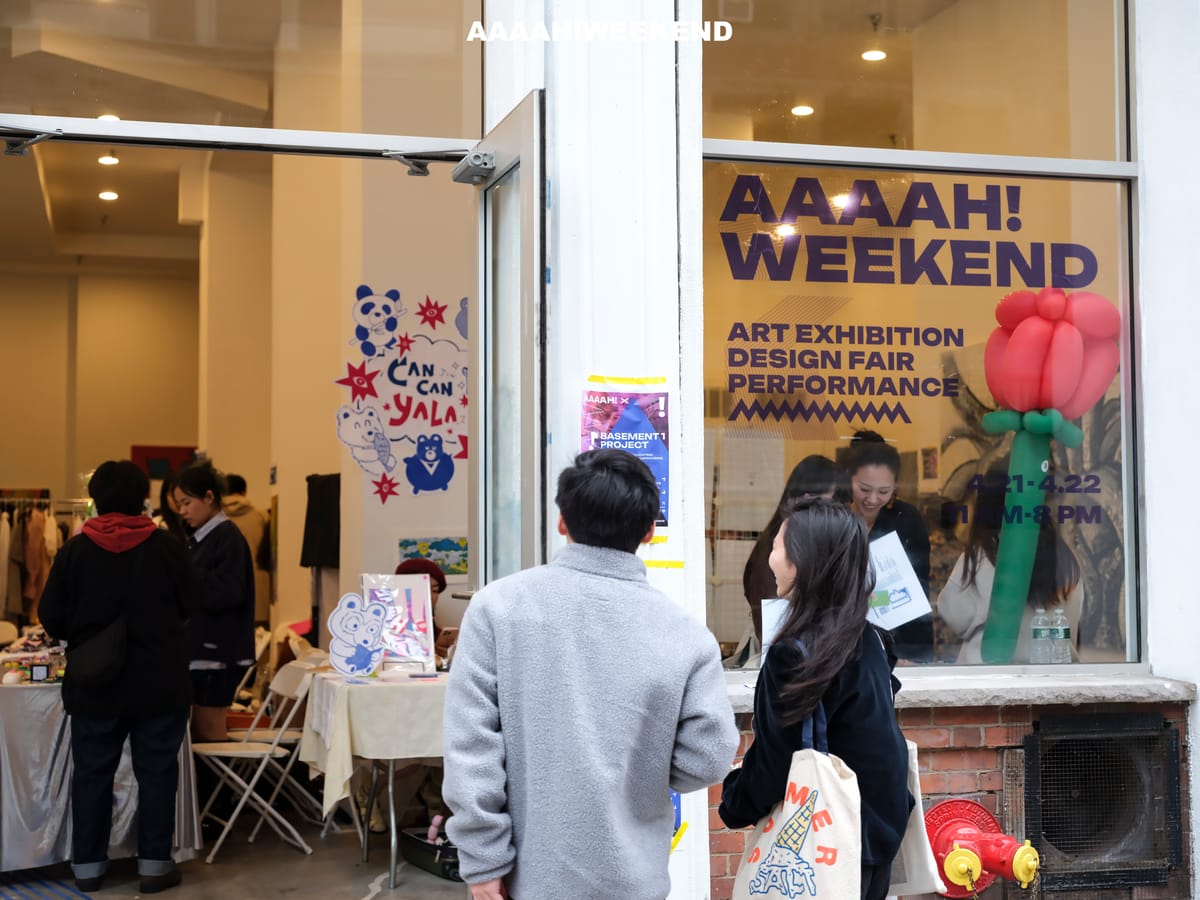
A Lunar New Year collaboration planned for February between Asia Society Museum and the nonprofit Asian Artist And Activities Hub has been postponed, after the project did not move forward on its original timeline.
The partnership began after Asia Society approached AAAAH through community networks and word of mouth, following the group’s earlier work with Chinatown-based organizations. AAAAH is a nonprofit founded by former School of Visual Arts students that organizes events promoting Asian art and culture.
The delay followed an extensive internal review at the Asia Society, where proposals had to clear multiple departments, including legal and safety teams, according to AAAAH’s leadership.
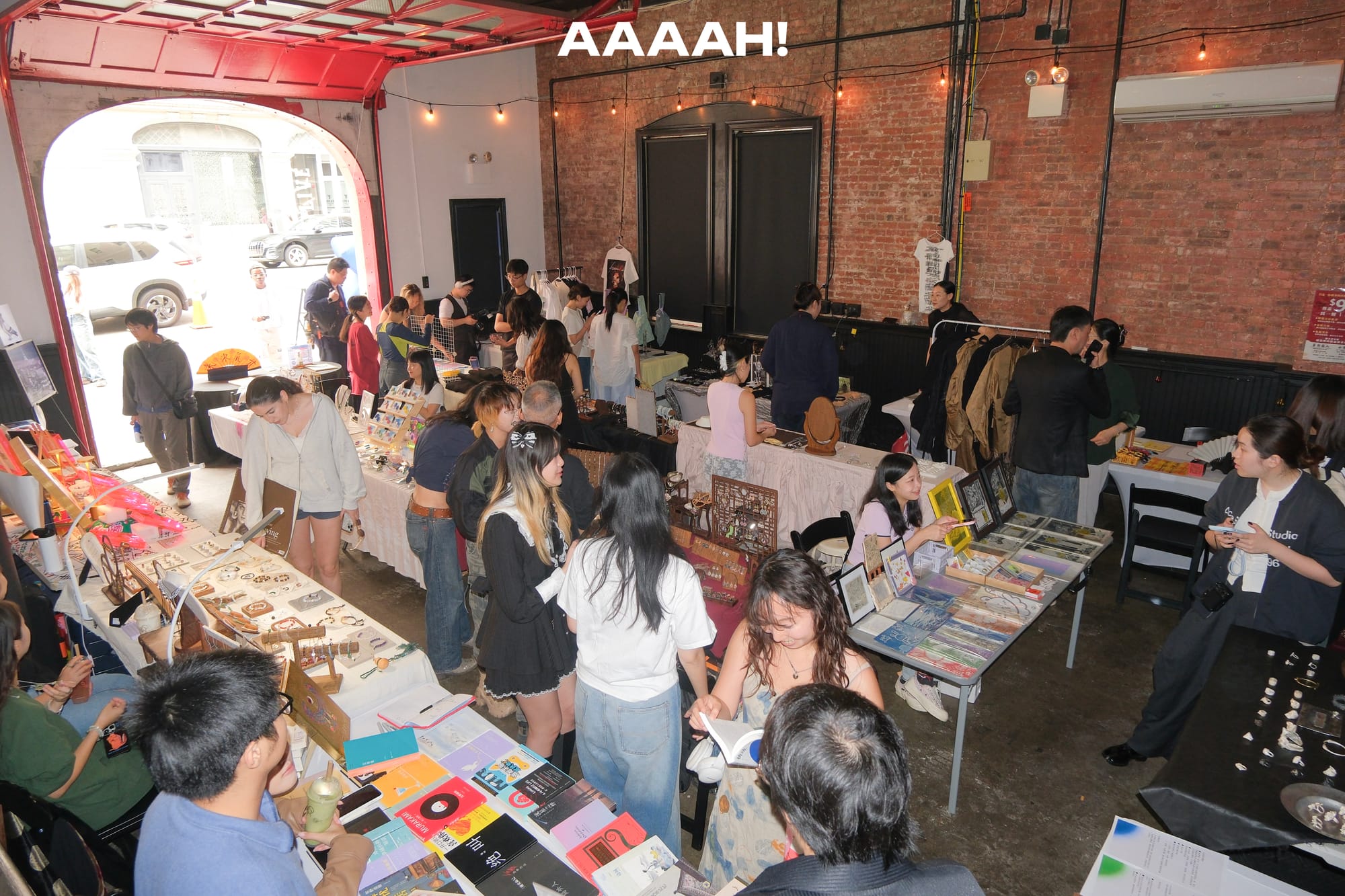
The Asia Society partnership comes at a moment of rapid expansion for AAAAH. The group has so far held 11 major events attended by nearly 40,000 people, according to its website, as well as smaller events with guest authors or workshops teaching the elderly how to apply for New York City’s housing lottery system.
AAAAH is gearing up to acquire the New Jersey–based Global Chinese Times newspaper on April 1. It is also developing a citywide Asian Art Map, and is reworking its public programming calendar as its operations continue to grow.
The pending acquisition of the newspaper marks perhaps AAAAH’s most consequential shift to date, from producing events to owning and operating a legacy media outlet with a weekly publishing cycle and an established readership.
The Global Chinese Times is a free weekly Chinese-language newspaper distributed throughout New Jersey and New York. It has published for more than three decades. AAAAH’s leadership said they see the paper as a key source of information, especially for older Chinese-speaking readers and new immigrants. Like other news media, such community newspapers are under financial threat.
“That is the only information source for them to get to know about the world, what is going on, what is happening in New York, in the United States,” said Ye Tian, AAAAH’s design director. “So, I think we want to keep that. They deserve to know more about what is going on.”
Yiran Sun, AAAAH’s managing director, said the group intends to maintain the print edition while expanding the paper’s digital reach and editorial scope. Affordable housing information, she said, is a priority because it remains one of the most urgent issues for the paper’s readership.
“The point of why we acquired this is not only because we want the media, but also if we don't keep running these media, they will be gone,” Sun said. “That is also part of our mission, to keep those things running, and to keep people getting the information.”
The deal adds a new operational layer to a small organization that already runs both a nonprofit and a for-profit events and marketing arm called AAAAH Culture. Weiyu Tian, the group’s business development director, said the nonprofit would be taking over the newspaper.
AAAAH Culture operates separately from the nonprofit, producing pop-up stores, pop-up events, and short-term activations for brands and other clients, drawing on the same logistics and event experience developed through AAAAH’s public programming.
“That’s actually more of a marketing and PR agency,” Sun said. “We’re basically helping those companies do their PR events and marketing events, especially for pop-up stores, pop-up events, or one-day or short-term events.”
That work, she said, exists so the team can support itself while continuing its nonprofit projects.
“The most important thing is we need to feed ourselves,” Sun said. “So we need to make money to live our lives, so that’s why we’re working so hard on the other side.”
In February, AAAAH—the nonprofit—plans to launch its Asian Art Map, a hybrid physical and digital resource designed to document Asian cultural spaces across New York City.
“This map is a data visualization project to show what is the gap between two systems in New York City,” Tian said.
She described those systems as the cultural map most New Yorkers recognize — places like Chinatown, which she did not feel a strong connection with when first arriving in New York — and a parallel network built by Asian communities, often through informal or under-resourced spaces.
In the project, “visibility” is defined less by foot traffic than by emotional importance — how much a place matters to the people who use it.
The map is designed to document Asian cultural spaces across New York City, including museums, galleries, community organizations, and informal venues that are often left out of official cultural listings.
Ye Tian said the project is meant to make visible a network of spaces that already exists but is not always easy to find, particularly for people outside those communities.
“We are not making a conclusion,” Ye Tian said. “We are not making a definition of what is Asian and what is Asian culture.”
Instead, contributors identify spaces that matter to them, allowing the map to evolve through submissions rather than remain fixed. Organizers said the map will be distributed digitally and physically through restaurants, community centers and cultural venues.
It comes after similar initiatives from organizations like The Clemente Soto Vélez Cultural and Educational Center which in November launched an interactive digital archive preserving the artistic, cultural and historical records of Latin American immigrant communities in New York City. Such initiatives underscore a broader push to document immigrant cultural infrastructure.
AAAAH's map was initially intended to launch alongside the Lunar New Year event at the Asia Society, the team's biggest client to date. The Asia Society is one of the most prominent institutional platforms for Asian art in New York, making the collaboration a significant step for the young nonprofit.
The map is still expected to be released in February, while AAAAH’s broader collaboration with Asia Society has been postponed to the fall, the group said. The Lunar New Year program, developed under the working title "In Our Name," has been deferred to a future year.
“Working with such a huge organization needs a really, really long timeline,” Ye Tian said. “They have many departments.”
Sun said the delay forced the group to confront how institutional processes shape public programming.
“Our collaboration has been postponed to the fall,” she said. “But the Lunar New Year concept, we want to hold that next year.”
AAAAH originated out of the School of Visual Arts, where four of the founding members attended. The project was born from a course focused on design and social innovation. The assignment was to identify a real-world problem and attempt to solve it.
The first response was an art market in SoHo. It was meant to be small. Sun said it was “unexpectedly popular.” That response pushed the group forward. The organization now operates with a core team of seven, supported by volunteers and interns.
“One of the most important reasons that we started this is because we saw so many young artists get stuck,” she said.
As AAAAH expands into publishing, mapping, and institutional partnerships, its leaders are conscious of how many similar initiatives disappear.
“We saw so many similar organizations,” Sun said. “They are gone.”
Correction made at 9:18 p.m. on February 1, 2026: An earlier version of this article identified AAAAH as the Asian Art And Activities Hub. It is the Asian Artist And Activities Hub.
Stories like this take time, documents and a commitment to public transparency. Please support independent arts journalism by subscribing to Urgent Matter and supporting our work directly.