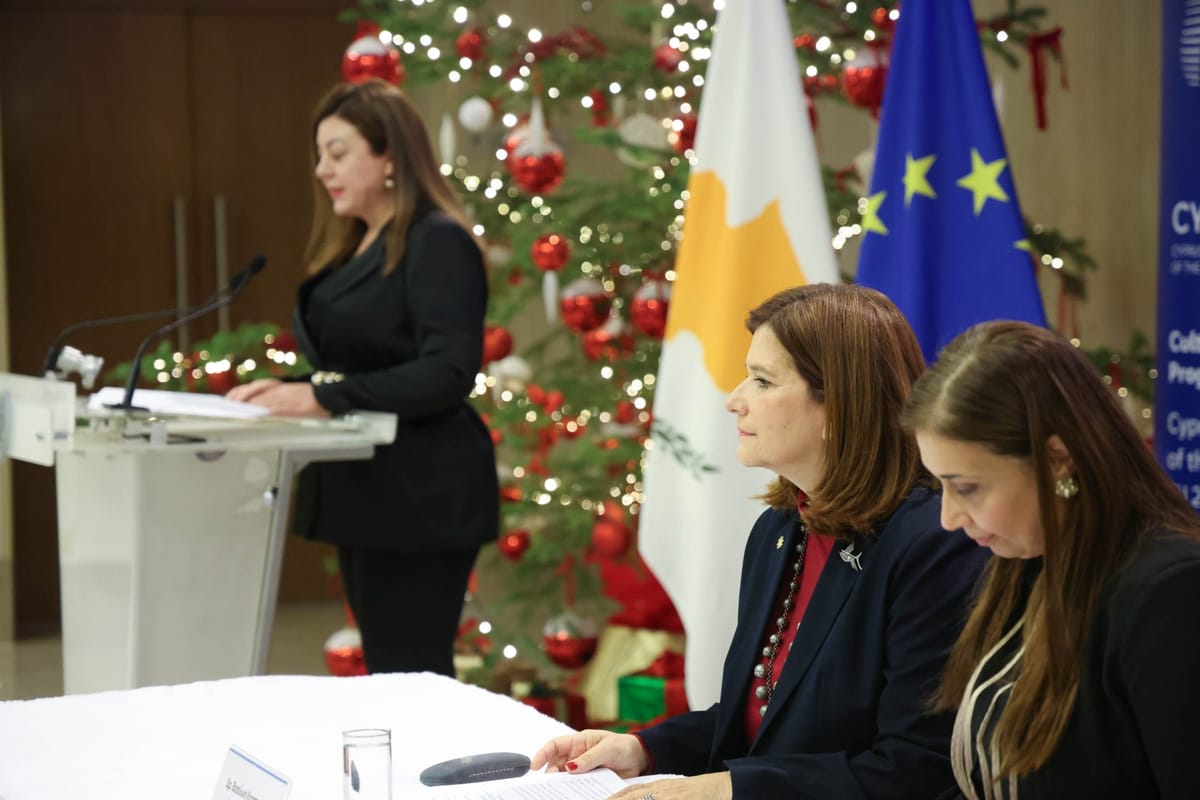
As Cyprus prepares to assume the six-month rotating Presidency of the Council of the European Union in January, the Mediterranean nation is pursuing a cultural strategy that places art alongside diplomacy and policy in its EU agenda.
Deputy Culture Minister Vasiliki Kassianidou, at a press conference Monday, officially presented Cyprus’ culture program for its presidency, outlining a series of exhibitions, performances and international events planned across Europe.
“The cultural program was designed as an integral part of the overall strategy of the Cyprus presidency,” Cyprus’s Culture Ministry said in a statement.
“For the first time in Cyprus, a cohesive and unified cultural narrative has been developed, one that does not present culture in a fragmented manner, but as a continuous and living process, linking cultural heritage with contemporary creation and cultural diplomacy.”
Rather than lean solely on traditional policy platforms, Cyprus is deploying a nearly $5.2 million cultural strategy designed to support cultural programming alongside its political agenda.
Officials said the program focuses on five areas: highlighting Cyprus’s place in European history, promoting contemporary Cypriot artists across the EU, incorporating new technologies into cultural projects, supporting artists and cultural workers, and using culture to strengthen ties with other European countries.
Sign up for Urgent Matter
Start the new year with a paid Urgent Matter subscription and support independent arts journalism.
No spam. Unsubscribe anytime.
Cyprus’s presidency begins as the European Union continues to manage the war in Ukraine, instability in the Middle East and strained relations with Russia and China, while internal political fragmentation among member states has complicated consensus-building and slowed decision-making across EU institutions.
“In 2026, Cyprus will not only speak with institutional positions, but also with art,” Kassianidou said on Monday, according to local media.
More than 500 artists, curators, technicians and cultural producers from across Europe are expected to take part in events that span Cyprus and 31 other countries.
The program includes exhibitions, digital projects, performances and archaeological displays, combining contemporary cultural work with material from Cyprus’s past.
It will officially open on January 7 at the Cyprus Theatre Organisation with a ceremony titled “Memory, Present, Meta,” bringing together more than 100 Cypriot artists across multiple disciplines.
Within Cyprus, the cultural program will include exhibitions, community projects and museum programming aimed at reaching the general public, not just officials and diplomats.
“In 2026, Cyprus will not speak to Europe solely through institutional positions, but through art, creativity and its people, leaving behind a meaningful cultural legacy that extends beyond the duration of the Presidency,” Kassianidou said.