Capron exhibition in Sarasota draws on migration, identity with hand-dyed fabrics
Five new works and a 15-foot suspended sculpture anchor the show, built from fabrics the artist dyed and printed herself.

Five new works and a 15-foot suspended sculpture anchor the show, built from fabrics the artist dyed and printed herself.
The Sarasota Art Museum will present a solo exhibition of textile works by artist Maria A. Guzmán Capron, featuring 10 large-scale pieces made from hand-dyed and screen-printed fabric.
The exhibition, “Maria A. Guzmán Capron: Penumbra,” opens April 19 and runs through September 27 at the Florida museum. The works include wall hangings and a suspended soft sculpture exploring themes of identity and human connection.
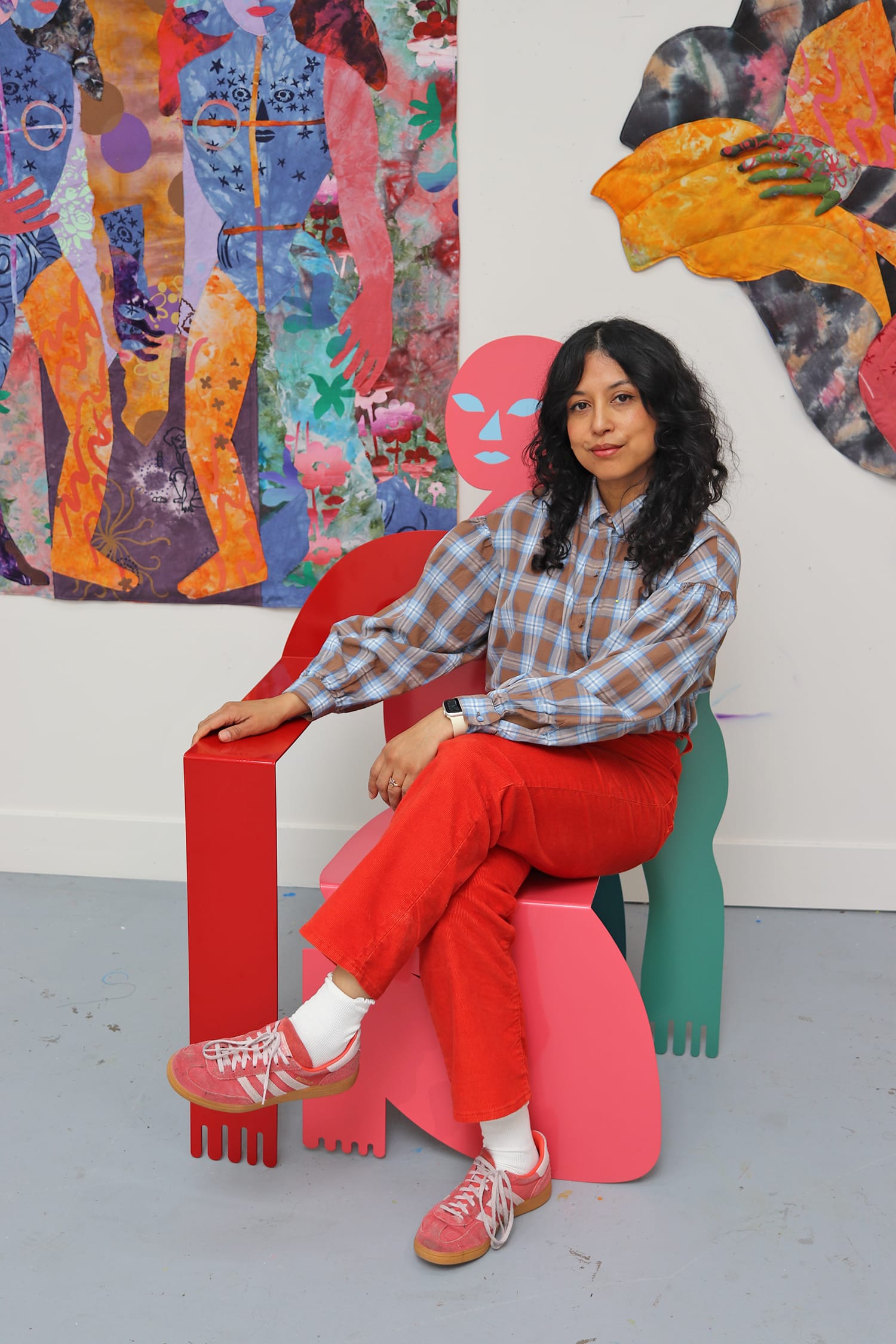
Capron, who lives in California, was born in Milan to Peruvian and Colombian parents before moving to Texas as a teenager. She said her work often focuses on how people navigate different cultural identities and experiences.
“I have been addressing this for a long time. I have used different words and ways to circle around this idea,” Capron told Urgent Matter.
The exhibition centers on the idea of the “penumbra,” or partial shadow. Capron and curator Lacie Barbour see this as a metaphor for the in-between states that people experience.
Barbour said the show continues themes found in Capron’s earlier work, but puts more emphasis on the shadow as both a visual and conceptual element.
“This exhibition is focused on this idea of the shadow and penumbra, which is this sort of in-between gray area of a shadow,” Barbour said.
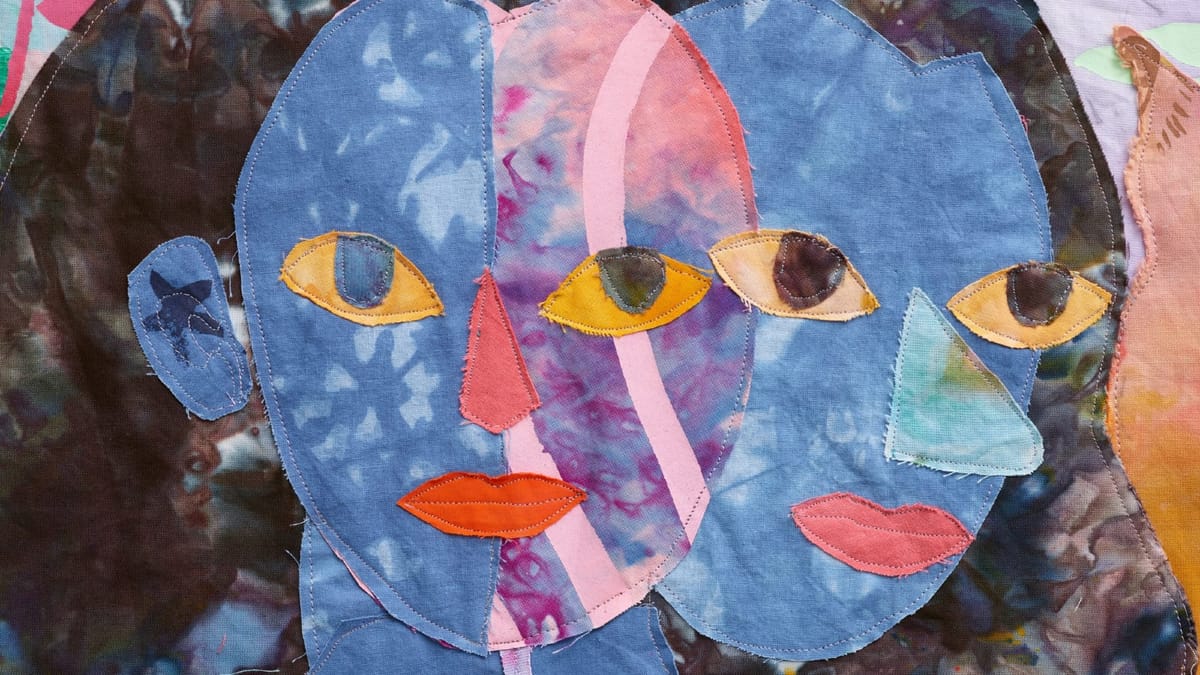
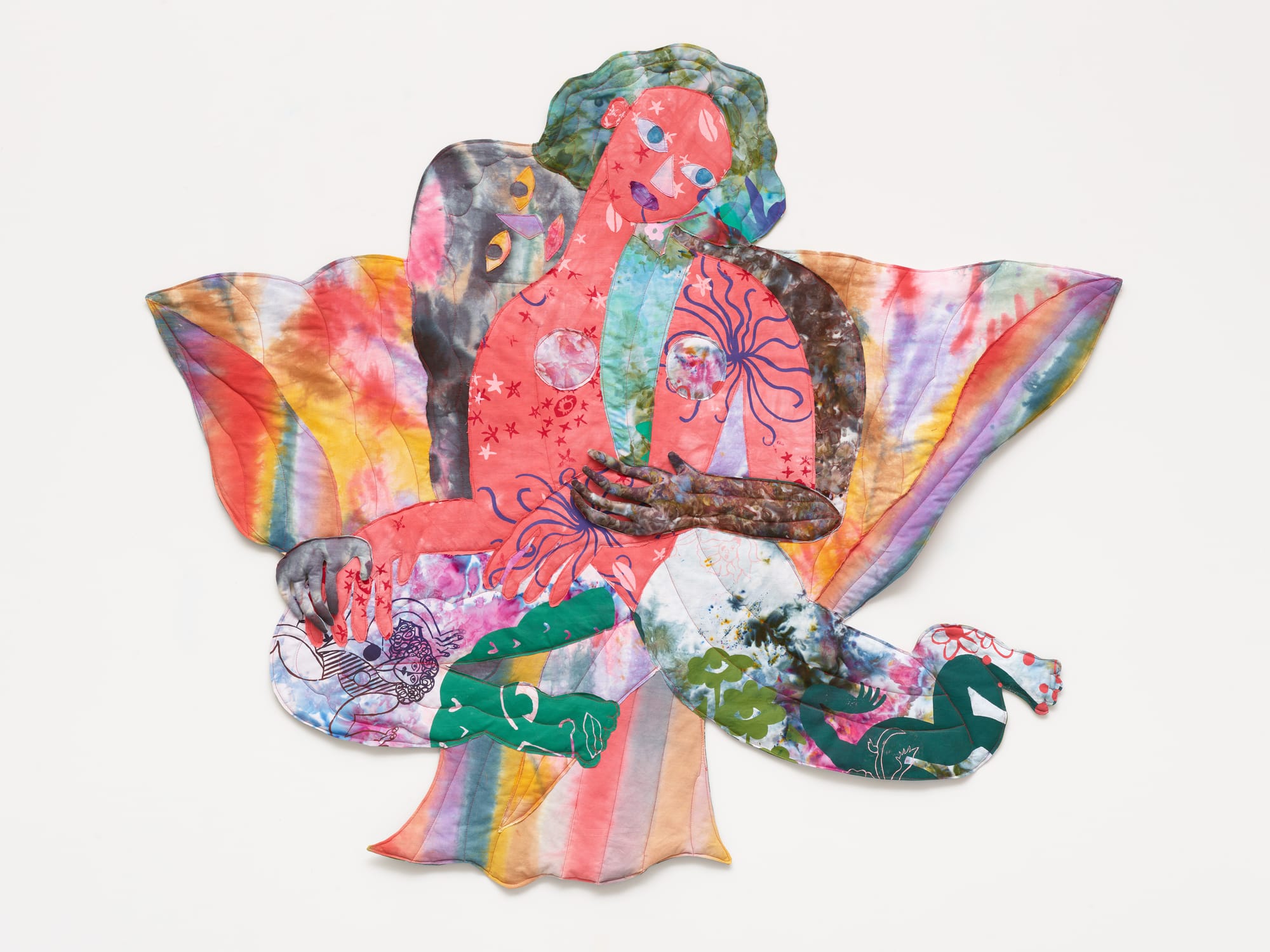
The works are made entirely from textiles that Capron dyed and printed by hand, a process she described as intuitive and physically involved.
“It's a development in my art practice, definitely. I've always been very interested in textiles and patterns and what they communicate,” Capron said.
She began with plain fabric before layering color, pattern and imagery.
 Adam Schrader
“For this exhibition, all the textiles start with white or off-white cotton. From there, I have really imbued the material with color to create patterns using designs and my own drawings,” she said. That process embeds narrative directly into the material before it is assembled into figures.
Capron said she works with large pieces of fabric and often treats them like paintings.
“I usually work on four yards at a time. I have a table set up for that size of textile. And it's almost like creating a very large painting. It's very intuitive. I don't follow strict rules,” she said.
After dyeing and adding patterns, she cuts the textiles and puts them back together as figures. She described this step as necessary but also a bit unsettling.
“Then I started cutting, which is a weird process to cut all these beautiful textiles that you made, and then just decide it's okay to take this apart to make something else,” she said.
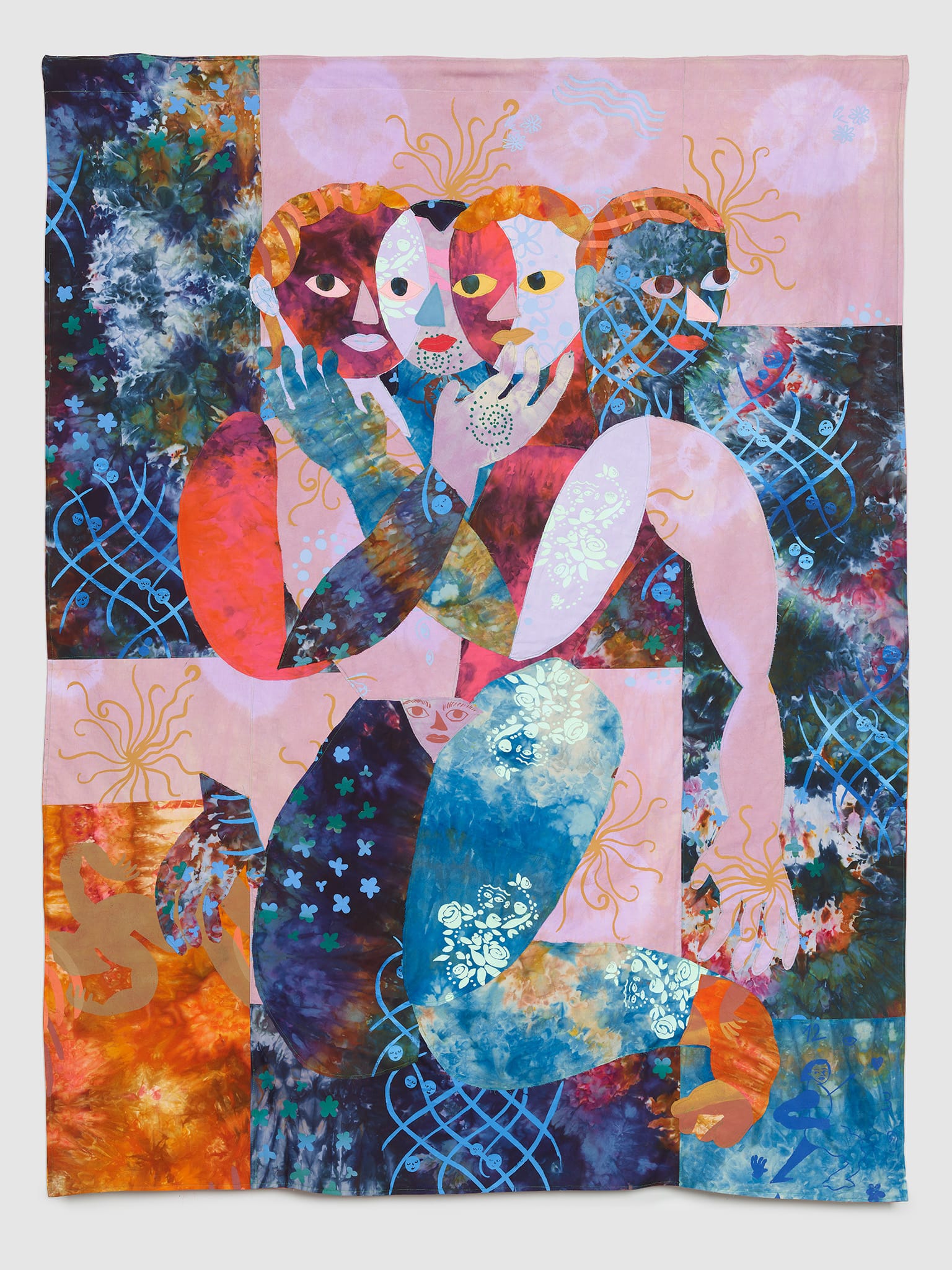
The finished works show figures that seem to merge, overlap, or interact in ambiguous ways. Capron sees these figures as “personas” that represent different sides of identity.
The figures sometimes take on mythological or otherworldly qualities, often appearing muscular and exaggerated. Capron has referred to them as “hot aliens,” a phrase tied to the “alien” designation on the green card she carried after moving to the United States.
Often, she pairs a detailed figure with a more abstract one, which she sees as a shadow companion. This pairing reflects her interest in duality and multiplicity.
“I believe in us housing multiplicity and having multiple ways of being within ourselves,” she said.
Capron connects these ideas to her own life, having lived in different countries and cultures. She talked about adapting to new places while keeping ties to her past.
That sense of adaptation carries into her materials and process, which she compared to building a home from fragments of different places.
“I started by collecting all these mass-produced textiles that reminded me of things that I grew up with,” she said.
Those influences remain embedded in her work, from everyday household fabrics to patterns seen in markets and traditional crafts.
She also recalled growing up with Peruvian arpilleras — hand-stitched textile works — in her home, which helped shape her understanding of color and composition.
“Even the clothing that my mother wore in the ‘80s, ‘90s, I remember fabrics and patterns that I loved,” she said.
Visits to markets in Peru also left a lasting impression—the colors, especially pinks and teals, and the patterns. She described those visual memories as inseparable from her artistic output.
“I feel like they're inside of me,” she said. “I don't even understand how to separate them from the work that I make.”
Barbour said she was drawn to Capron’s work through its use of textiles and its emotional resonance.
“I've always been very interested in artists working in textiles,” Barbour said.
She pointed out that museums and other institutions have increasingly valued textile art in recent years.
“For a really long time, museums and institutions were not collecting textile works. They weren't taking them seriously. Over the last few decades, we've seen that sort of culture shift,” she said.
In Capron’s work, Barbour said she saw a combination of technical experimentation and emotional accessibility.
“The sort of level of whimsy and joy and freedom that comes across in her works really stuck with me,” she said.
The exhibition features five new works and five existing ones, chosen and arranged to show the ongoing themes in Capron’s art.
One work, Déjame Llevarte, depicts two figures walking hand in hand, their forms blending together as they move.
“So, we have 10 works total, and most of them are wall hangings, and then one really large suspended, soft sculpture in the middle of the gallery,” Barbour said.
The roughly 15-foot sculpture extends horizontally through the space, positioned on all fours and altering how visitors move through the gallery.
Capron described the sculpture as an embodiment of the shadow concept at the center of the exhibition. She conceived it as a larger-than-life presence that represents an alternate version of the self.
“I'm thinking of it as this personification of this epic shadow,” she said.
The figure’s exaggerated limbs and shifting form reflect the idea that this “other self” can transcend physical limitations.
“It can do things that our human body cannot—the way it can extend, that it can become small or large,” she said.
The gallery itself will depart from a standard white wall presentation, with painted surfaces in contrasting light yellow and light purple tones to echo the idea of a cast shadow.
The exhibition also emphasizes the relationships between figures, often shown through touch and closeness.
“A lot of the figures across her works are hugging or caressing each other or holding hands,” Barbour said.
She said those gestures convey trust and connection across ambiguous relationships.
 Adam Schrader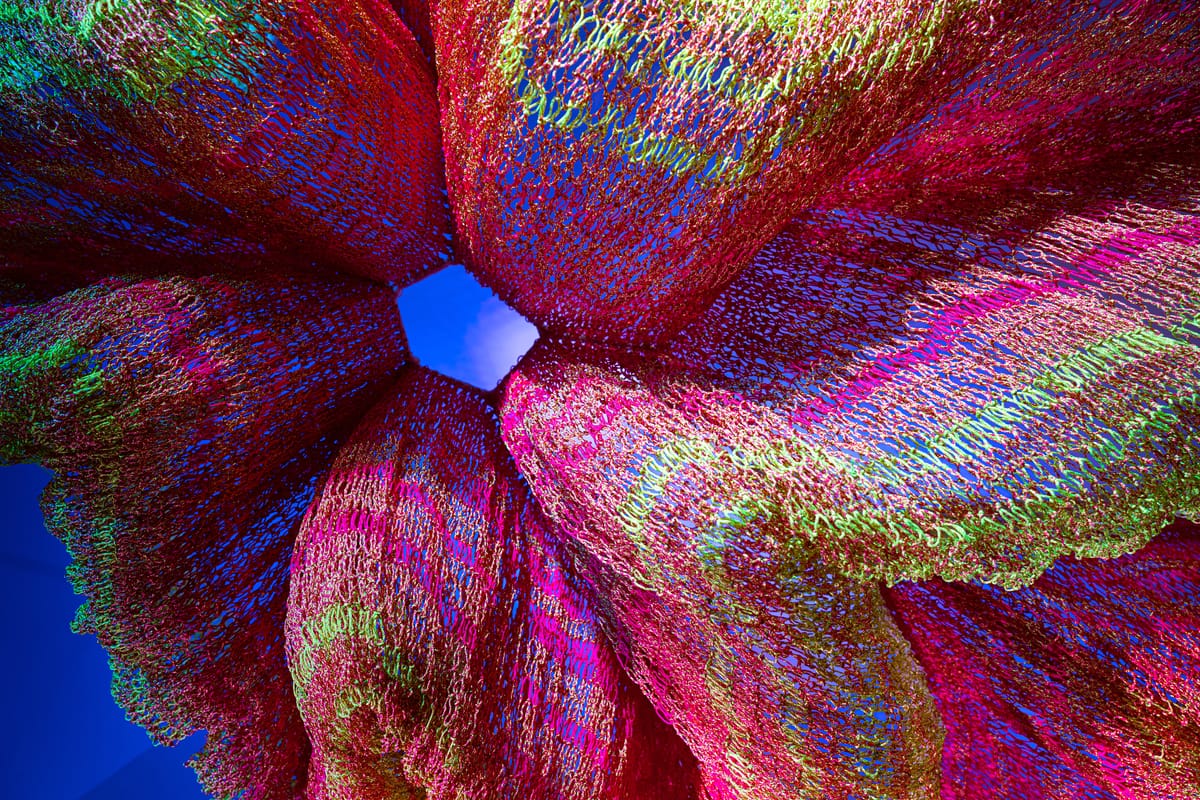
“They are really companions, they're friends, lovers, maybe they’re family,” she said.
Barbour hopes the exhibition encourages visitors to think about these relationships and their own sense of identity.
“I hope that people spend time kind of understanding and piecing together the works, imagining stories of who these people might be,” she said.
She said the show is meant to be both playful and thoughtful. “I want people to feel that sense of play,” she added.