Beanie Babies billionaire’s lawsuit against Santa Barbara museum dismissed by judge
The court found Warner’s claims expired seven years before the lawsuit was filed.

The court found Warner’s claims expired seven years before the lawsuit was filed.
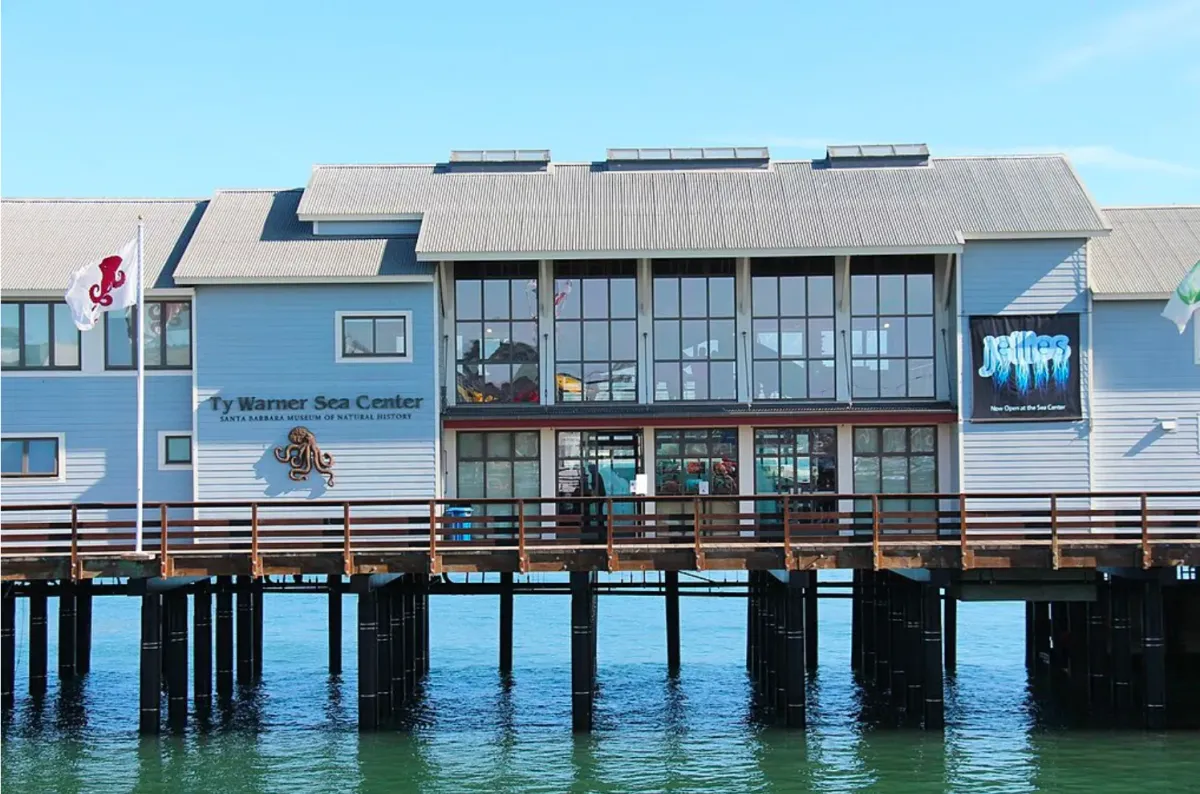
A lawsuit filed by Beanie Babies billionaire Ty Warner, accusing the Santa Barbara Museum of Natural History of violating a long-term naming-rights agreement for its Sea Center after he pleaded guilty to tax evasion, has been dismissed by a federal judge.
“The Museum is pleased with the court’s decision to dismiss this case. With this behind us we are grateful to be able to put our full energy back into serving local children, families, and visitors," Luke Swetland, the chief executive and president of the museum, said in a statement to Urgent Matter.
"As a nonprofit organization that has served the Santa Barbara community for more than a century, our mission remains focused on inspiring a passion for nature and science through education and discovery.”
The case was dismissed last Thursday by Judge R. Gary Klausner of the U.S. District Court for the Central District of California, agreeing with a motion filed by the museum arguing that applicable statutes of limitations had run out.
The full court filing is available to paid subscribers.
 Adam Schrader
“The court finds that Plaintiff's claims are time-barred by the applicable statutes of limitations,” the court order reads. “Accordingly, the court grants defendant's motion to dismiss and dismisses the action in its entirety.”
In the lawsuit filed by Warner on September 16, he said he agreed in 2004 to donate $1.5 million to help the museum complete the reconstruction of its Stearns Wharf facility, in exchange for the building being named the Ty Warner Sea Center. It provided naming rights for the life of the structure or for 35 years, whichever came first, but for no less than 25 years.
He also designed a limited-edition octopus-shaped Beanie Baby, “Opie,” for sale in the gift shop, the lawsuit said.
The museum allegedly removed Warner’s name in 2014, roughly halfway through the agreed-upon term. The institution allegedly told him the change was prompted by his tax evasion conviction but publicly said it was part of a rebranding to align the Sea Center more closely with the Museum of Natural History for its tenth anniversary.
Warner believed that since the museum kept the full donation, it intended to restore his name at a later date. Ten years later, in December 2024, Warner was reviewing his financial contributions and decided to ask the museum again if it intended to restore his name.
“He was told no, but that the Sea Center was open to naming opportunities at the Sea Center for Mr. Warner,” he said in the lawsuit. “After months of internal discussions, on May 16, 2025, the Sea Center invited Mr. Warner to make another substantial donation to the Sea Center, this time in excess of $50 million.”
Lawyers for Warner wrote that the museum’s willingness to enter into another agreement with him indicated that the explanation he had received about his tax case was just a “pretext” and had instead removed his name for another undisclosed reason.
He had sought unspecified compensatory and punitive damages, as well as damages for “emotional distress.”
But much of the argumentation by Warner and the museum as the case worked itself through the court focused on whether he was time-barred by the statutes of limitations governing the case.
Klausner ruled without oral argument after taking the museum’s motion to dismiss under submission in December, concluding the matter could be decided on the written record alone. “No appearances by counsel are necessary,” he wrote in an in-chambers order pulling the motion off the hearing calendar.
The court’s order laid out a blunt timeline problem for Warner. According to the judge, Warner’s own complaint acknowledged that the museum removed his name from the Sea Center in 2014 — the same year it sent him a letter formally terminating the naming-rights agreement following his tax evasion conviction.
Under California law, that removal triggered the statute of limitations clock for all of Warner’s claims, including breach of contract, misrepresentation and unjust enrichment.
“The complaint plainly admits that ‘[i]n 2014 . . . the Sea Center reneged on its agreement,’” Klausner wrote. Because Warner did not file suit until 2025, the court found his claims were nearly seven years too late.
Warner argued that the clock should have been paused because he did not discover the museum’s true motive until years later, when it invited him to discuss a new donation in excess of $50 million.
 Adam Schrader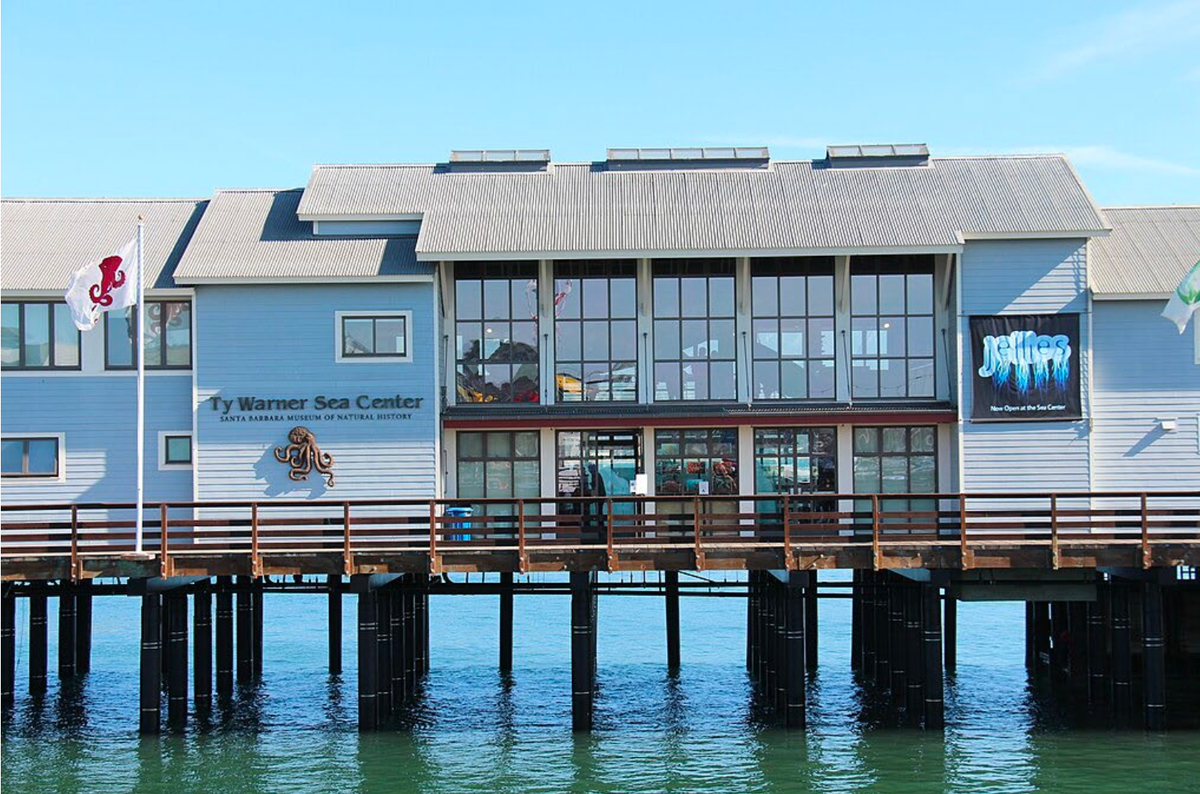
The court rejected that argument, finding that Warner knew his name had been removed and could have investigated the reasons at the time. “The fact that Plaintiff knew about the removal of his name charges him with presumptive knowledge of his breach of contract and unjust enrichment claims in 2014,” the judge wrote.
The court also rejected Warner’s attempts to revive the case under theories of continuing violations, continuous accrual, and anticipatory repudiation, finding that the alleged harm stemmed from a single, discrete act — the removal of his name — rather than an ongoing series of breaches.
“Harm that results from one wrong, the removal of Plaintiff’s name, does not constitute a pattern of small harms,” Klausner wrote.
The docket reflected a procedurally uneven fight along the way. Filings from both sides were stricken and refiled after failing to comply with local court rules, including page limits and required word-count certifications, prompting repeated corrective orders from the judge.
Even so, Warner appeared to be preparing to press forward. Just three days before the dismissal, he filed a joint discovery plan estimating the case would require a five-to-seven-day trial.
Instead, the judge dismissed the action in full, vacated all deadlines and hearings, and ordered the clerk to close the case — ending the lawsuit without discovery and long before a trial would have taken place.
Follow along with other lawsuits at Urgent Matter's art lawsuit tracker.