Asia Society honors legacy of founder John D. Rockefeller 3rd in 70th anniversary show
The show presents 70 objects from the founding collection and runs from March 18 to January 3, 2027.

The show presents 70 objects from the founding collection and runs from March 18 to January 3, 2027.
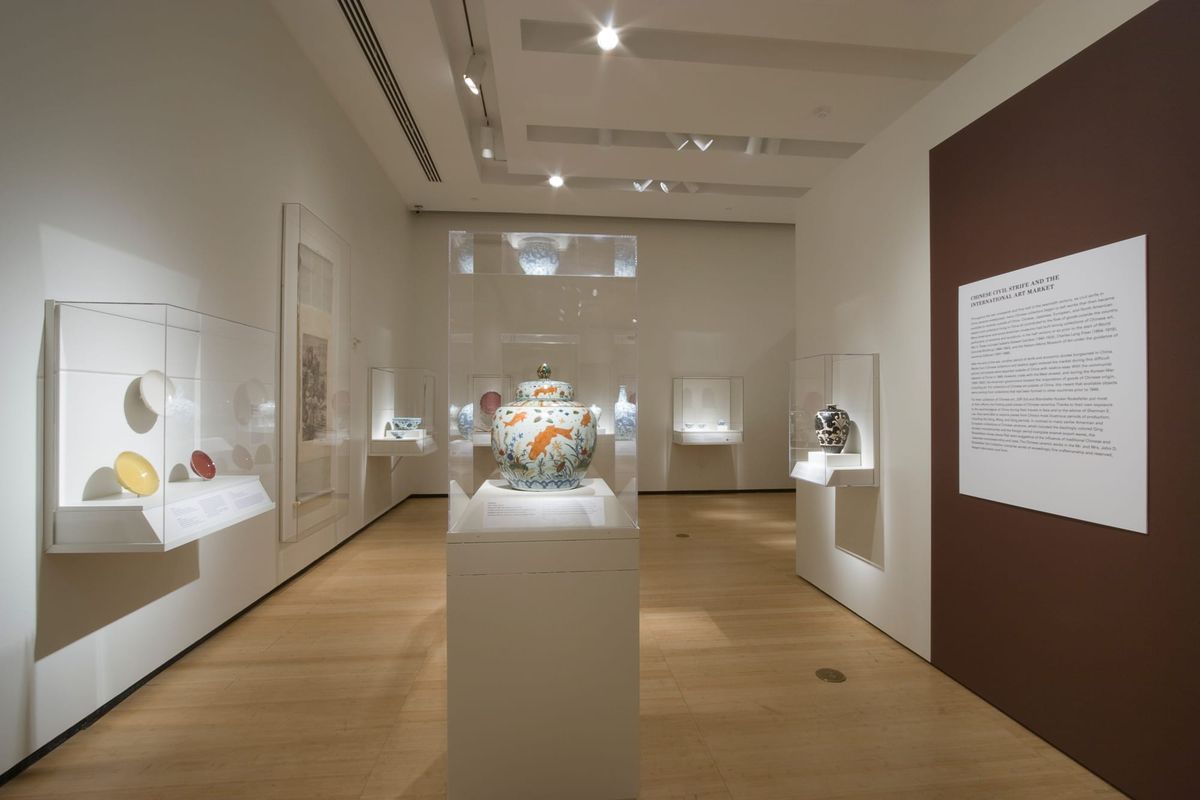
The Asia Society Museum in New York City is honoring the legacy of its founder, John D. Rockefeller 3rd, for its 70th anniversary with an exhibit of work he assembled and donated to its permanent collection.
“Anniversaries provide the opportunity for reflection and retrospection, and an opportunity to share how much our history informs our present work,” Xiohan Du, the museum’s assistant curator of pre-modern Asian art, said in an email responding to questions from Urgent Matter.
“It’s an opportunity for us to share what makes us unique as an organization and why we do what we do, and step outside of ourselves a bit as an organization.”
Rockefeller, the philanthropist grandson of Standard Oil magnate John D. Rockefeller, founded the Asia Society in 1956 to promote greater knowledge of Asia in the United States. Beginning in the 1950s and through the 1970s, he and his wife, Blanchette Hooker Rockefeller, established a collection of hundreds of artworks and artifacts from Asia.
Rockefeller’s collection was formally transferred to Asia Society in 1979, the year after his death in 1978. The 1979 gift effectively transformed it from primarily a policy and cultural-exchange organization into an institution with a permanent museum collection.
The anniversary show, titled “Buddha and Shiva, Lotus and Dragon: Celebrating 70 Years of Asia Society and the Rockefeller Legacy,” includes 70 of the artworks donated by Rockefeller. It is on view from March 18 to January 3, 2027.
“Anniversaries are a time to look back and look forward. Asia Society was founded in 1956 on the firm belief that arts and culture are central to understanding the region’s present realities,” Du said.
“The collection John D. Rockefeller 3rd bequeathed to Asia Society was the primary impetus for our Park Avenue building. For our 70th anniversary year, we wanted to honor this history and legacy, the collection, and critical role of cultural diplomacy in society.”
When asked how the museum addresses the wealth and power behind the Rockefeller name, Du responded that the Rockefeller family “is a model for philanthropy in this country.”
“Their intention in bequeathing their collection to Asia Society was that it to be used for edification and education. With this exhibition, we are celebrating their extraordinary vision, generosity and legacy,” Du said.
The Asia Society Museum said the show is divided into three sections, beginning with a selection of sculptures that trace the transmission of Buddhism across Asia.
Du said the Buddhism section features a “magnificent” stele depicting a pair of crowned Bodhisattvas from China’s Northern Qi dynasty and dating to 570 C.E.
The figures sit in what scholars call a “pensive pose,” with one finger resting against the cheek. Some researchers believe the pose represents a figure seated in paradise, though its exact meaning remains unclear.
“Its monochrome white marble of the piece enhances the serenity of the pensive figures and the overall composition of the heavenly scene depicted,” Du said.
The exhibit continues with a section of medieval-period Hindu sculpture from India and Southeast Asia, which Du said includes a “lovely” depiction of Sambandar, one of a group of 63 Hindu saints who dedicated their lives to the worship of Shiva.
“He can be identified by his youthful appearance and joyful dancing pose, which refers to his emphasis on song and dance in the worship of Shiva, and by the pointing finger of his right hand,” Du said.
“This sculpture, one of the stellar Chola bronzes in the Asia Society Museum Collection, speaks of joy and celebration, perfect for this year marking the 70th anniversary of Asia Society.”
And the show ends with its largest section, showcasing metalwork and ceramics from China, Japan and the Korean peninsula.
“Included here is a personal favorite of mine: a Korean storage jar from the Joseon dynasty, circa mid-18th century,” Du said.
“I particularly love the elegance of the blue and white color combination on this jar: the colors are of a more muted variant compared to the blue and white porcelains from the Yuan and Ming dynasties also on display.”
Du said the jar may have been intended for the wealthy Korean literati class, who were attracted to the simplicity of the blue and white colors, rather than for the imperial court itself.
“A highly educated user would have especially appreciated the auspicious decorative motifs: the pine tree, crane, and moon, traditional symbols of longevity,” Du said.
In press materials, the museum said the collection is “now viewed through a contemporary, global lens.” Du said that the context in which people see Asia has changed in recent decades.
“Asian culture is much more pervasive in our society and a growing familiarity with Asian pop culture whether its music, film, food, or fashion, also brings new perspectives,” Du said.
The museum will have two companion displays running concurrently with the “Buddha and Shiva, Lotus and Dragon” show.
The first highlights eight new acquisitions from Rockefeller’s daughters, Hope Aldrich and Sandra Ferry Rockefeller, displayed with five comparative pieces from the museum’s permanent collection, according to a news release. Du said that seven new acquisitions had never before been publicly displayed.
And five other artworks from the permanent collection gifted by Blanchette Hooker Rockefeller will be on display in the Asia Society’s Visitors Center.
“The display honors Blanchette’s role as an active and discerning partner in building the collection, and her shared regard for both the objects and the Asia Society as a repository for these special artworks,” Du said.
The anniversary comes as a Lunar New Year collaboration planned between Asia Society Museum and the nonprofit Asian Artist And Activities Hub was postponed, after the project did not move forward on its original timeline, according to AAAAH.
 Adam Schrader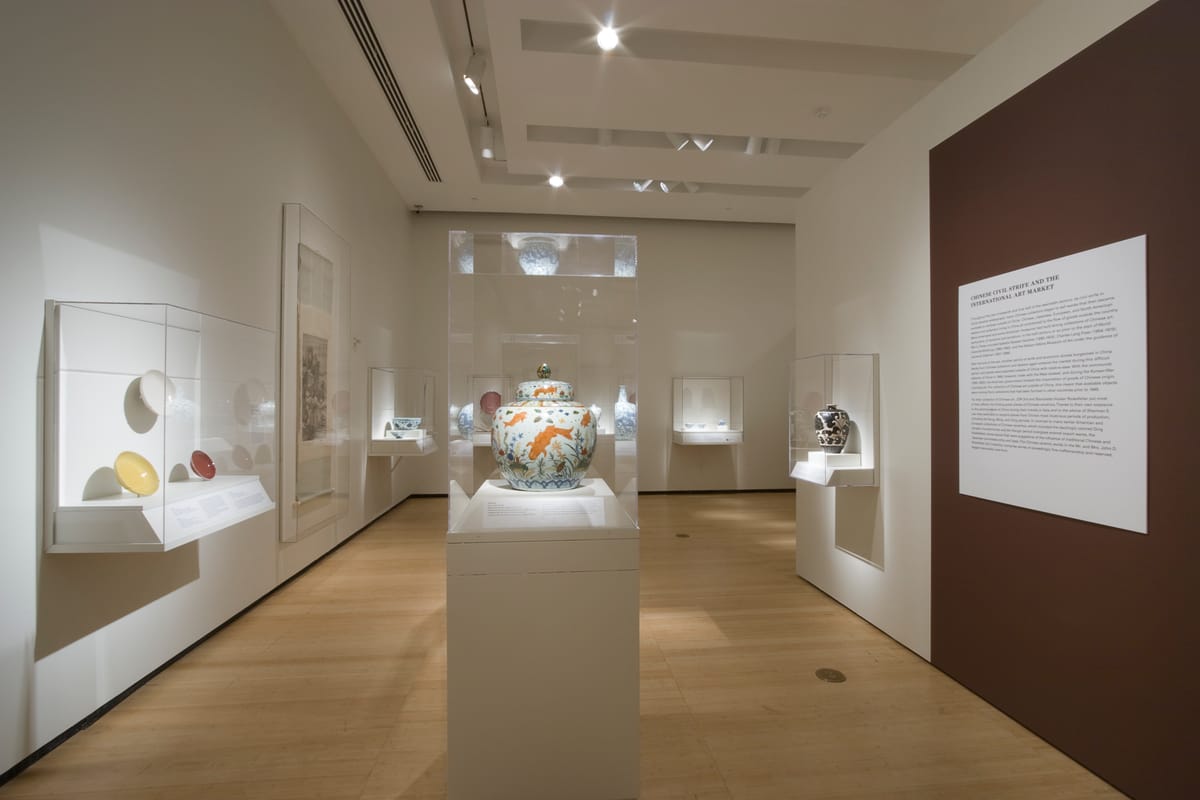
Asia Society did not comment on the AAAAH Lunar New Year event, stating it was not part of planned activities at the time of the interview.
But the Asia Society has increasingly leaned into festivals, performances, and public events. When asked what was driving the heightened programming, Du said the museum has seen a shift in local audiences over the years.
“With Asia’s increasing political and economic power, there is a hunger for programming that explores evolving global dynamics. And our audiences are more internationally aware and Asia-literate. An example of this is our 725 Salon series of talks in Mandarin Chinese that have become a more regular and hugely popular offering, with often sold-out audiences.”
Du said the museum hopes its long-time visitors will enjoy seeing some of their favorite works as well as the recent acquisitions.
“At the same time, the Asian American community in NYC has grown exponentially, along with the number of people who have connections to and interests in Asia,” Du said. “We hope they will come to learn more about these extraordinary works.”
Clarification: This article was updated at 11:51 p.m. on March 2, 2026, to clarify information around the AAAAH Lunar New Year event.
Editor's Note: An earlier version of this article used Roman numerals for the name John D. Rockefeller III. It has been amended to John D. Rockefeller 3rd, at the request of the Asia Society.