Artists turn New York’s discarded materials into new work at city-run warehouse
A group show at Materials for the Arts features work by four artists who used discarded materials sourced from the city-run reuse program.

A group show at Materials for the Arts features work by four artists who used discarded materials sourced from the city-run reuse program.
Materials for the Arts, a New York City–run reuse program, will open a group exhibition next month featuring work by resident artists using discarded materials from its Long Island City warehouse.
The show, titled “The Useful Life of Objects,” will go on view in the Materials for the Arts gallery on January 15 and run through March 12, city officials said in an emailed news release.
The exhibition centers on Materials for the Arts’ role as a city-operated reuse system that intercepts surplus and discarded materials before they are sent to landfills.
The program collects millions of pounds of materials from businesses and government agencies and redistributes them free to public schools, nonprofits and cultural organizations in New York City.
These materials go to the program’s 35,000-square-foot Long Island City warehouse, where staff sort the donations and make them available to approved organizations and artists for reuse.
For this show, the gallery acts as an extension of that system. The four participating artists—Ronen Gamil, Baseera Khan, Armita Raafat, and Justin Sterling—created their work during fall residencies at MFTA, using materials from the warehouse.
While the artists participated in fall residencies at Materials for the Arts, not all works on view were created during that period. The exhibition includes both recent pieces and earlier work.
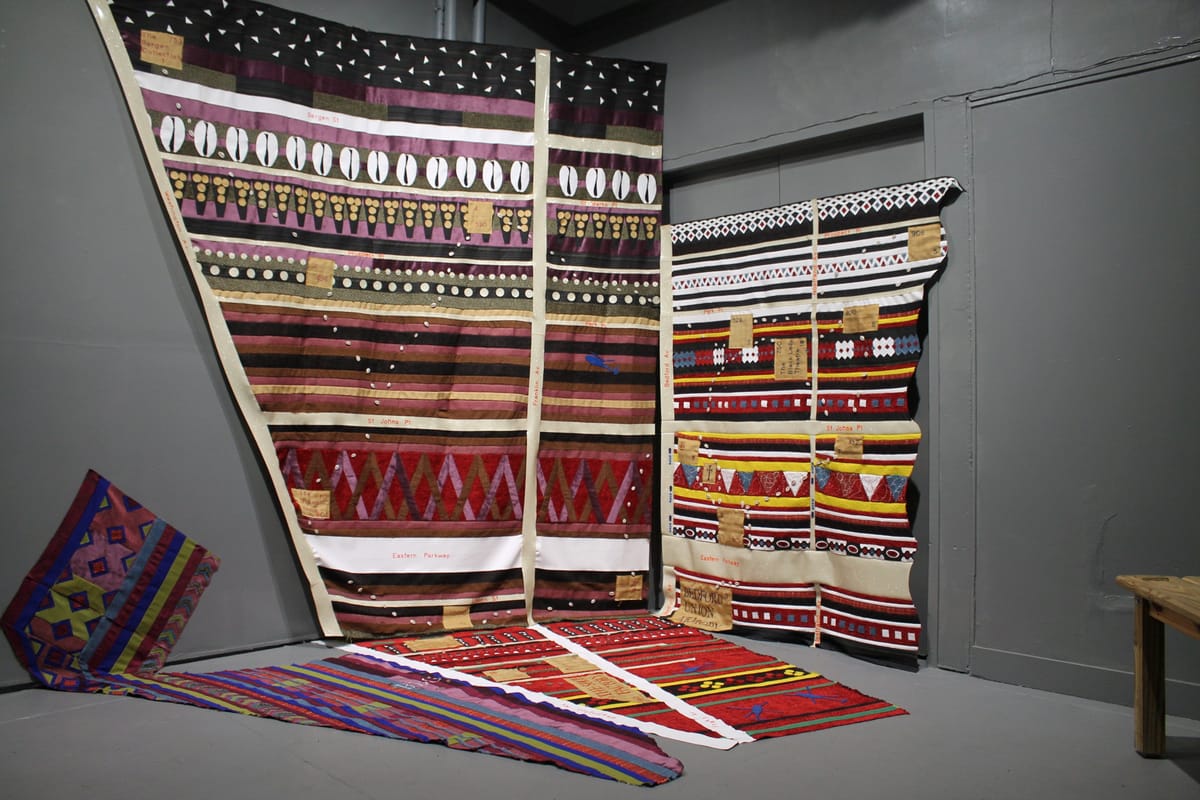
Ronen Gamil’s installation The Best Is Yet To Come, made in 2020, is a large piece built from stitched fabric that covers part of the wall and stretches onto the floor. The fabrics show different colors and patterns, with some looking new and others worn or faded. Shells and coins are among the decorative items sewn into the surface.
Gamil is a Brooklyn-based artist with Yemenite-Israeli roots, who grew up in Palestine-Israel after spending early childhood in Brooklyn. Their work includes installation, textiles and sculpture, often using reused materials to explore migration, housing and urban change. Gamil has exhibited at the Brooklyn Museum, the Bronx Museum of the Arts, Socrates Sculpture Park and FiveMyles.
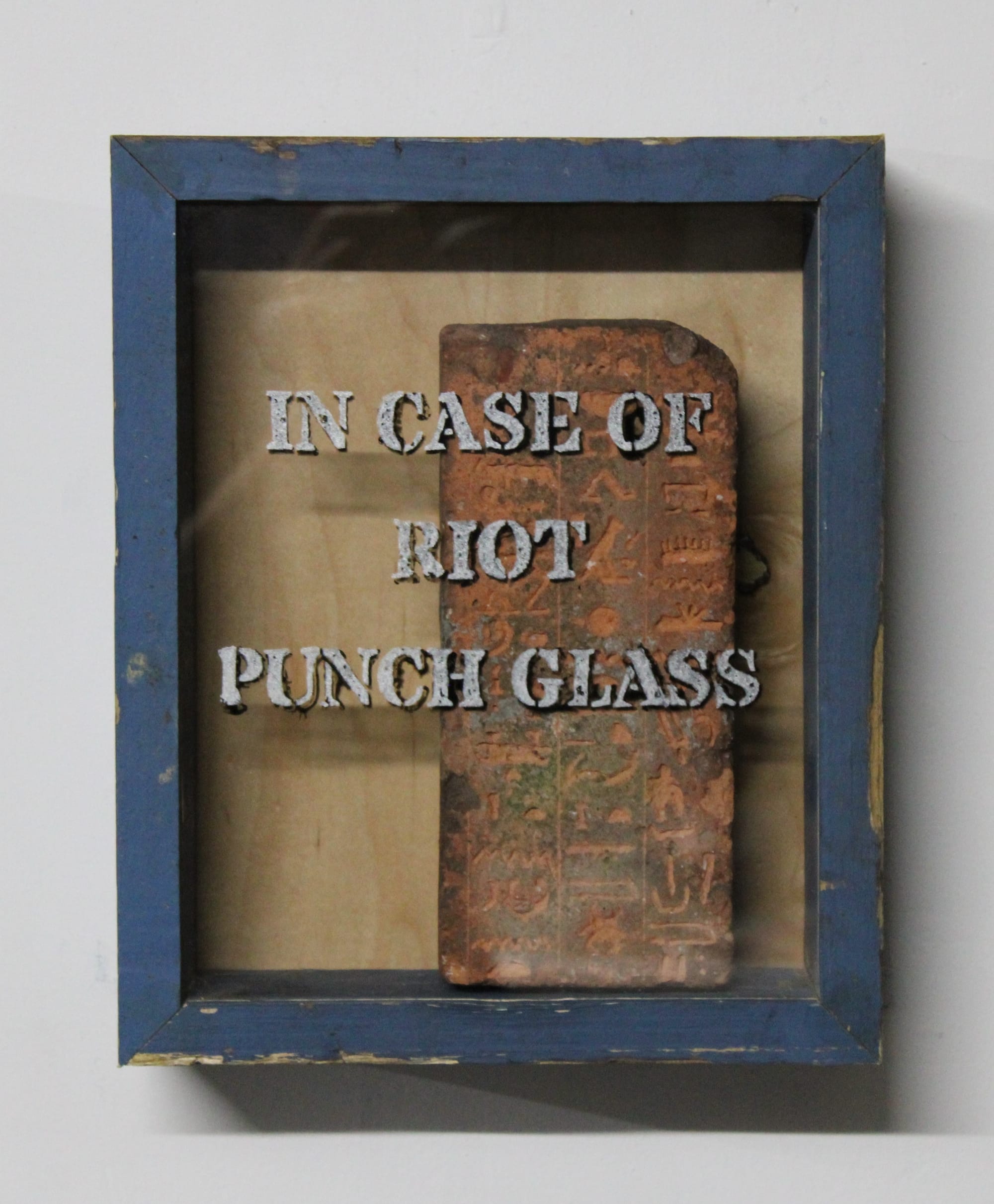
Justin Sterling’s 2025 work Riot Box (Brick) is a wooden display box mounted on the wall with a glass front. Inside, there is a single weathered brick with visible marks and wear. The glass reads “IN CASE OF RIOT / PUNCH GLASS,” echoing the language of emergency cabinets.
Sterling is a New York City–based visual artist and trumpet player whose work centers on reclaimed municipal objects and the built environment. His practice spans sculpture, installation, performance and video, often examining authority, protest and public space. Sterling has presented solo exhibitions at institutions including the San Diego Museum of Art and galleries in New York, Houston and Sydney.
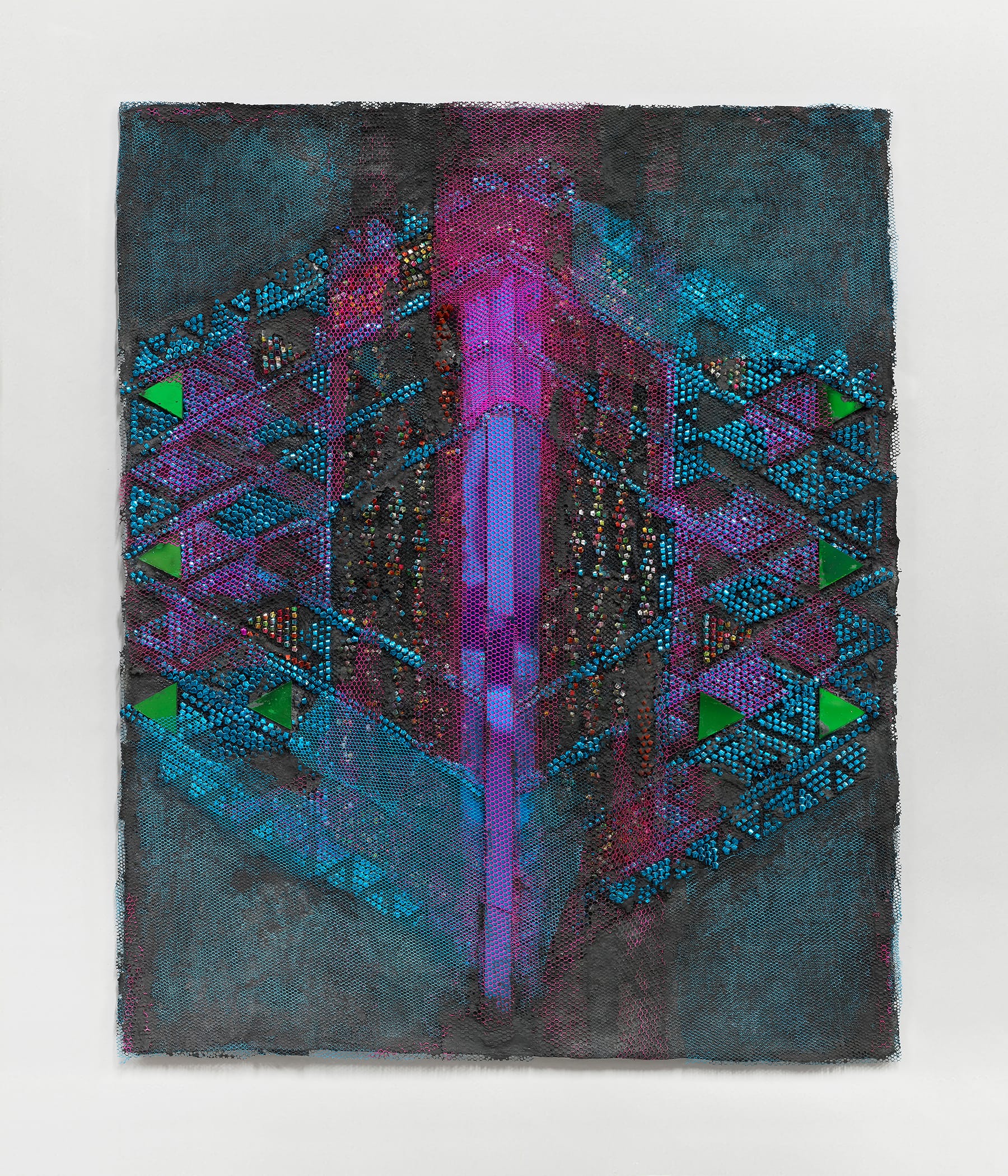
Armita Raafat’s 2024 work is a small mixed-media piece made from handmade paper and fabric. The paper has an uneven texture and is stitched together in several places, with embroidered textile elements attached. Fine mesh is layered into the composition, and small mirrors are embedded throughout.
Raafat is a sculptor and installation artist born in Chicago and raised in Iran. She earned her undergraduate degree from Al-Zahra University in Tehran and an MFA from the School of the Art Institute of Chicago. Raafat has exhibitedat institutions including the MCA Chicago and the Bronx Museum of the Arts.
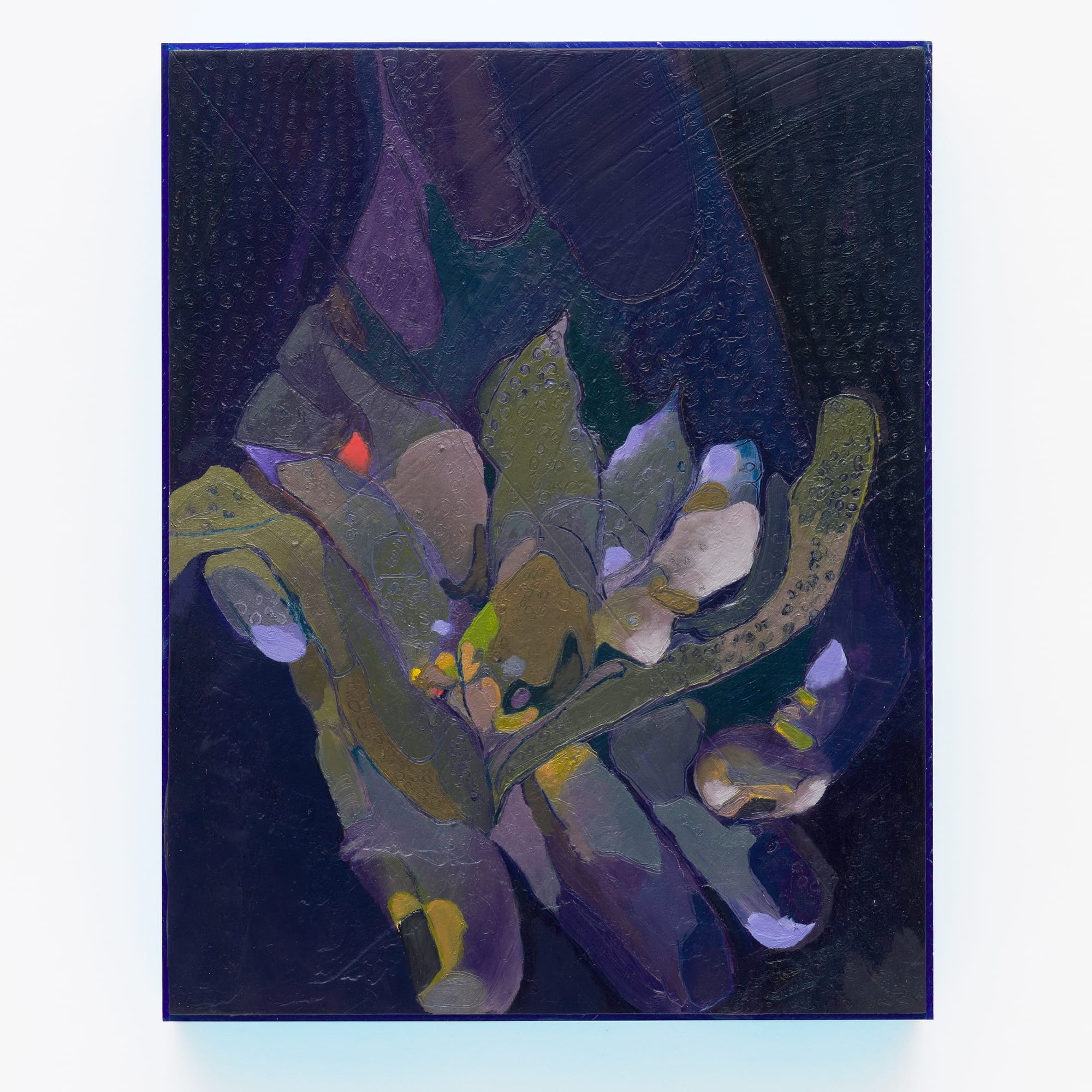
Baseera Khan shows a 2025 painting titled Holding, Blue Histories, made on a wooden panel and presented in a clear Lucite frame. The surface is dominated by layered blue tones, with variations in density and brushwork. The paint builds up through repeated layers, forming an image that suggests a hand emerging from overlapping blue and violet tones.
"Blue Histories traces water’s role in historical trade and conflict over rare minerals used for adornment and art," Materials for the Arts said.
Khan is a visual artist based in New York. Their work includes painting, sculpture, performance, and public art, often exploring material economies, labor, religion and history. Khan has had solo exhibitions at the Hirshhorn Museum and the Brooklyn Museum. Their work is in the collections of the Guggenheim, the Whitney Museum of American Art and the Walker Art Center.
“We thought expansively about experimentation and about what becomes possible when artists are given the freedom to respond to the materials around them,” said Kendal Henry, the assistant commissioner for public art at NYC’s Department of Cultural Affairs.
“Materials for the Arts is an invaluable resource and cultural hub for creative workers across our city, and we look forward to this exhibition and the conversations it inspires around the role of art in civic dialogue.”
The program is operated by the Cultural Affairs department with support from New York City’s Department of Education.
Henry co-curated the show with Sara Reisman—the chief curator at the National Academy of Design and a faculty member at the School of Visual Arts’ Curatorial Practice Masters Program.
Reisman said in a statement that the title of the show came after the co-curators visited the artists' studios.
“We witnessed firsthand the recuperation of objects and materials found in the MFTA warehouse,” Reisman said. “I love how Materials for the Arts extends the useful life of objects in ways that challenge capitalist culture's emphasis on the new and shiny over what is old and storied."