Artist-led apparel startup Hosh seeks national market for Indigenous art
A new company led by Navajo weaver D.Y. Begay licenses Indigenous artists’ work for apparel while leaving ownership with the artists.

A new company led by Navajo weaver D.Y. Begay licenses Indigenous artists’ work for apparel while leaving ownership with the artists.
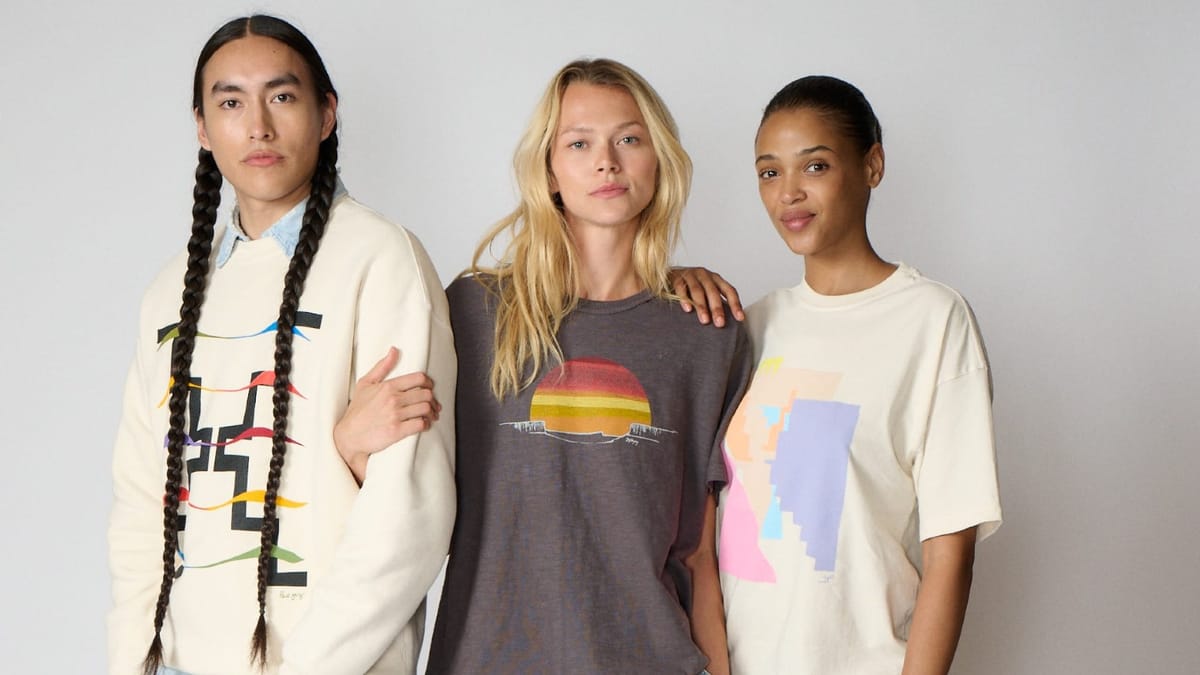
Hosh, a six-month-old apparel company co-led by Navajo weaver and curator D.Y. Begay and former footwear executive Tom Tarica, is attempting to build a national market for contemporary Native American artists. It bills itself as a “creative platform” to help open doors for Indigenous artists while giving them control over how their work is presented.
With Tarica, Begay launched Hosh in July—fresh off a career-spanning solo exhibition at the Smithsonian’s National Museum of the American Indian in Washington, D.C., which was accompanied by the first monograph devoted to her art. Her work has also been featured in the flagship Smithsonian American Art Museum and exhibitions at a number of other institutions including the Museum of Fine Arts, Boston.
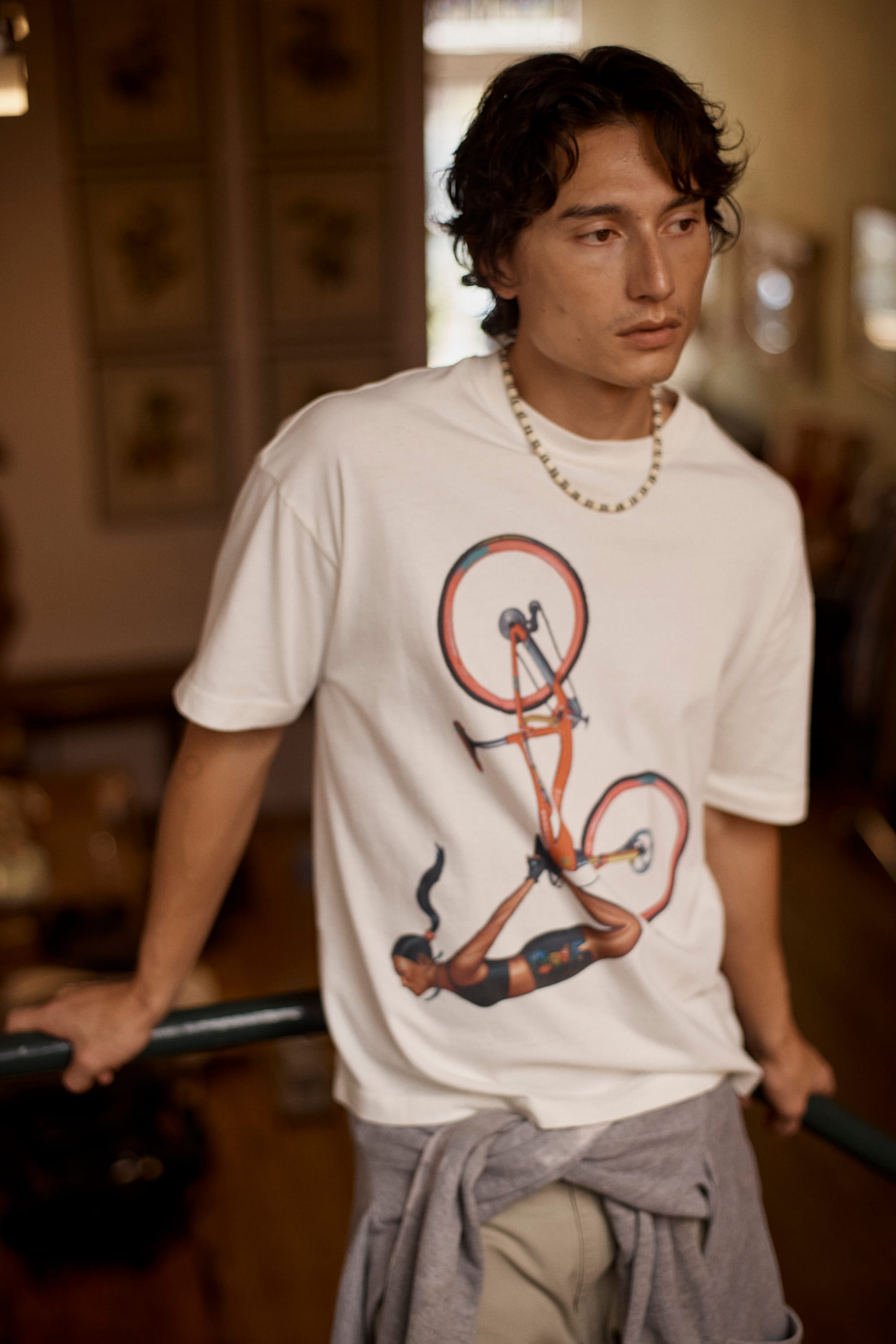
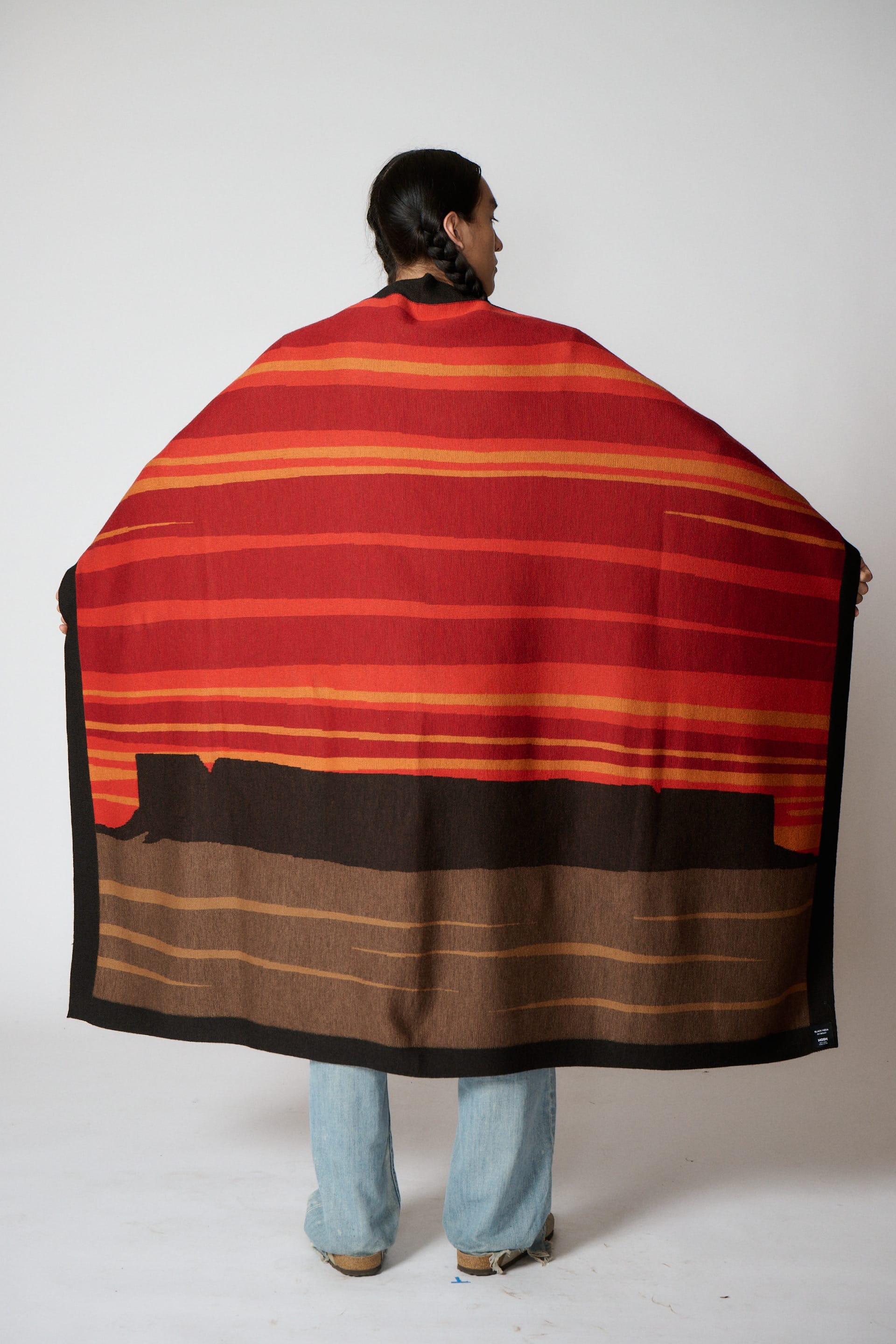
Hosh’s most recent release was launched October 13 on Indigenous Peoples’ Day and features work by Begay and her sisters, Berdine Begay and Berdina Charley. It marks the first time the three sisters, who come from a six-generation Navajo weaving family, have collaborated on a commercial collection. The release includes limited-edition T-shirts adapted from handwoven Navajo tapestries, along with a blanket and a selection of hats.
Tarica told Urgent Matter that Hosh works with 12 artists, licensing their designs for clothing and other products. They pay their collaborators 10% of sales, he said, with remaining revenue reinvested in the company. Artists retain full ownership of their work.
The idea for the company emerged from Tarica’s earlier research into Native art merchandising and consumer products. He said he first contacted Begay about three years ago after thinking about creating a brand that could collaborate with Native American artists, an idea that crystallized during a family trip to Moab, Utah.
“I just happened to be shopping for my children in Moab for T-shirts,” Tarica said. “Some of the T-shirts in the shop, just because of the location, were dedicated to Native American iconography. I was very excited about it as a tourist. But I realized it wasn't real art made by living artists, or artists at all. That was the start of thinking there could be a brand.”
Tarica said he saw T-shirts as an accessible entry point for sharing artwork with consumers while allowing artists to continue owning their intellectual property. He also said he wanted to introduce Native American artists and American Southwest aesthetics to audiences in New York, which he described as an “untapped” potential for Indigenous artists.
As part of that research, Tarica visited the Metropolitan Museum of Art, where he encountered historical Navajo weavings accompanied by wall text written by Begay. He said he appreciated what he read and decided to reach out. Begay later agreed to speak with him by phone.
“I didn't reply right away. I was skeptical,” Begay said. “When I did finally talk to Tom, he gave me the history of his family, which was wonderful. He's got three kids, a wife, and lives in New York and has been in the business before.”
Begay said she ultimately agreed to continue the conversation, but first asked Tarica to visit Santa Fe, New Mexico, to meet working artists and spend time in local communities.
“I thought he needs to really come and hear and listen and ask questions about the communities, about their art, about their family, and just learn and listen,” Begay said.
She also encouraged him to visit galleries and tourist shops in Santa Fe to observe how Native American art is presented in different settings.
“What she asked me to do was to compare the tourist shops to—I don't want to say the real art—but to other parts like museums and meeting with artists, because there is so much tourism,” Tarica said. “So, we're not looking to sell within the tourist community.”
Tarica said Hosh does have goals to open brick-and-mortar shops, likely first in New York, which he described as an unconventional location for a Native art–focused brand.
“But it's exciting to us because it offers a chance to introduce these artists to new people,” he said. “If we were to open a store in Santa Fe, it would make a whole lot of sense, and we might do that someday, but it's just not our first priority.”
Asked whether meaning is lost when traditional artwork is translated into apparel, Begay framed the question in terms of medium and continuity within her own practice.
“I guess you could really think about the medium, whatever medium it is. I'm a weaver. I'm an artist. I come from a long line of weavers. I'm a fifth-generation weaver,” she said.
“My weaving has been passed down for that many generations. And yes, things have evolved and changed for the materials and the designs, but the basic information for my weaving is still done in the traditional ways.”
She said Navajo weaving traditions are sacred and rooted in oral histories passed down through generations.
“We believe that our weaving was gifted by the holy people, the deities, spiderwomen and spidermen,” Begay said. “We were taught those stories growing up, and my great-great-grandmother preserved that tradition, which we still practice today.”
“My design is very contemporary. So that has changed,” she said. “The actual traditional technique has remained the same. The equipment and the tools have remained the same.”
Tarica said all of the artists working with Hosh maintain independent studio practices. “It's handmade. They don't have ateliers. They're doing it themselves,” he said.
“One of the things that is exciting for them about this project is that it allows them to have an extension of their art practice and to think of their art in different ways,” Tarica said. “And that's the way we approach it: ‘How do we reimagine, together, your artwork for whatever product it is?’”
He said the company’s current production methods are relatively simple, primarily screen-printing, but may evolve.
Tarica cited a collaboration with young Navajo ceramic artist Jared Tso as an example. In the first project Hosh worked on with him, Tso wanted to honor his father, who was a painter. So, Hosh worked off a painting his father had made and created T-shirts and hats.
“But that kind of just shows you how it can be reimagined to become its own thing,” Tarica said.
Most of the artists currently working with Hosh are based in the Southwest, reflecting Begay’s location, though Tarica said the company has begun expanding beyond the region.
“Most of the artists are from the Southwest just because that's where D.Y. is from. Two of them are her sisters,” he said. “But we are focused on broadening our reach to artists from across the country.”
Asked how that expansion might affect the company’s visual identity, Tarica said the model allows for variation.
“We've created a brand, and all of it has to work together in a sense,” he said. “But the way we've created it is that this is artist-led. So, there are going to be very different looks.”
Begay said artists decide how their work is adapted and often approach her directly about working with Hosh.
“Our weaving tradition was traditionally made for wear,” she said. “So, I'm always open to young weavers who weave or want to learn to weave. I support them.”