Artist appeals dismissal of lawsuit targeting Smithsonian over his pro-Trump painting

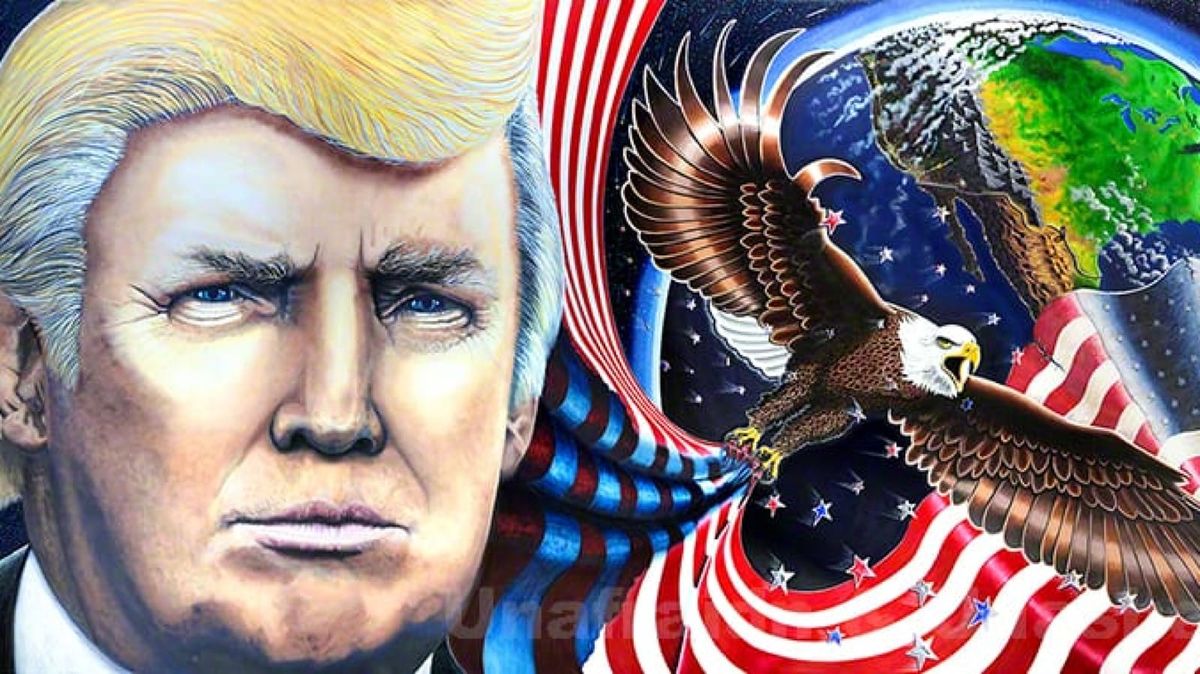
A New York artist has appealed the dismissal of a sweeping lawsuit accusing the Smithsonian Institution and other top officials of politicizing the nation’s premier museum complex.
Julian Raven submitted a notice of appeal to the U.S. Court of Appeals for the D.C. Circuit on March 11. His lawsuit had been dismissed on January 26 by U.S. District Judge Trevor N. McFadden, who found that Raven failed to show he suffered a concrete, personal injury—a requirement to bring a case in federal court.
The saga began when Raven painted a patriotic portrait of Trump titled Unafraid and Unashamed in 2015, when he was then a candidate. Trump was pictured next to a bald eagle holding the American flag. The painting was later exhibited at the Republican National Convention in 2016.
Paid subscribers can read the full notice of appeal.
 Adam Schrader
That year, Raven submitted the painting to the National Portrait Gallery, but it was allegedly rejected by director Kim Sajet. Raven filed an unsuccessful lawsuit against her in 2017, alleging that the museum violated the First and Fifth Amendments of the U.S. Constitution. He appealed the dismissal of that lawsuit, but lost.
After Trump returned to office for his second term last year, the president said he was firing Sajet for being a “highly partisan” person and for being a strong supporter of Diversity, Equity and Inclusion initiatives. Sajet ultimately resigned over Trump’s attempts to fire her.
Around that time, the White House also provided The Washington Post with a list of 17 instances in which they claimed Sajet was critical of Trump or openly supported DEI initiatives. The newspaper later reported that the Raven incident was on that list.
Raven then filed a new lawsuit in July 2025 against Smithsonian Secretary Lonnie G. Bunch III, the institution’s Board of Regents, Chief Justice John G. Roberts Jr. in his role as chancellor, as well as Trump, the U.S. Congress and the United States.
The artist alleged that Sajet personally rejected his painting “with hostility, political animus and overt partisanship.”
"I am the Director of the Smithsonian! Your application will go no further, you can appeal it all you want!” Sajet allegedly told Raven on an 11-minute phone call, according to his self-authored complaint.
In his complaint, Raven said that Sajet’s resignation is “incontrovertible confirmation” of the institutional failures within the Smithsonian.
“If Sajet was innocent of the partisan charge, she could have remained on the job, fought for her rights of unlawful dismissal under the vast body of wrongful dismissal laws, including claiming retaliation and job discrimination,” Raven wrote in his lawsuit.
“But the president’s actions finally put the spotlight on her partisan actions. If push came to shove, and Sajet claimed retaliation or discrimination any litigation would have highlighted the treasure trove of evidence vindicating the president’s accusation that Sajet was a partisan actor.”
Raven also tied his claims to broader allegations of politicization within the institution, pointing to public statements, internal decisions and past controversies as evidence of what he described as a breakdown in neutrality.
The artist sought extreme remedies in his lawsuit, including the removal of Smithsonian leadership, congressional intervention in the Board of Regents, and court supervision to enforce what Raven described as the institution’s original trust obligations, among other measures.
In this latest case, McFadden ruled that Raven’s broader claims about institutional decline amounted to generalized grievances shared by the public, not a specific harm unique to him. Such claims do not meet the constitutional standard for standing, the judge said.
The court also rejected Raven’s argument that he could sue as a “public beneficiary” of the Smithsonian, finding no legal basis to treat individual Americans as beneficiaries with enforceable rights over the institution’s operations.
Alongside dismissing the case, the court denied Raven’s request for a preliminary injunction and a series of additional motions, including efforts to certify the case directly to the U.S. Supreme Court.
Raven’s appeal seeks review of the dismissal, the denial of injunctive relief and other rulings issued in the final judgment.
Follow along with other lawsuits at Urgent Matter's art lawsuit tracker.