Art Restitution Tracker: A global ledger of looted art returns and disputes
A database tracking lawsuits, settlements, and voluntary returns of artworks and cultural artifacts.

A database tracking lawsuits, settlements, and voluntary returns of artworks and cultural artifacts.
Museums, governments and collectors around the world have returned a growing number of artworks and cultural objects in recent years as pressure mounts to address objects looted during the Nazi era and the colonial period.
Between 1933 and 1945, the Nazi regime seized or coerced the sale of more than 650,000 artworks across Europe, according to the Center for Art Law. Decades later, few have been handed over to their rightful owners.
Organizations like the Center for Art Law have created their own databases to track the restitution of artworks looted by the Nazis. As a newsroom that frequently reports on restitution disputes, Urgent Matter is building its own repository so readers can quickly locate documented cases and connect them to ongoing reporting, legal proceedings and policy developments.
Restitution debates also extend to objects taken during the colonial period. Germany's public museums alone are estimated to hold 40,000 artifacts taken from Cameroon during its brief and violent occupation at the turn of the 19th century.
Across France's national collections, objects from sub-Saharan Africa number in the tens of thousands, catalogued but largely immovable under laws that treat them as inalienable state property. More than 90% of sub-Saharan Africa’s cultural heritage is still held in Western repositories.
The Museum of Modern African Art Gallery & Lifestyle said in a recent blog post that the return of looted African artifacts has accelerated dramatically since 2020, driven by a convergence of factors.
First came the release of the 2018 Sarr-Savoy Report commissioned by French President Emmanuel Macron, followed by a global race reckoning after the 2020 murder of George Floyd and sustained advocacy by African governments and diaspora communities.
As restitution efforts accelerate, the global movement to repatriate looted cultural heritage has transitioned from symbolic gestures to a complex, legal, and institutional overhaul.
“It's as if we've changed eras. It's as though the Berlin Wall has fallen,” art historian Bénédicte Savoy told ARTnews in 2024.
Tracking restitutions is also a tool for accountability. Without a public ledger, the distinction between permanent returns and "circulationism"—temporary loans that maintain Western legal title—remains blurred.
Recent data shows the impact of restitutions. Ivor Agyeman-Duah, associate director of the Manhyia Palace Museum, told The Africa Report that the museum’s visitor numbers nearly doubled in 2024 from previous years, reaching 87,000 by October. MoMAA called it “proof that returned heritage drives both cultural pride and economic benefit.”
The tracker records restitution efforts across the art world, from courtroom battles and diplomatic negotiations to voluntary returns by museums and private collectors. Rather than focusing only on successful claims, it also documents disputes, stalled negotiations and partial agreements.
Cases involving artworks looted or forcibly sold under the Nazi regime.
Origin: Fischer family collection (Frankfurt, Germany)
Holder: Private collection (Germany)
Status: Returned (2025)
Legal mechanism: Voluntary restitution
Summary:
A watercolor by German Expressionist artist Ernst Ludwig Kirchner, Im Bett liegender Mann (Selbstbildnis), was voluntarily restituted by collectors Annemarie and Günther Gercken to the descendants of Jewish collectors Ludwig and Rosy Fischer. The heirs later donated the painting to the Virginia Museum of Fine Arts, reuniting it with other restituted works from the Fischer collection.
 Adam Schrader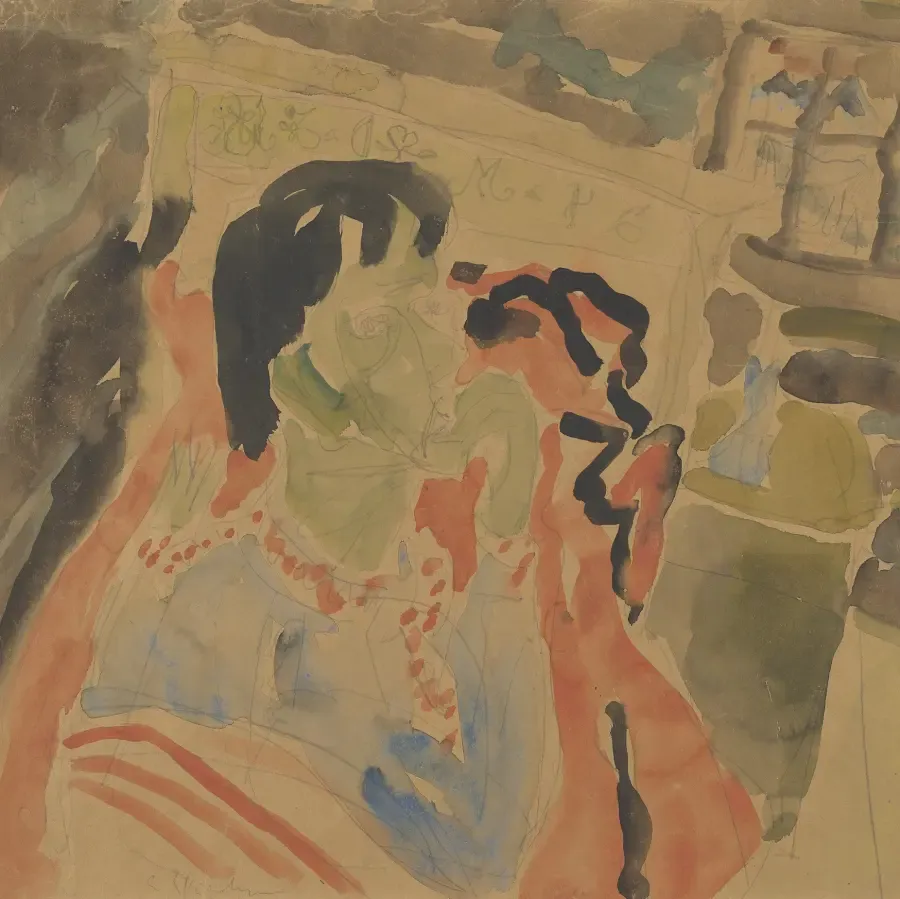
Origin: Paul von Mendelssohn-Bartholdy collection (Germany)
Holder: Sompo Museum of Art / Sompo Holdings
Status: U.S. lawsuit rejected (appeal lost, 2025)
Legal mechanism: Civil litigation
Summary: Heirs of German-Jewish banker and collector Paul von Mendelssohn-Bartholdy sought restitution of Vincent van Gogh’s Sunflowers, arguing the painting was sold under duress in the 1930s as Nazi persecution forced the collector to liquidate his assets. A U.S. appeals court upheld the dismissal of the case, ruling that the federal court lacked jurisdiction over the Japanese owner, leaving the painting in the Sompo collection in Tokyo.
 Adam Schrader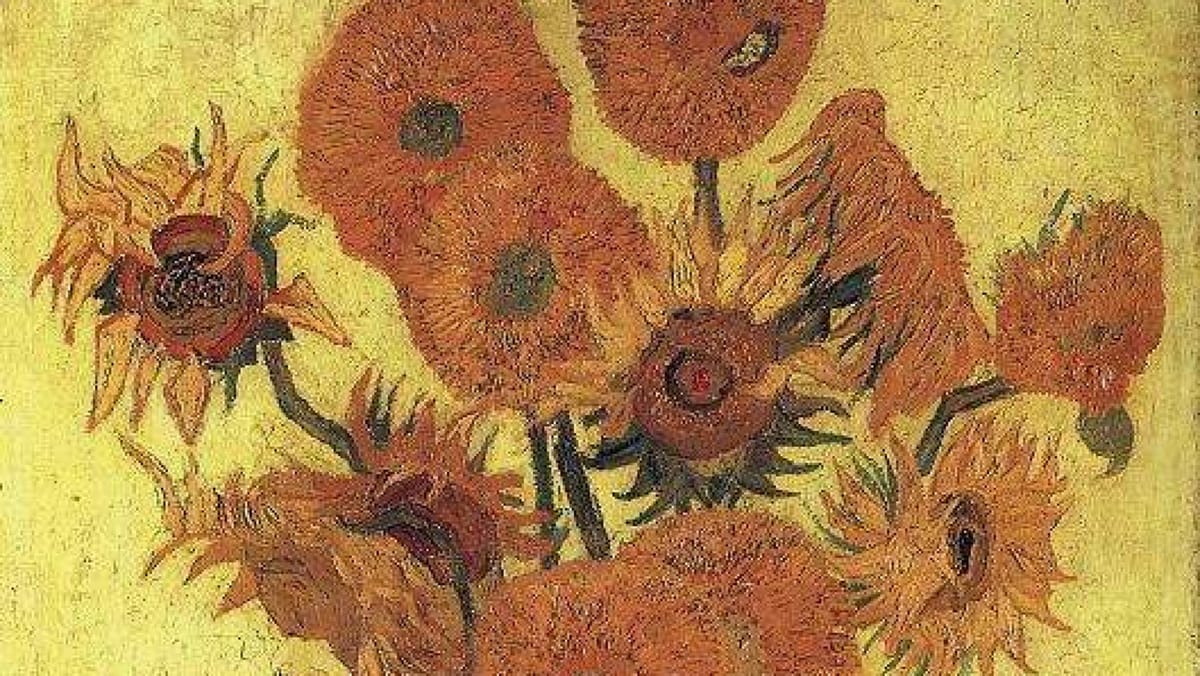
Origin: Herzog family collection (Hungary)
Holder: Hungary (state museums and institutions)
Legal mechanism: Civil litigation
Status: Claim dismissed by U.S. appeals court
Summary: A U.S. appeals court ended a long-running lawsuit by heirs of Hungarian Jewish collector Baron Mór Lipót Herzog seeking the return of artworks seized during the Holocaust and now held in Hungarian state museums. The court ruled the claims could not proceed in U.S. courts, effectively ending the decades-long legal battle over parts of the Herzog collection, one of the largest art collections looted in Hungary during World War II.
 Adam Schrader
Objects removed during colonial occupation or imperial expansion.
Artifacts and fossils removed through illegal excavation or smuggling.
Origin: Mongolia
Holder: French customs authorities
Status: Returned (2025)
Legal mechanism: Customs seizure
Summary: France returned a nearly complete Tarbosaurus bataar skeleton and dozens of additional dinosaur fossils to Mongolia after French customs seized them during a trafficking investigation. The fossils had been looted from Mongolia’s Gobi Desert and smuggled into France via South Korea before being confiscated in 2015.
 Adam Schrader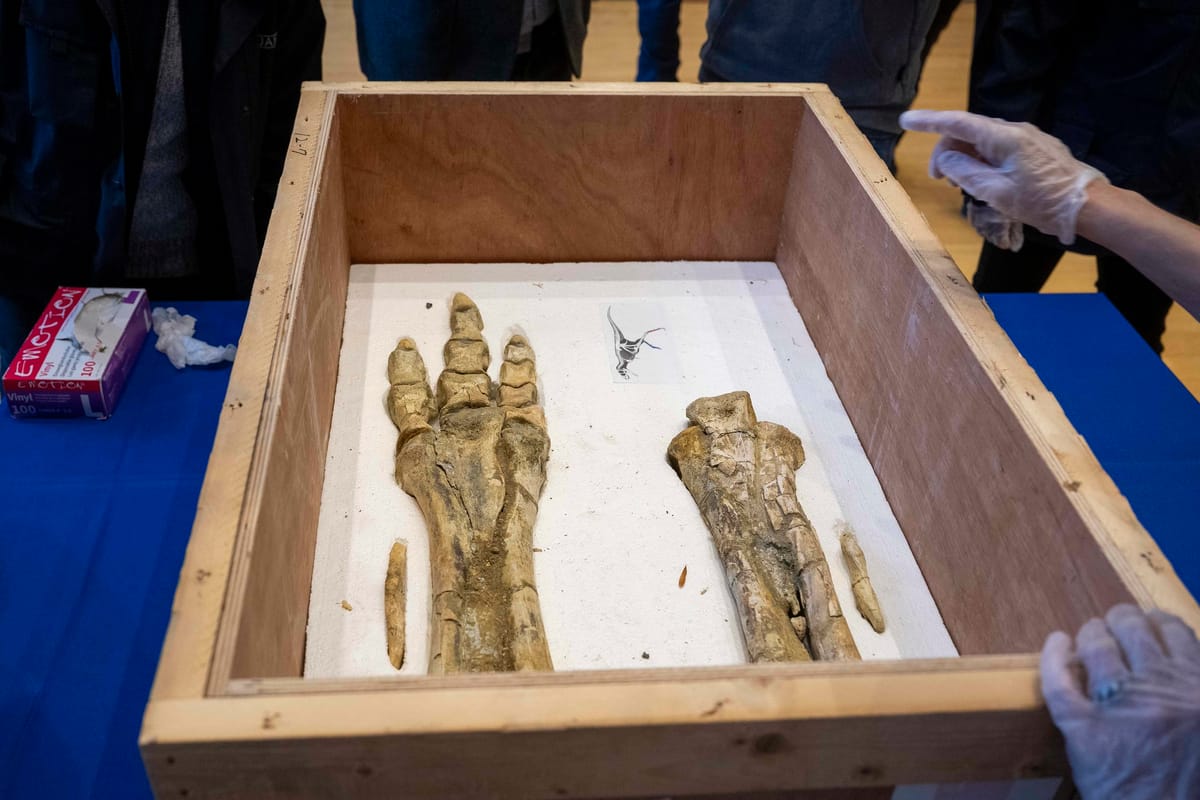
Origin: Egypt
Holder: United States (multiple institutions)
Status: Returned (2025)
Legal mechanism: Criminal investigation; Voluntary restitution
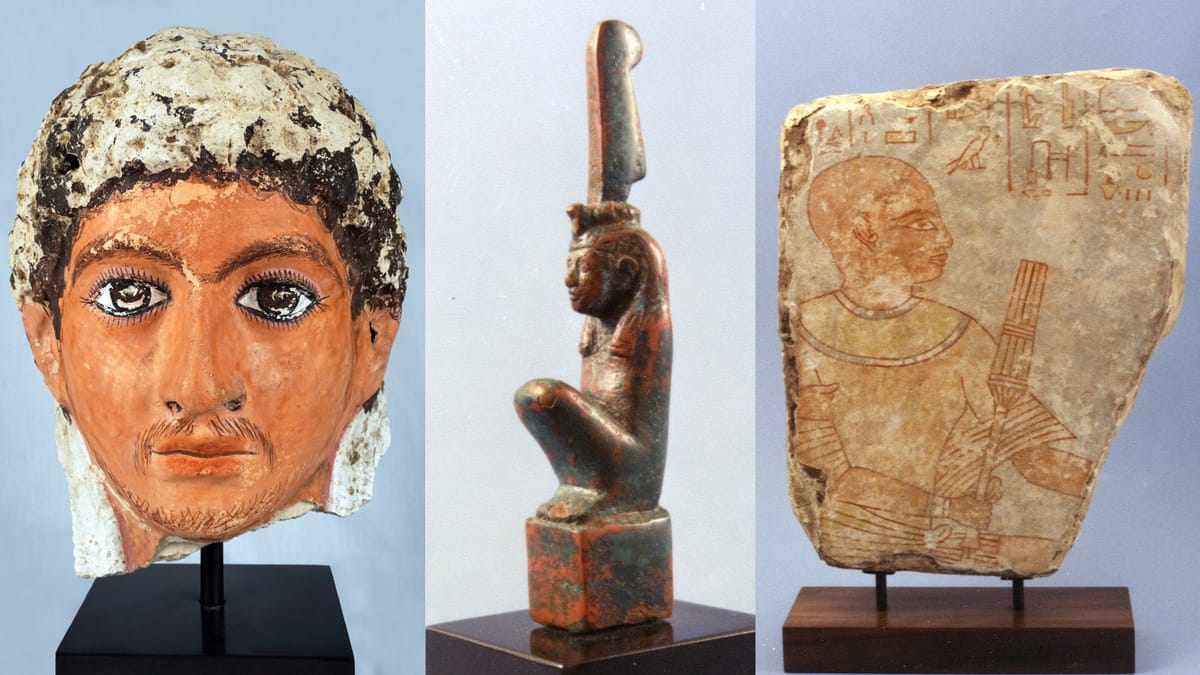
Summary: It was announced in November 2025 that U.S. authorities returned 36 antiquities to Egypt after investigators determined the objects had been illegally removed and trafficked through the international art market.
The items were recovered as part of multiple criminal investigations by the office of Manhattan District Attorney Alvin Bragg.
The restitution included a mummy mask that surfaced on the art market in 1977 in the possession of the dealer Mathias Komor. At the time it was recovered, it was in the possession of a museum that was not named by authorities.
Also restituted were items including 24 rare manuscripts with writings in Coptic and Syria that were in the possession of the Metropolitan Museum of Art and were said to have been handed over to the Egyptian Consulate in New York “as an initiative of the museum."
Also restituted were items, including 24 rare manuscripts with writings in Coptic and Syrian that were in the possession of the Metropolitan Museum of Art and were said to have been handed over to the Egyptian Consulate in New York “as an initiative of the museum."
 Adam Schrader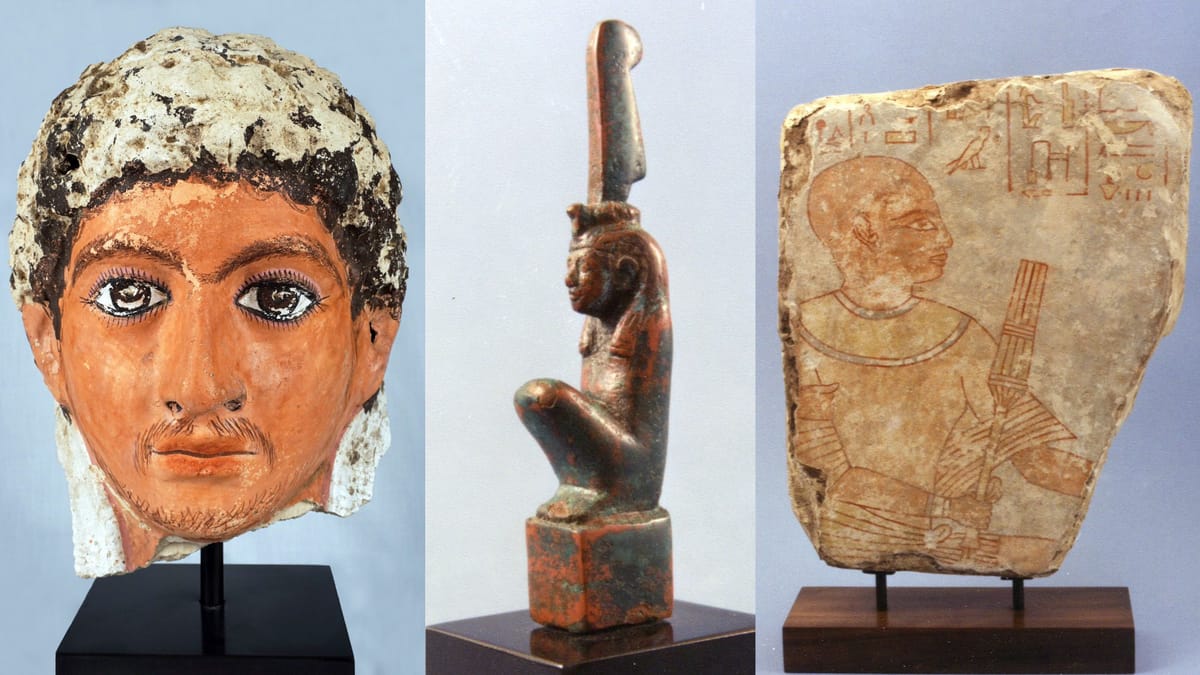
Origin: Mexico
Holder: Portugal
Status: Returned (2026)
Legal mechanism: Criminal seizure
Summary: Portugal returned three pre-Hispanic archaeological artifacts to Mexico in the first restitution of Mexican cultural property from the country. The objects—a West Mexican ceramic female figure, a Classic-period Maya polychrome vessel, and a Zapotec funerary urn depicting the rain deity Cocijo—were recovered by Portuguese judicial authorities after being illegally removed from Mexico. The handover took place at the Mexican Embassy in Lisbon.
 Adam Schrader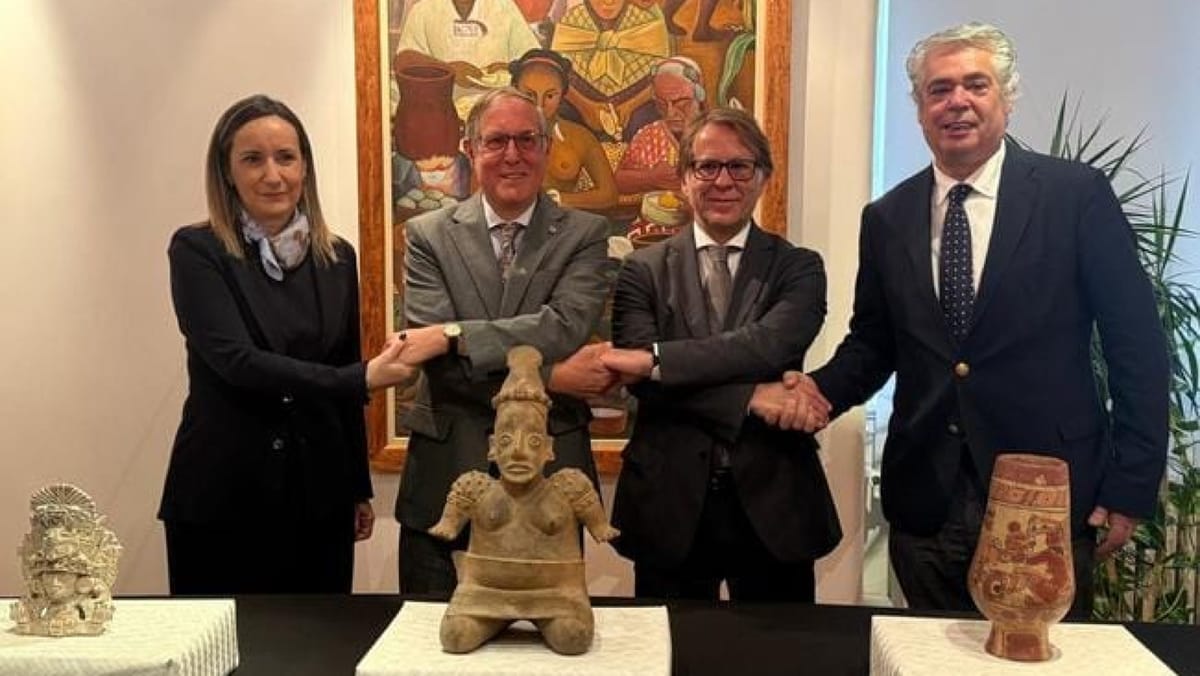
Ongoing claims or negotiations involving museum collections.
Follow along with other lawsuits at Urgent Matter's art lawsuit tracker.